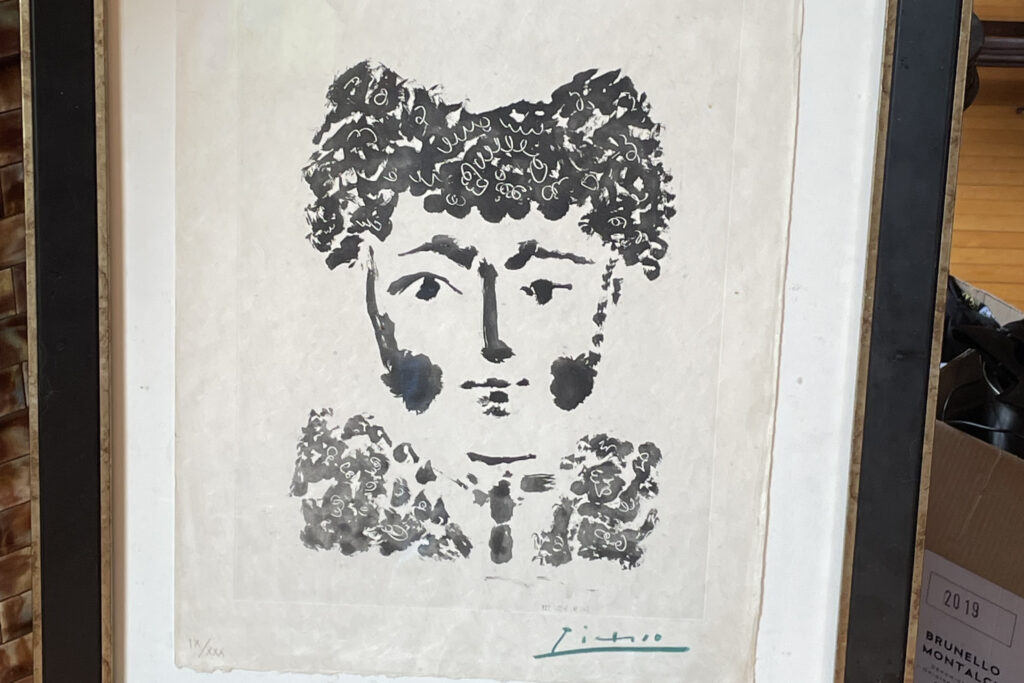
The Milwaukee apartment reeked of cat urine. Empty pizza boxes rose waist-high from the floor. And in a bedroom, tucked behind the door and covered in dust, hung a nondescript print in a black and brown frame.
Tim Dertz had arrived at the apartment worried mostly about the smell, the trash and the $15,000 he’d lost renting the apartment, whose tenant he’d finally evicted.
Eager to recoup some of that loss, Dertz invited Chad Strack, an antiques dealer, in case anything of value was left hidden in the mess. Over 20 minutes, they made their way to the back bedroom.
“Do you know what that is?” asked Strack, as both stood men before the print. “That’s a Picasso.”
The print wasn’t just any Picasso. In February 2018, the black-and-white print — a 1949 aquatint on rice paper featuring the Spanish artist’s signature in green pencil — had vanished from a downtown Milwaukee art gallery. An investigation failed to turn up any suspects. And for eight years, the piece’s whereabouts were a mystery.
But on Aug. 4, the Picasso — named “Torero,” or “bullfighter” in Spanish — was recovered.
“This is a baby,” said William DeLind, who owned the gallery from which the piece was taken. “This was a very personal affront when it was taken, and now it’s very personal coming back.”
According to the Art Loss Register, which keeps a database of missing art, Picasso is the world’s most-stolen artist with more than 1,000 of his works missing. The piece found by Dertz features a figure sporting sideburns and curly hair, which Picasso placed on Japanese paper using a sugar-lift process, the ninth print in a series of 30.
In 2018, it hung on consignment at DeLind’s appraisal store.
One afternoon, he and his partner noticed the etching was gone. DeLind recalled doing a double take when he walked into the store’s lobby. Something felt emptier.
“I looked around the room and came back to the empty spot,” DeLind said. “It didn’t take me very long to say, ‘Oh my God, it’s gone.’”
Each anniversary of the vanishing, DeLind would alert local media outlets, but he had largely given up hope he’d ever see the aquatint again. Insurers had settled the claim years ago. In February, his business partner died. DeLind now focuses on appraising art instead of selling it.
“You never expect to see something that is stolen back again,” DeLind said. Then, on Aug. 6, the police called.
Dertz said he’d been nervous knowing he had a possible Picasso in his possession after finding the etching two days earlier. He spent a night pacing — “freaking out,” as Natassha Delgado, his girlfriend, described.
“I didn’t want to handle it anymore,” Dertz said.
He and Delgado called the police the morning after the apartment discovery, then brought the artwork into the station.
When police later returned the print to DeLind, the 84-year-old said he knew it was his long-missing Picasso.
He pulled out his jeweler’s loupe, with which he’d verified countless pieces before. This time, he was giddy.
“I didn’t cry, but I was very emotional to see it,” DeLind said.
Insurers own the painting now, DeLind said, but he is hoping he’ll be able to hang it in his store for a month or two, just for people to see it back on the wall again.
The Milwaukee Police Department in a statement commended Dertz for doing “the right thing” by turning in the etching. “We are better together,” the statement adds.
Investigators are in the process of locating the rightful owner, a department spokesperson told The Washington Post.
For a time, there was a $10,000 reward offered to anyone who found the print. Dertz said he hasn’t been contacted about a possible payout — but even if he never gets any money, he’ll settle for a tale to tell.
“It’ll always be great to have a story on how I owned a Picasso for a day,” he said.
The post A landlord was cleaning out a vacant apartment — then he found a lost Picasso appeared first on Washington Post.