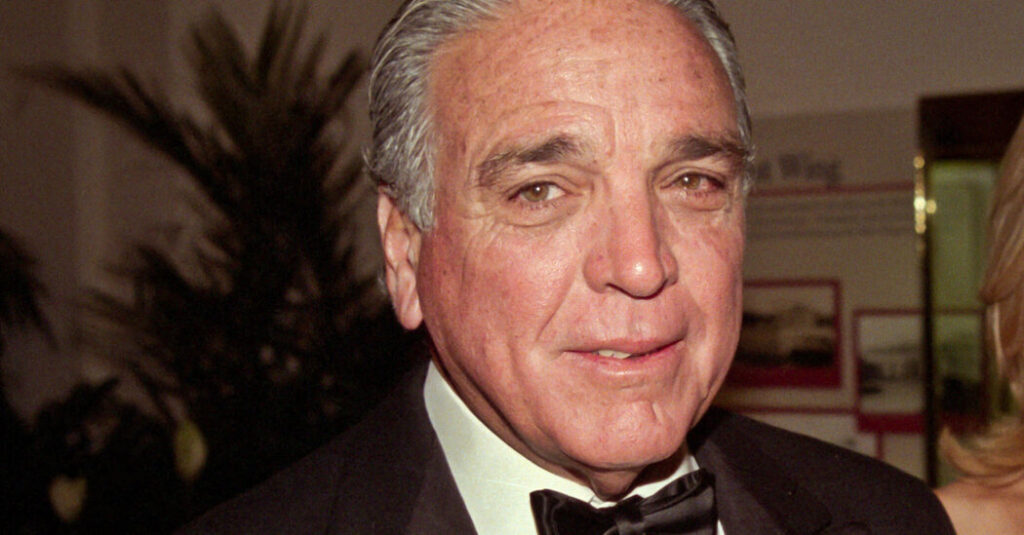
Alfonso Fanjul Jr., the patriarch of a family that lost one of Cuba’s largest sugar businesses in the revolution of 1959 and fled to the United States, where, thanks to pluck and government price supports, they built an even vaster empire, died on Aug. 3 in South Florida. He was 89.
The death was announced by Florida Crystals Corporation, part of the privately held family business that Mr. Fanjul presided over. The company provided no further details.
A billionaire who called himself a farmer and lived a luxurious life in Palm Beach, Fla., where he docked a 95-foot yacht, Mr. Fanjul, known as Alfy, was co-chairman and co-chief executive of the family businesses alongside his younger brother José, known as Pepe.
Their two other brothers and sister also have interests in the empire, which includes the world’s largest cane sugar refiner and the Domino and C&H brands.
Alfy and Pepe Fanjul became major donors to both political parties in the United States, a lesson in realpolitik that they learned after Cuban Communists confiscated 90,000 acres of the family’s property as well as its mansions and an art collection.
“One of the reasons we get involved in American politics is because of what happened to us in Cuba,” Alfy Fanjul told Vanity Fair in an article published in 2011.
He gave generously to Democrats and was a co-chairman of Bill Clinton’s 1992 presidential campaign in Florida. Pepe Fanjul has donated more than $2.5 million to the political campaigns of President Trump, a longtime friend whose protectionist tariffs have benefited the Fanjuls.
Mr. Clinton and former Speaker Nancy Pelosi attended Mr. Fanjul’s funeral in Palm Beach on Saturday.
During one of the few in-depth interviews he gave to the press, Mr. Fanjul was described by Marie Brenner of Vanity Fair as having “the old-world manners of a Spanish aristocrat, a cool detachment that indicates he is accustomed to being in control.”
For decades, the Fanjuls attracted critics of their labor, environmental and business practices. Environmentalists accused Florida Crystals of spoiling the Everglades with chemical runoff from their 180,000 acres of cane around Lake Okeechobee. (As evidence that it was a good environmental citizen, the company pointed to a renewable energy plant that it built, as well as to sustainable practices on its farms.)
Even sharper criticism came from free trade advocates, who said the Fanjuls profited from import quotas that ensured American sugar farmers got an inflated price, some three times higher than the rest of the world’s price. The difference was said to cost American consumers billions of dollars a year. The libertarian Cato Institute called Big Sugar in the United States a “candy-coated cartel.”
The Fanjuls, usually speaking through public relations specialists, responded that they had built their business over decades of hard work and determination — in the best tradition of the American dream.
Mr. Fanjul was born in Havana on June 27, 1937, to Alfonso Fanjul Sr. and Lillian (Gómez-Mena) Fanjul. His parents’ marriage united two wealthy Cuban sugar families, whose properties included 10 mills, mansions and the Manzana de Gómez, a full-block commercial building in central Havana that is now a luxury hotel.
Alfy, who was sent to Fordham University in New York for college, was back home on New Year’s Eve in 1959, watching the fireworks at the Havana Yacht Club, when the Cuban dictator Fulgencio Batista fled the country ahead of the advancing Communists.
Mr. Fanjul later told the story of a meeting in the family office soon after with Fidel Castro’s guerrillas, who opened the discussion by laying their machine guns on a table. The family lost all its assets and left for New York.
Mr. Fanjul, his father and his maternal grandfather, Pepe Gómez-Mena, set out to rebuild the business in America; they had already sent some money out of Cuba.
With other wealthy exiles, they raised $640,000 (about $7.3 million today) and bought 4,000 acres of land in western Palm Beach County and three run-down Louisiana sugar mills. The mills were shipped to Florida, where the first cane harvest was cut in 1961. Over the years, much of the cane was harvested by Jamaican workers on temporary visas.
Seven years older than his brother Pepe, Alfy became the leader of the Fanjuls’ rise in America. He took over as chairman and chief executive of the companies in 1980, after his father died.
The business expanded in 1984 when it acquired large holdings in Florida and the Dominican Republic from Gulf & Western, a conglomerate that then included Paramount Pictures. According to Forbes, in 2025 the family-controlled businesses were worth about $4 billion.
The family’s holdings also include a 7,000-acre luxury resort in the Dominican Republic, Casa de Campo, which is known for golf courses, a marina and an equestrian center.
The Fanjul portfolio includes a stake in Central Romana Corporation, a large sugar producer in the Dominican Republic. Last year, Trump officials lifted a ban that had been imposed by the Biden administration on imported sugar from Central Romana because of accusations that it used forced labor. Labor rights groups have said the company has not improved those practices.
Besides political donations, Mr. Fanjul gave to educational institutions and charities. He was a trustee of the University of Miami and the Brookings Institution, and a co-founder of Mission International Rescue Charities in the Dominican Republic. The Fanjul family has supported hospitals, schools and civic groups in Palm Beach County.
Mr. Fanjul’s marriage to Maria Cristina de los Reyes ended in divorce, and in 2007 he married Raysa Herrera, who survives him, along with his brother Pepe; their three siblings, Alexander, Andres and Lillian Fanjul; two daughters from his first marriage, Crista Ryan and Lillian Fernandez; a stepdaughter, Raissa Enis; five grandchildren; and seven great-grandchildren.
From his waterfront home in Palm Beach, Mr. Fanjul liked to set to sea on his yacht and for big-game saltwater fishing. He was twice a member of winning teams in the Sailfish Club of Florida’s Gold Cup tournament, in 1979 and 2007.
Unlike some members of the Cuban exile community, he did not obsess over how to reclaim his family’s lost holdings on the island they fled.
“My father spent the last years of his life trying to figure out how to get to Cuba,” he told Vanity Fair.
But Mr. Fanjul understood that the family’s future was American.
The post Alfonso Fanjul Jr., Cuban American Sugar Baron, Dies at 89 appeared first on New York Times.