This is an edition of The Atlantic Daily, a newsletter that guides you through the biggest stories of the day, helps you discover new ideas, and recommends the best in culture. Sign up for it here.
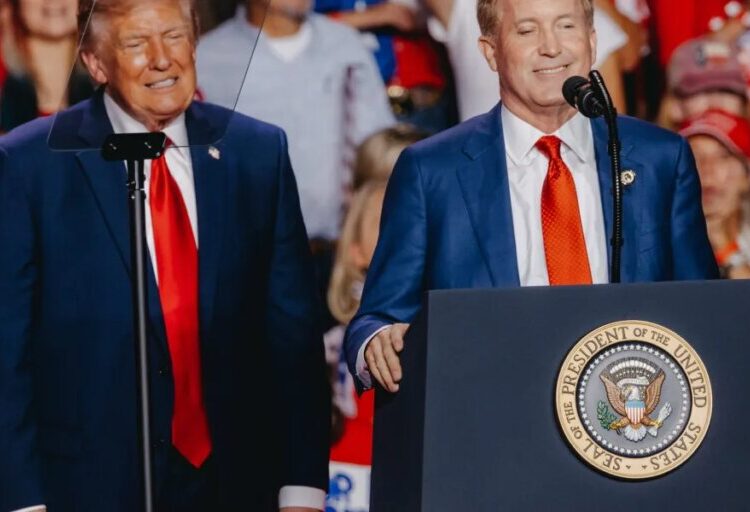
When Donald Trump returned to the White House in 2025, he was nursing grudges and claiming a mandate. The institutions he saw as his enemies—in politics, business, and education—faced a dilemma about how to respond.
A few concluded that they should resist the president’s demands of fealty and collaboration. Another group tried appeasement, seeking accommodation that would allow them to otherwise operate as usual. And some looked at the landscape and concluded that something fundamental had shifted in American politics. They saw the MAGA movement as a lasting change, and decided that their best move was to make their own radical shift to adjust.
As I wrote last week, predictions of a Trump-driven realignment of the electorate now look extremely shaky. The groups that he was able to attract to the Republican ticket two years ago—young voters, especially men; Hispanic voters; and Black men—have turned solidly against him and against GOP candidates in polls ahead of the midterms. Voters who were unimpressed with Joe Biden or Kamala Harris and who heard Trump’s promise of stopping inflation are now angry about the president’s shrugging at higher prices and inflationary war in Iran. With some distance, the 2024 election looks less like a decisive turning point and more like a fluke. But that realization has come too late for those who reshaped themselves for a reality that has proved ephemeral.
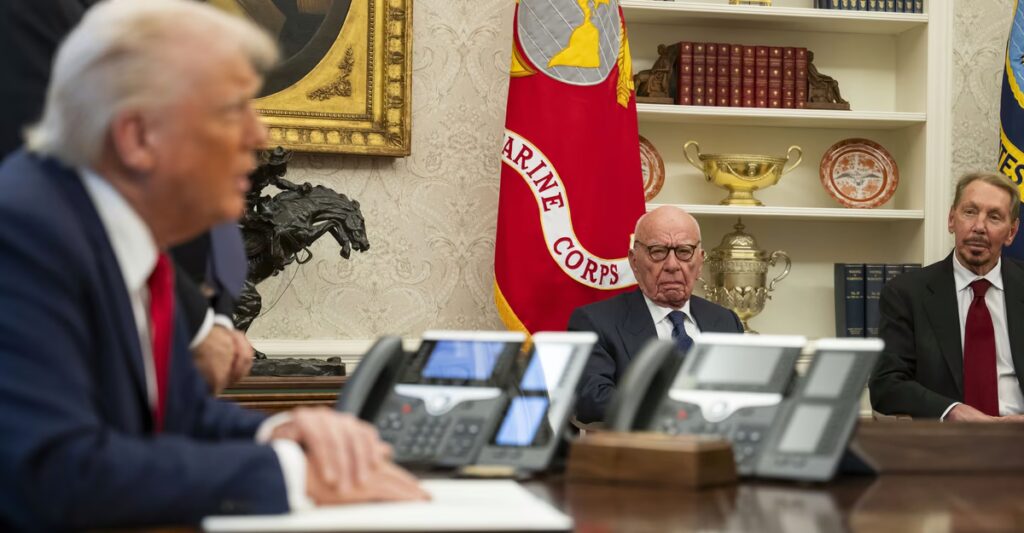
David Ellison, who, along with his father, Larry, is a friend of Trump’s, decided to use the new Trump administration as an opportunity to build a huge media conglomerate. First, his company Skydance merged with Paramount. Taking control of CBS News, he installed Bari Weiss as editor in chief, seeking a leader who would appeal more to both the White House and to conservative viewers. But Weiss’s makeover has so far looked like a flop: 60 Minutes has hemorrhaged staffers, and the Evening News has hemorrhaged viewers. Her proposition was that a slightly more conservative version of the mainstream media would bring the audience back to a struggling network, but that doesn’t appear to actually be appealing to either MAGA viewers or legacy CBS watchers.
Ellison has already moved on to an attempted merger with Warner Bros., reportedly promising administration officials deep political changes at CNN if the deal was approved by federal regulators. Ellison got approval, but now that deal is in trouble anyway. Facing an antitrust lawsuit led by the attorney general of California, Paramount agreed to pause the merger until a trial next year. Experts are divided on how likely Paramount is to prevail, but if the merger doesn’t close by September 30, the company will owe Warner Bros. shareholders $7 million every day until it does. In a New York Times column last week, Ellison complained that people are drawing incorrect inferences about his politics, but his private views are beside the point: What is public is Ellison’s willingness to play to the Trump administration’s politics to build an empire.
CBS News is not the only media interest to discover that courting MAGA news consumers is not a guarantee of success or growth. The Times also reported recently on how a range of right-wing influencers has seen audiences shrink drastically. Their travails appear to reflect Trump’s own difficulty in keeping his 2024 coalition together: The most pro-Trump figures have seen some of the biggest drops, amid ideological battles inside the MAGA coalition over Israel and the war in Iran, while more Trump-critical figures on the right have sometimes gained.
Other corporate leaders also bet on Trump. Elon Musk attempted to become something like an unelected deputy president at the start of Trump’s second term. That experiment ended acrimoniously, and the men’s relationship has been on and off ever since, but Musk’s reputation is now inextricably connected with Trump’s. X has shed users. Tesla sales have struggled, in part because anti-Trump consumers have turned against Musk and also because Musk has been distracted by other ventures, such as SpaceX.
These decisions to throw in with Trump were notable because many institutions treated his 2016 win as an accident of chance, and were happy to publicly resist him. In doing so, though, they seem to have opened the door to more direct corporate involvement in politics—and with it, greater vulnerability to political pressure. The idea that corporations had gone “woke” by embracing DEI and other progressive causes in 2020 and 2021 was to some extent a marketing ploy by the companies, but it infuriated Republicans and made them targets for Trump’s second administration. Trying to protect themselves, corporate leaders now may have overcorrected, mistakenly assuming a lasting MAGA regime.
Within right-wing politics, many individuals and organizations also leapt into Trumpism. The venerable Heritage Foundation reworked itself and lost or pushed out many long-standing scholars and staffers. Now it finds itself in an identity crisis—and also shut out of the White House because Trump is still sore about the attention and credit that Project 2025 won for driving his agenda. Many mainstream Republicans remade themselves as MAGA Republicans, but the results have not always been good. Just ask Senator John Cornyn, who lost his primary to an even-more-MAGA challenger this May.
Earlier this month, Politico’s Kathy Gilsinan reported on the broken pipeline for bringing new foot soldiers into conservative government and nonprofit organizations. “Everyone knows what the problem is: The organizations that bring young staffers to Washington, D.C. have spent the last decade prioritizing blind ideological loyalty instead of competence or intelligence,” a senior GOP congressional staffer told her. “We have a generation of rabid, incompetent idiots.”
This is the risk of betting big on a long-term realignment: If you wager wrong, politics overall will snap back quickly, but you will be stuck with the consequences of your decision for much longer.
Related:
Here are three new stories from The Atlantic:
- Tyler Austin Harper on why he quit the tenure track
- The man in charge of immigration data just resigned.
- In defense of Flock
Today’s News
- A 7.4-magnitude earthquake struck western Colombia, killing at least 111 people and causing building collapses, injuries, and widespread damage, according to Colombian officials.
- President Trump told Axios that the United States is only “semi-negotiating” with Iran as talks over reopening the Strait of Hormuz remain stalled after Tehran laid out its demands, including compensation for war damage.
- Israeli Prime Minister Benjamin Netanyahu rejected the Trump administration’s 15-point Gaza plan yesterday, saying that Israel will not withdraw its forces until Hamas is fully disarmed. The proposal, announced by Trump’s Board of Peace last month, called for Hamas to surrender its weapons in phases in exchange for a gradual Israeli withdrawal from Gaza.
Dispatches
- The Weekly Planet: Living outside is a more dreadful prospect during a heat wave, Meg Bernhard reports.
Explore all of our newsletters here.
Evening Read

If Only This Could Last Forever
By Elizabeth Bruenig
Summer always overstays its welcome by about a month. After the Fourth of July, which has its charms, nothing but a stretch of relentless heat lies ahead, reaching toward Labor Day, and I begin to yearn for fall. So does the grand, semi-malevolent intelligence that organizes American consumption: By mid-August, grocery stores are stocking their shelves with autumnal goods—pumpkin-pie Pop-Tarts, cinnamon-maple Frosted Flakes, pumpkin-spice cinnamon rolls in pressurized cardboard tubes. As I stroll through the aisles, I gaze wistfully at candy corn while the frosty supermarket air cools the sweat I worked up walking to the store beneath the blazing sun. Late September can’t arrive soon enough.
More From The Atlantic
- Radio Atlantic: Never Trump, still a Republican
- How the “body positivity” movement died
- France’s best argument against racism isn’t working.
- The watchdogs are barking themselves hoarse.
- Ukraine may be just the ally America needs.
Culture Break

Explore. Are raccoons evolving into pets? Annie Lowrey on the myth and science of the country’s favorite floofy, fluffy cuddle-badgers.
Listen closely. Conducting can look like either inexplicable magic or embarrassing nonsense. Matthew Aucoin, himself a conductor and a composer, explores the profession’s power and purpose.
Rafaela Jinich contributed to this newsletter.
When you buy a book using a link in this newsletter, we receive a commission. Thank you for supporting The Atlantic.
The post The People Who Bet Big on MAGA’s Future—And Lost appeared first on The Atlantic.