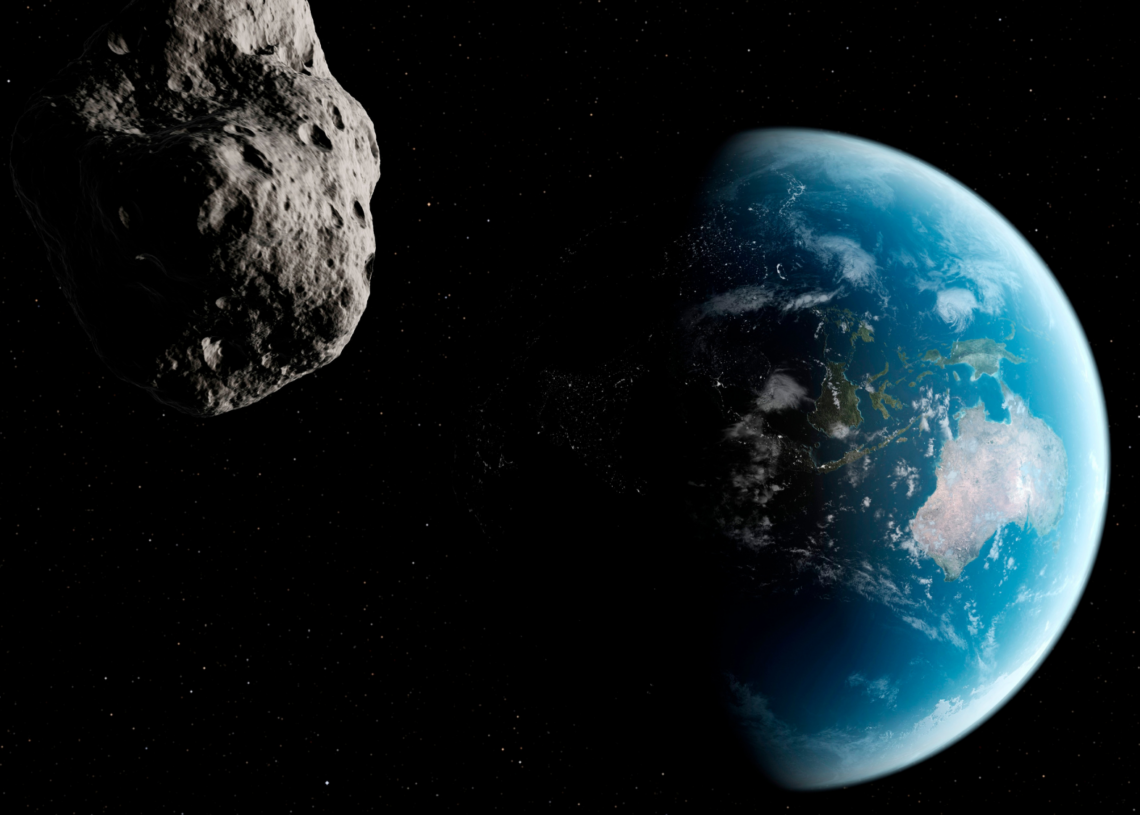
In April 2029, a potentially dangerous asteroid the size of a skyscraper will fly by Earth, sailing closer to us than even some of our own satellites. It’s going to be one heck of a spectacle for those of us on the ground.
According to Live Science, Asteroid 99942 Apophis isn’t expected to hit Earth. Scientists have crunched the numbers quite a bit, and we always come out alive in the end. Apophis will pass within about 20,000 miles of Earth on April 13, 2029, close enough to be visible to the naked eye for most people on the planet, and that’s not an exaggeration.
Up to 90 percent of the Earth’s population will be able to catch a glimpse of the asteroid that has been dubbed the “God of Chaos,” a name that isn’t really doing much to make people feel better about its chances of smacking into the planet, considering how close of a shave it will be giving us as it is. But, considering the state of things down here, maybe getting whacked with an asteroid will be an improvement.
A Potentially Hazardous Asteroid Will Fly Safely Past Earth in 2029
North America will mostly miss the spectacle, as it’ll be just outside of our view except for people living in the farthest reaches of the northeastern tip of the United States, along with Canadians living in Nova Scotia.
There is one small wrinkle that may throw a wrench in all of the currently projected smooth sailing, and it’s a subject I’ve written about quite a bit before: space junk.
As reported by Science Alert, in a study published in The Planetary Science Journal, researchers theorize that since the asteroid is flying so close to us, closer than even some of our satellites, there is a small but real chance that a piece of man-made debris in the Earth’s orbit could collide with Apophis. Thus, spoiling the scientific community’s perfect opportunity to study such an astrophysical spectacle from such close distance, as any collision with a man-made object could send it veering off course.
It sounds like the makings of a disaster movie, but all it would ruin is our chances at getting to study something this rare from this close.
The post Earth Is Getting a Front-Row Seat to One of the Rarest Asteroid Flybys Ever appeared first on VICE.