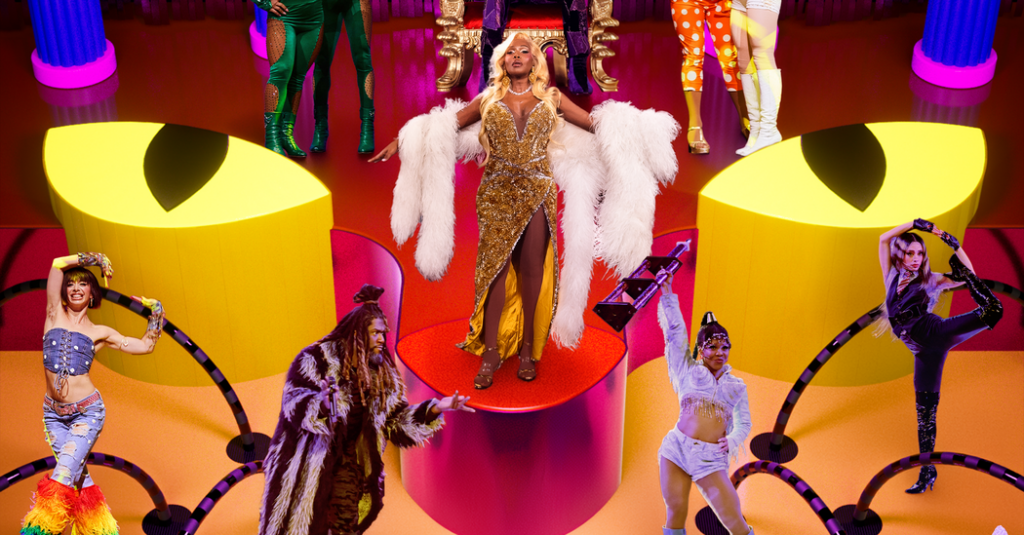
“Cats: The Jellicle Ball” is — or, now, was — like nothing else on Broadway: vibrant and Black and queer and a lot of fun. In its four-month run, the production had no trouble filling seats: Capacity rarely dipped below 90 percent. Theatergoers clacked yellow “Jellicle”-branded hand fans, purchased at the merch table, as a rotating roster of celebrity guest judges, including Angela Bassett and Anna Wintour, presided over the contest for one of the titular strays to be reborn.
But there just weren’t enough ticket buyers who were willing (or, possibly, able) to pay full price. It closes this weekend.
That’s a shame. The show, which reimagines Andrew Lloyd Webber’s feline fantasia as a ballroom competition and features a catchy number about shoplifting, feels subversive, especially in a season when top honors at the Tony Awards went to more conventional fare, like “Schmigadoon!,” a parody of Golden Age musicals adapted from a TV series, and “Ragtime,” a broad-strokes retelling of early 20th-century American history. As Betty Buckley, the original Grizabella from the original “Cats,” wrote in April, “Broadway grows and stays relevant when it listens to the culture outside.”
Following the news that “Jellicle Ball” would close, Mr. Lloyd Webber lamented on Instagram that bringing a show to Broadway makes “practically no financial sense.” He begged theater owners, unions and producers to come together to address this budget crisis. He’s not wrong. The current conditions are untenable, and all of the parties he mentions need to consider what concessions they’re willing to make. When a show is struggling, wealthy creatives could choose to waive their own royalties — as Mr. Lloyd Webber, who is also a theater owner in Britain, did in this case. But it wasn’t enough.
Since Broadway reopened after the pandemic shutdowns, there has been a shift from four out of five new shows failing to recoup their initial investments to nine out of 10. It has been an especially difficult climate for musicals, which cost more to produce and run. “Jellicle Ball” was capitalized at a relatively modest $18 million, when as much as $30 million or more is not unusual for a musical. It still couldn’t find its legs. Rising costs have led to a number of flops in recent seasons — including “Tammy Faye” and “The Queen of Versailles.”
Lately, many American producers are opting to mount new material in London, where lower costs for labor and rent, as well as more generous government support, make balance sheets less precarious. (New York State allocated $150 million in May to extend a tax credit program that benefits the performing arts, though it’s still less generous than similar support in Britain.) Producers also point to the labyrinth of union rules governing Broadway, including minimums for the number of workers and hours required to perform tasks that could be done with fewer people, a pain point that unions need to be willing to negotiate. It’s also true that the West End pays less than Broadway minimums.
There are countless reasons behind the demise of any Broadway show, each of which is essentially a start-up business taking its chances in a volatile market. There is no denying that skyrocketing costs — including global issues like tariffs and gas prices, and industry-specific ones like labor and technology — are squeezing profit margins razor thin. A weekly gross close to $1 million used to be a benchmark for success. “Jellicle Ball” cost nearly $1 million to run per week, meaning it needed to earn that much over seven days just to break even. As high as Broadway ticket prices may be (around $150 each is average for a musical), box office receipts struggle to keep up with production costs.
Mr. Lloyd Webber is correct that Broadway is in a tight spot, but as anyone accustomed to the losing odds of producing on Broadway will tell you, there are meaningful measures of success beyond making a profit. A show can have cultural impact just because it was staged.
“Jellicle Ball,” which premiered Off Broadway in 2024 at the Perelman Performing Arts Center, gave 17 of its 28 cast members their Broadway debuts. Many of those involved are Black, Latino and trans artists rarely granted mainstream opportunities. The costume designer Qween Jean became the first openly transgender person to win a Tony Award. The directors, Zhailon Levingston and Bill Rauch, and the choreographers, Omari Wiles and Arturo Lyons, also took home Tonys for their intrepid work.
André De Shields, who was nominated for a Tony for his performance, has suggested that “hate and intolerance” are to blame for the show’s curtailed run. A representative for the show said it drew a notably diverse audience, including many who are most likely not Broadway regulars. Expanding the theater audience is a good thing. But Broadway, in the end, is in the business of selling full-price tickets, which means it has to draw a crowd that can afford them, including tourists and suburbanites. Despite the show’s great press, it didn’t draw enough of them.
Producers and theater owners may point to “Jellicle Ball” as an excuse to play it safe. They shouldn’t — and the success of the original “Cats” is one of the strongest arguments.
Consider what an oddball idea “Cats” was to begin with: The original production lacked many of the conventional attributes of a musical — like a real plot. But it ran for 18 years. Broadway was different then, with lower overhead costs and less competition from other forms of media. But the necessary role of Broadway as a playground for risk-taking and innovation persists.
For what it’s worth, the party isn’t over yet: Atlantic Records is set to release a cast recording this winter, and producers have reportedly expressed interest in mounting a London run and an American tour, both of which offer ways to make up for financial shortfalls on Broadway. Even as it recedes into Broadway history, “Jellicle Ball” will live on, and not just as a beautiful memory.
Naveen Kumar is a critic and journalist. He is the associate director of the National Critics Institute.
Source images CBS Photo Archive; Jose A. Alvarado, Jr.; NBC; and Paula Lobo, via Getty Images.
The Times is committed to publishing a diversity of letters to the editor. We’d like to hear what you think about this or any of our articles. Here are some tips. And here’s our email: [email protected].
Follow the New York Times Opinion section on Facebook, Instagram, TikTok, Bluesky, WhatsApp and Threads.
The post Why a Fabulous Broadway Show Can Fill Its Seats and Still Close appeared first on New York Times.