TOKYO — The only country to have experienced atomic bombings in war has long upheld its “Three Non-Nuclear Principles” as a core policy, under which Japan does not possess, produce or permit the entry of nuclear weapons.
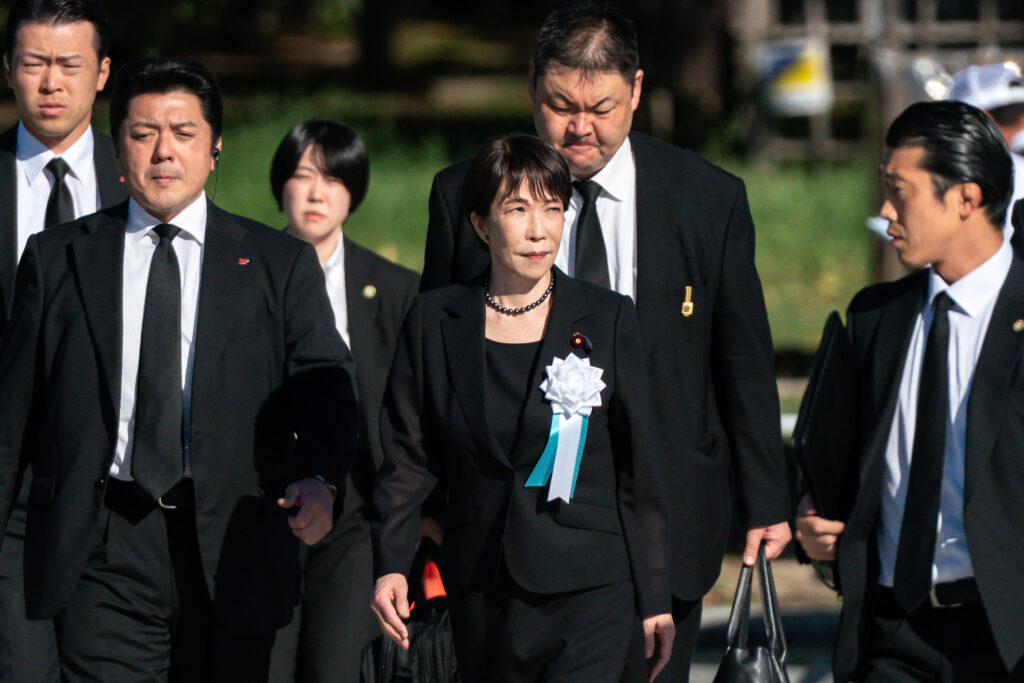
But in remarks lent weight by their time and place, in Hiroshima on the 81st anniversary of the U.S. atomic bombing of the city during the Second World War, Prime Minister Sanae Takaichi stepped carefully to avoid a clear reaffirmation of that commitment.
“Japan is upholding the Three Non-Nuclear Principles,” she said in remarks at a memorial ceremony Thursday. Unlike recent prime ministers who pledged to maintain the principles going forward, Takaichi limited her remarks to a description of the present policy, leaving future commitments ambiguous.
The Three Non-Nuclear Principles, endorsed more than 50 years ago by parliamentary resolution, retain widespread popular support.
Takaichi, an ultraconservative security hawk, has previously advocated reconsideration of the third principle, which bars nuclear weapons from the country, arguing that Japan cannot fully rely on U.S. nuclear deterrence if such restrictions remain in place.
Defense Minister Shinjiro Koizumi told reporters last month that “all policy options should be discussed without taboo.”
The Japanese government plans to revise its national security strategy by the end of the year, and Takaichi’s remarks have fueled speculation that her government is laying the groundwork for a possible step toward changing the Three Non-Nuclear Principles.
Such a move would be controversial in Japan, where atomic bomb survivors have spent decades preserving the memory of Hiroshima and Nagasaki and leading global efforts toward nuclear disarmament.
Takaichi argues that the country is in an increasingly menacing security environment, with threats in the region from nuclear-armed Russia, China and North Korea.
An article published Thursday in China Daily, a state-run English-language newspaper, reported that Chinese authorities had “slammed Japanese right-wing forces for politically exploiting the nation’s identity as a nuclear bombing victim for sympathy and seeking possession of nuclear weapons.”
Chinese Foreign Ministry spokesman Lin Jian connected Takaichi’s remarks to broader efforts to step up Japan’s security posture, in a statement paraphrased by China Daily.
Catch up quickly every weekday morning with a rundown of the 7 most important and interesting stories. Sign up for The 7 newsletter.
The post On Hiroshima anniversary, Japan’s premier shifts tone on nuclear policy appeared first on Washington Post.