Jon Cowan is the president of Third Way, where Matt Bennett is an executive vice president.
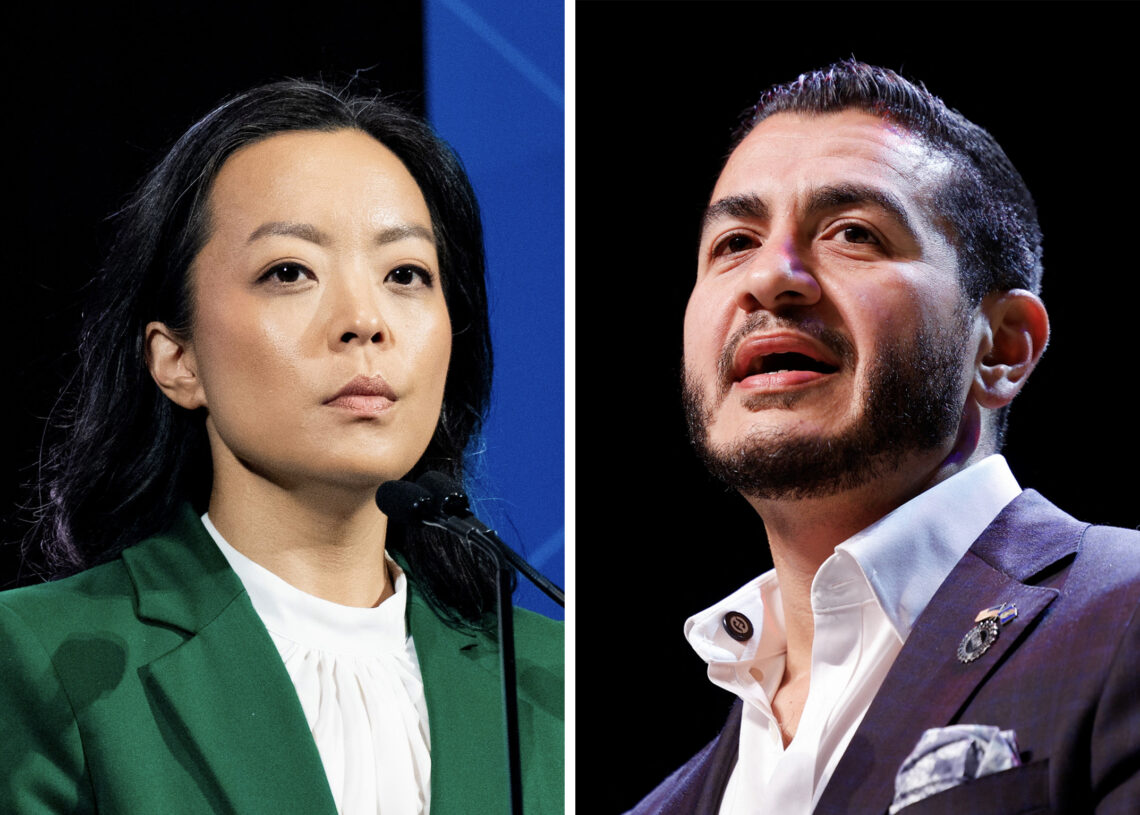
The far left is having a moment, and Democratic presidential aspirants are no doubt watching. Progressive activists think they have the key to winning all over the map, buoyed by Abdul El-Sayed’s narrow victory in Michigan’s Senate primary, Wisconsin gubernatorial candidate and state Rep. Francesca Hong’s polling advantage ahead of the Aug. 11 primary and scattered wins by Democratic Socialists of America-aligned candidates. But presidential hopefuls be forewarned: Three warning lights are blinking red.
First, even in what looks like a strong Democratic year, these candidates are testing the limits of political gravity. Take Michigan, a swing state that Donald Trump won twice. El-Sayed won his primary by just one point, and he ran up the score with highly educated voters while underperforming with the demographic Democrats need to win in the fall: White voters without college degrees. To get them back, he’ll need to drop the radicalism: Stop hanging out with left-wing provocateur Hasan Piker and ducking questions about Israel’s right to exist, and be clear that he supports the police and no longer seeks to abolish U.S. Immigration and Customs Enforcement. The clock is ticking — Republicans are already running an ad showing El-Sayed calling himself “dangerous.”
Hong is a DSA member who wants to move toward “a world without prisons” and oncesaid Thanksgiving should be canceled (she’s since walked that back). It won’t take a political mastermind to leverage this rhetoric against her. If she is the nominee and loses in November, a crucial swing state will have a MAGA Republican governor in 2028 who still refuses to accept the results of the 2020 presidential election.
Of course, El-Sayed and Hong could win, because Trump is staggeringly unpopular. But Trump will be on his way out the door in 2028, so presuming that any Democrat, no matter how far left they run, could win these presidential swing states is a strategy based on wishful thinking, not reality.
Second, moving far to the left is poison in a presidential general election campaign. In the 2020 primary race, Kamala Harris adopted a range of fringe positions under pressure from progressive activists. She flamed out quickly. Then, as the nominee in 2024, she struggled to distance herself from the ideas she embraced in 2020. Add to that the Biden administration’s border policy and failure to contain inflation, and voters rejected a ticket they felt had drifted too far left.
Polls in 2024 consistently found that more voters viewed Harris as “too liberal” than viewed Trump as “too conservative.” The spread was 18 points in the Progressive Policy Institute’s post-election survey of working-class voters (a huge gap in an election decided by less than two percentage points). Harris’s own campaign chair said afterward that the campaign was “up against a caricature of being dangerously liberal” — a caricature built on positions Harris and other Democrats had actually taken, and one the campaign spent hundreds of millions of dollars trying and failing to shake off.
They had to try, because the math is inescapable. Exit polls in 2024 showed the general electorate self-identifies as 42 percent moderate, 35 percent conservative and 23 percent liberal. Given that imbalance, a Democrat must win at least 60 percent of moderates to become president. Winning a simple majority isn’t enough: Harris won 57 percent, Hillary Clinton 52 percent and John F. Kerry 54 percent. As a Democratic nominee, if you get 60 percent of moderates, you’re president. If you don’t, you lose.
Third, presidential primaries are unique. Even in Michigan, the Senate primary electorate split evenly on El-Sayed, and the political dynamics are likely to be very different in two years. Though turnout was high this year, presidential primary electorates in Michigan tend to be bigger than in the previous midterms. That will probably be even more true in 2028, when Michigan is one of the early states in the primary calendar that will get enormous amounts of candidate time, political spending and media attention.
Moreover, what voters look for in a primary candidate for governor or senator is different from what they seek in a presidential nominee. They want a winner. In 2028, electability will eclipse everything else for voters in South Carolina, Nevada, New Hampshire and, yes, Michigan. Their central question is likely to be: “Which of these people can beat JD Vance or Marco Rubio?”
For a lot of Democratic primary voters, picking the most electable candidate does not mean settling for a safe, dull choice. Third Way polling shows that 38 percent of Democratic primary voters identify as moderate or conservative, while only 31 percent call themselves “very liberal.” But Democratic voters, regardless of ideology, almost certainly want a candidate who fights for working people, stands up to Trump Republicans and leads with authenticity — attributes that a candidate from any wing of the party can possess.
So, for presidential hopefuls, the right response to this political moment is combative centrism that challenges the status quo, not caution or socialism. Democrats should be picking fights with Trump. But there is a difference between fighting hard and veering left. Voters reward the former; they have repeatedly punished the latter.
In 2024, the electorate told Democrats, in plain language and painful detail, that it found the party too extreme. Some 2028 hopefuls may be tempted to move further in the direction voters rejected. That’s not resistance, that’s amnesia.
The post Democrats are calculating a left turn. The math is inescapable. appeared first on Washington Post.