DNYUZ
No Result
View All Result
DNYUZ
No Result
View All Result
DNYUZ
Home News

Meteor shower dubbed ‘the Perseids’ will follow a solar eclipse on August 12 — and will light up the sky from North Carolina to Alaska

August 6, 2026
in News
Meteor shower dubbed ‘the Perseids’ will follow a solar eclipse on August 12 — and will light up the sky from North Carolina to Alaska

Stargazers will have a spectacular week of skywatching, as a meteor shower follows a solar eclipse that will sweep across parts of the continental United States from August 12 to August 13.

The eclipse will be partial and will only take a “small bite out of the Sun,” according to NASA, with the amount of lunar overlay varying by location from North Carolina to Alaska.

Visible debris breaking off the subsequent shower, dubbed “the Perseids,” will peak on the evening of August 12 into the early morning hours of August 13 with a path of totality across Greenland, Iceland and Spain.
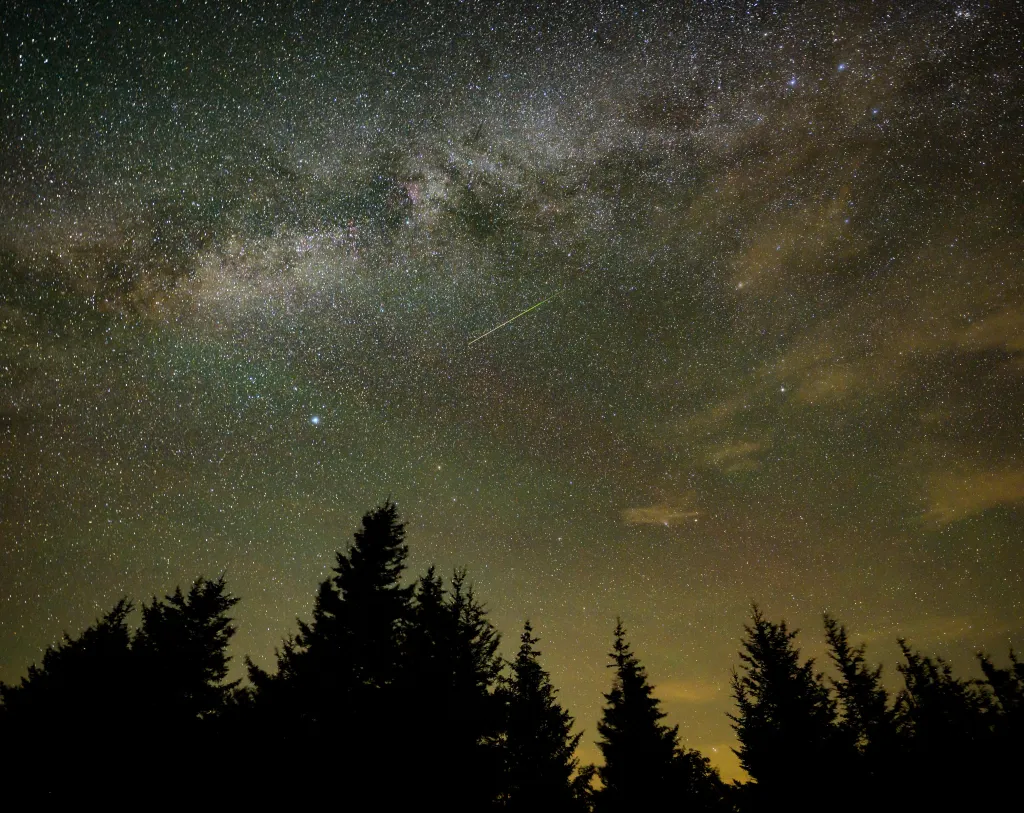
A meteor streaks across the sky filled with stars and faint clouds, above a silhouette of evergreen trees.
The Perseid meteor shower is expected to peak about Aug. 12-13, and with a new moon, may have optimal viewing if skies are clear. USA TODAY Network via Reuters Connect

As the Earth passes through the debris stream of the Comet Swift-Tuttle, “tiny bits of comet dust hit our atmosphere at high speed, they burn up as bright streaks of light,” creating the aerial phenomenon known as a “shower,” according to NASA.

50 to 100 meteors can be seen per hour, making the Perseids the most plentiful of all annual meteor showers alongside the presence of “fireballs.”

Fireballs, or unusually bright meteors — often called “shooting stars” — are meteors that shine brighter than the planet Venus.

These dazzling light displays are caused by significantly larger pieces of space rock, such as direct fragments from asteroids or comets, entering Earth’s atmosphere at very high speeds.
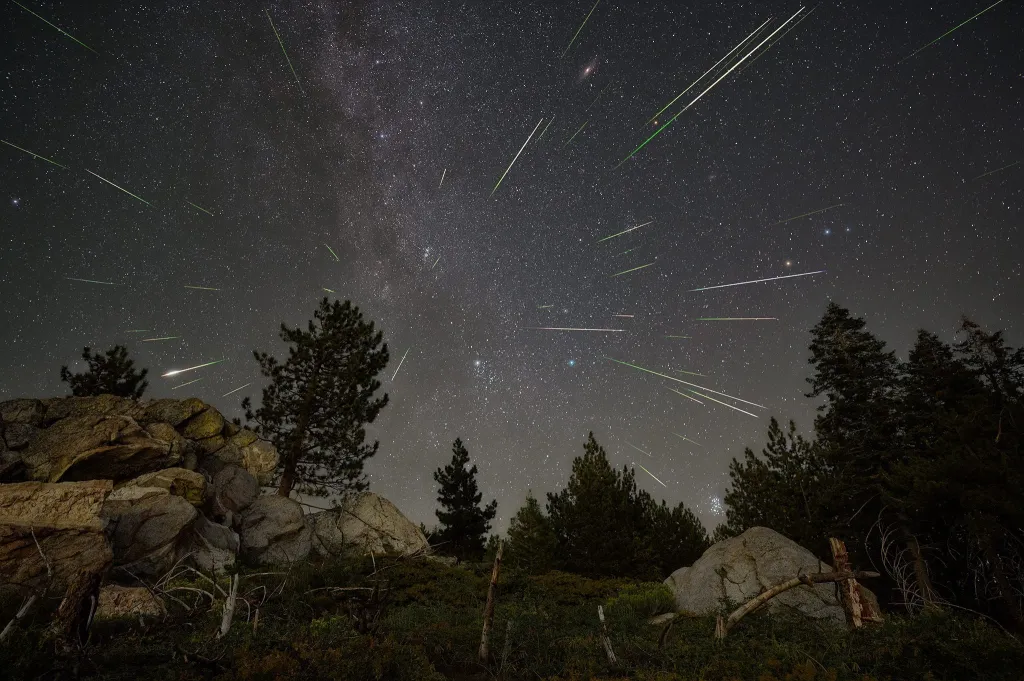
The Milky Way and numerous bright meteors streak across a dark night sky over a rocky, forested landscape.
Visible debris breaking off the subsequent shower, dubbed “the Perseids,” will peak on the evening of August 12 into the early morning hours of August 13 with a path of totality across Greenland, Iceland, and Spain. USA TODAY Network via Reuters Connect

The new moon arriving on August 12 will create ideal, dark conditions in the skies. 

NASA instructs astrophiles to look toward the northeast and watch the Perseus constellation clear the horizon, where the meteors originate — however, they can appear anywhere.

The post Meteor shower dubbed ‘the Perseids’ will follow a solar eclipse on August 12 — and will light up the sky from North Carolina to Alaska appeared first on New York Post.


‘RHOBH’ star calls it quits after 1 season despite Rihanna begging her to stay
News

‘RHOBH’ star calls it quits after 1 season despite Rihanna begging her to stay

by Page Six
August 6, 2026

 Amanda Frances, you will be missed. The reality star announced she’s leaving “The Real Housewives of Beverly Hills” after only ...

Read more
News

Wisconsin socialist Francesca Hong walks back bizarre claim to cancel Thanksgiving — now says it’s her favorite holiday

August 6, 2026
News

Israel’s killing of journalist Amal Khalil was a war crime, rights group says

August 6, 2026
News

Meteor shower dubbed ‘the Perseids’ will follow a solar eclipse on August 12 — and will light up the sky from North Carolina to Alaska

August 6, 2026
News

X’s product chief is stepping down to ‘take a breather’ after a year of running the app ’24/7′

August 6, 2026
Perez Hilton’s Family Has ‘Very Little Information’ on His Condition After Self-Harm Incident

Perez Hilton’s Family Has ‘Very Little Information’ on His Condition After Self-Harm Incident

August 6, 2026
Uber’s CTO says the company is coming to the end of its tokenmaxxing era

Uber’s CTO says the company is coming to the end of its tokenmaxxing era

August 6, 2026
Measles panic at popular SoCal theme park after infected guest roamed for hours

Measles panic at popular SoCal theme park after infected guest roamed for hours

August 6, 2026

DNYUZ © 2026

No Result
View All Result

DNYUZ © 2026