There’s a moment early in the fourth season of “Ted Lasso” when Keeley Jones, the bubbly marketing guru played by Juno Temple, stands before AFC Richmond’s shareholders and announces the launch of the English soccer club’s long-gestating women’s squad.
“This has been three years in the making,” Keeley says, “and we’re finally here.”
The character, of course, is referring to the time it took to get a pro soccer team off and running. But the meta-remark also acknowledges the obvious: The Emmy-winning comedy has been off the air for three years ahead of its return Wednesday on Apple TV.
It’s a case study in modern streaming. After “Ted Lasso” followed up its acclaimed 2020 debut with a second season less than a year later, the third installment came after a 16-month hiatus. Now, this fourth season marks a soft reboot as “Ted Lasso” returns with a new assignment for Jason Sudeikis’s folksy coach and a refreshed cast.
It speaks to streaming’s fluidity that a hit series can follow such an irregular release pattern. Nowadays, streaming is divided between the flash-cooked satisfaction of annually released shows and those cinematic series that may simmer for years between seasons.
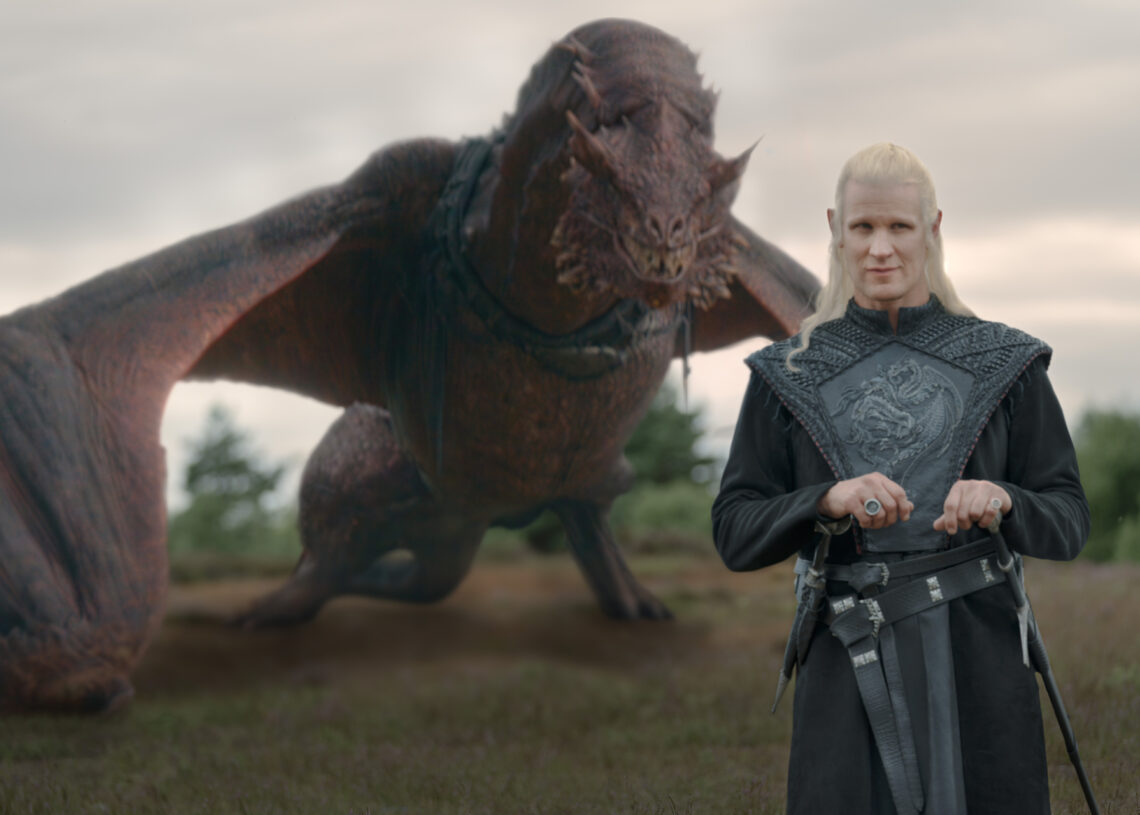
Take the combustible kitchen dramedy “The Bear” and the fantasy epic “House of the Dragon,” which premiered in the summer of 2022; both series returned in June, but “The Bear” was on its fifth and final season while “House of the Dragon” was debuting its third. In the spring, the zeitgeist-tapping drama “Euphoria” aired its send-off season after four years off the air. The Emmy-hoarding comedy “Hacks” also said farewell — having released four of its five seasons during that “Euphoria” hiatus. The medical drama “The Pitt” and the mystery-box thriller “Severance” are both filming their third seasons, though the former debuted in 2025 and the latter has been airing since 2022.
Those spaced-out shows are among the most beloved on television. But keeping up with a series after a long pause can be easier said than done. Last month, Bloomberg reported on Netflix’s struggles to retain viewers for second seasons. One likely factor: Many of the series taking lengthy breaks between seasons are the same ones that rely on intricate plotting and complex characters to enchant audiences.
“I won’t name them, but there’s two or three shows where my wife and I were like, ‘We loved Season 1, and we don’t have the energy to go back and catch up on every detail,’” says John Hoberg, an executive producer on the dystopian thriller “Paradise” who is married to his writing partner, Kat Likkel. “That’s a bummer.”
The trend picked up steam in the early 2010s, when Netflix began pouring resources into prestige shows and the HBO blockbuster “Game of Thrones” raised audience expectations. As other streamers invested in original series and Hollywood’s top talent embraced long-form storytelling, more cinematic shows populated the landscape. With an uptick in scale came more location shoots. Grander visual effects. Bigger-name actors.
“TV became more ambitious,” says Jen Statsky, a co-creator of “Hacks.” “It takes more time to shoot, it takes more time to edit, and you simply can’t stay on the cadence of coming out as often.”
Certain shows have proved worth the wait. When “Stranger Things” returned for its fifth and final season last fall, after three years away, the 59.6 million views in the first five days set Netflix’s English-language record. The second season of “Severance” — also released after a three-year wait — yielded the best viewership in Apple TV history before snagging eight Emmys. “House of the Dragon” returned this summer to series-best reviews and a marginal viewership decline, which was chalked up to competition from the World Cup.
“They’re aiming for the production quality of a Hollywood feature,” says Caetlin Benson-Allott, a Georgetown University professor who specializes in film and media studies. “One of the things that’s implicit here is if you want cinematic television, then sometimes you’re going to get seasons that come out on the schedule of movie sequels — not linear TV seasons.”
It’s why YouTubers such as Brendon Boutin — a.k.a. Man of Recaps — have carved out a niche jogging viewers’ memories. A video editor by trade, Boutin began creating recap videos when he was the “Game of Thrones” obsessive answering his friends’ questions about all of the characters, locations and plotlines they’d forgotten between seasons. In 2019, his primers for the final season of “Game of Thrones” and the big-screen Marvel blockbuster “Avengers: Endgame” each yielded more than 2 million views — convincing him of the enterprise’s endurance.
The formula is simple: After cutting together highlights from past seasons of shows such as “Bridgerton” and “The Boys,” or past movies in ongoing film franchises, Boutin turns the camera on himself as the footage rolls and he speed runs through the plot points. He delivers his unscripted narration with unbridled enthusiasm and a dash of irreverence. Although some multi-season recaps clock in at a half-hour, most of his videos hover around the 10-minute mark.
“When a show comes back out and it’s been two, sometimes three years, the ‘previously on’ that you see just doesn’t cut it,” Boutin says. “I try to bring you through so it feels like you’re doing a full rewatch of the season but in a very short time, because that’s what it takes these days. You binge it all in a weekend, and then two years later, it’s like, ‘I couldn’t tell you what’s going on.’”
But those recaps aren’t necessary for unicorns such as HBO Max’s “Hacks,” which reliably came out every 12 months while consistently gleaning strong viewership, critical acclaim and awards adoration. (The third season, released after a nearly two-year hiatus, was delayed by the Hollywood strikes and star Jean Smart’s heart procedure.) Last month, the final season set a comedy series record with 24 Emmy nominations.
“It was always a conversation for us,” says Paul W. Downs, who created the show with his wife, Lucia Aniello, and Statsky. “We always wanted to deliver the show on a cadence that felt like it was reliable to the viewer. But also we always wanted to make the show in the way that we had and maintain the quality — if not exceed the season before.”
To Downs, Aniello and Statsky, that meant a straightforward sacrifice: giving up their nights, weekends and vacation time. “We have maybe 48 hours between seasons, and I’m not exaggerating,” Aniello says. “It is very taxing on the mind, body and soul. But it really has worked for us.”
After the writers’ room knocked out eight or nine scripts for a 10-episode season, the creative team would plunge into production while polishing off the remaining scripts, prepping upcoming episodes and editing footage as it came in. Between that exhausting but efficient approach and the half-hour sitcom’s relatively uncomplicated premise — about the love-hate relationship between a seasoned stand-up comic and her Gen Z protégé — “Hacks” repeatedly hit its annual deadline.
“We do treat our show like every episode is a movie,” Downs says. “It’s just we don’t have an hour of material, and we don’t have dragons to add, and we don’t have — I’m looking for a joke — the self-preservation not to work on weekends.”
Hulu’s “Paradise,” on the other hand, was always envisioned with a “big network 2000s quality to it,” says producer and writer Hoberg. Focused on an underground society in a postapocalyptic United States, the pulse-pounding series features myriad characters, parallel timelines and no shortage of lore. So creator Dan Fogelman and his collaborators pledged to regularly release episodes to help the audience follow the twisty narrative and swiftly pay off its season-ending cliff-hangers.
“From the beginning, we wanted this to be a show that our nephews would watch and that our aunts would watch and our uncles would watch,” Hoberg says. “One of the things we were talking about was, ‘My aunt’s not going to stick around for two years and then try to remember everything.’”
One key to achieving that: Hulu green-lit the writers’ room to start working on the second and third seasons months before the previous season had aired, let alone been renewed. Had the series flopped, it would’ve been a sunk cost. But once the renewal order came in, Hoberg says the show was positioned to get a “rolling start” on the next season — scouting locations, designing sets, finalizing scripts — before diving back into production just a few weeks later.
“You need to have a bit of a network television approach, in some ways, mentally, to do that,” Hoberg says. “But I do hope, just as a viewer and someone who loves the business of television, that it becomes more of the norm again, because I think audiences want it.”
If “Paradise” has traded any quality for expedience, you wouldn’t know it. Viewership increased with every episode of the second season, which counted a nomination for outstanding drama series among its seven Emmy nods.
Could the success of “Paradise,” “Hacks” and other annual Emmys darlings — such as “The Pitt” and “The Bear” — leave a road map for streamers? Or will viewers continue to accept lengthy waits in exchange for top-tier television from the likes of “Severance” or “House of the Dragon”? It’s a question Statsky answers by circling back to her storytelling instincts.
“People still, at the end of the day, do respond to authenticity and originality,” she says. “So that’s the only thing that can guide us at this point.”
The post Your favorite TV show has taken years to return. How did we get here? appeared first on Washington Post.