The signs of a committed jihadist were there. Violence. Propaganda. Attempts to travel abroad to join a terrorist group. And finally, deception.
German officials had for months documented them all in Abdul Rahman Toufiq Ballout, a Berlin-born German citizen of Lebanese descent. By age 21, he had a history of criminal convictions and terrorist aspirations so extensive that law enforcement officials were authorized to secretly surveil him. He met in recent weeks with de-radicalization specialists, who concluded he was too deeply committed to his extremist views to be helped.
None of it mattered. He was released from juvenile detention, which holds offenders up to 21 years old, two months ago after a failed attempt to join the Islamic State, the terrorist organization known for its extreme cruelty.
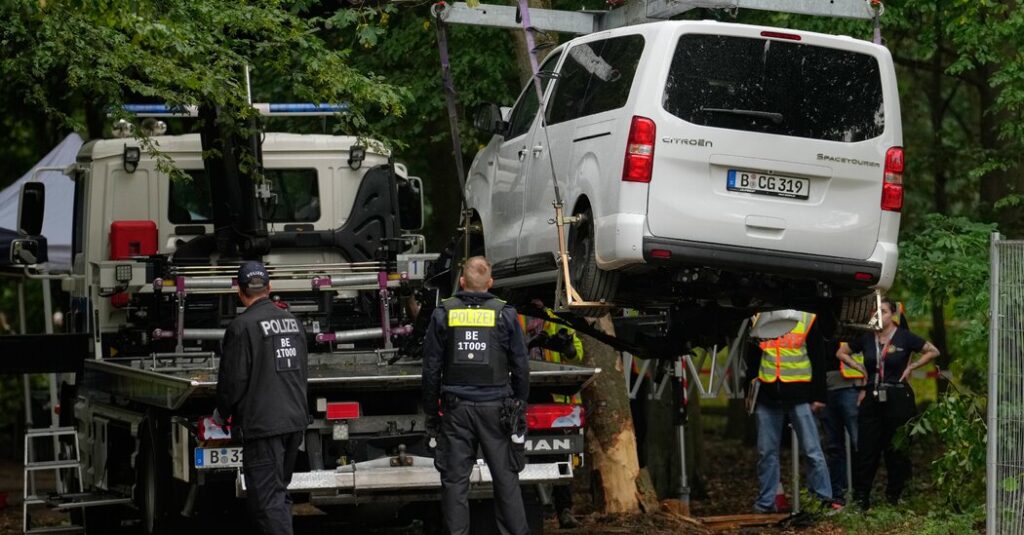
Then, on Saturday night, Mr. Ballout rammed a van into a crowd of revelers leaving a gay Pride celebration in Berlin’s Tiergarten park and attacked with what appeared to be a machete. He killed one woman and injured 29 other people. After a daylong manhunt, the police shot him to death in a confrontation on Sunday.
Since then, political leaders, law enforcement officials and people across Germany have been consumed by one question: How, given everything the government knew about him, was Mr. Ballout free to act?
“We must answer,” Chancellor Friedrich Merz of Germany told reporters, “how it was possible for a man classified in this way here in Berlin to go unhindered” and attack the Pride celebration?
Mr. Ballout’s case has prompted finger-pointing among government officials as Germany grapples with persistent extremist violence and weighs changes to a legal system that failed to stop his deadly machinations. Prosecutors had objected to his release from detention. The federal judiciary and its security leaders are engaged in a rare and increasingly bitter public blame game over interpretations of German law and responsibility for preventing Mr. Ballout from carrying out his attack.
“The failure was not that the risk was undetected,” said Adrian Shtuni, an associate fellow with the International Center for Counter-Terrorism, a research group. “It was a systematic mismatch between the gravity of the assessed threat and the leniency of the legal and operational response.”
He added, “All gave too little weight to Ballout’s proven commitment to jihadist violence.”
Mr. Merz, his interior minister, Alexander Dobrindt, and their center-right party, the Christian Democrats, have called for an overhaul of laws meant to deter and detain terrorists.
Other center-right leaders have begun to echo calls from the far-right Alternative for Germany, which has pushed to strip terrorists of their German citizenship and deport them.
Some German leaders have urged caution. “A thorough investigation must be the first priority before we draw any legal policy conclusions,” the chairwoman of Germany’s Conference of Justice Ministers, Anna Gallina, told Funke Media.
The political furor has been fueled by a realization that Mr. Ballout did not slip through the cracks. Instead, he was on the radar of multiple arms of the German security and law enforcement networks.
As a teenager, Mr. Ballout was convicted of assault and of a theft at a train station. He left school after 10th grade and worked odd jobs, his father, Tawfik, told Der Spiegel, a leading German news organization.
His father said he had prohibited his son from growing a long beard, and that they had argued about it. He told Der Spiegel that he has concluded that his son Abdul had been “brainwashed,” though he did not say by whom.
In 2024, Abdul Ballout published illegal Islamic State propaganda on his Instagram account, German investigators said. That November, according to reports in the German newspaper Die Zeit, he changed his WhatsApp status to a picture of his cousin, Abu Bilal, an Islamic State fighter who died in battle in Iraq in 2015.
Mr. Ballout tried to fly in May 2025 to Mauritania, near other countries in West Africa that are hubs for Islamist extremism. He never made it. Prosecutors did not say why he picked that destination, or why the trip failed. But he tried again later that same month, flying to Turkey and making his way to Lebanon with the hope of traveling on to Syria to enlist with the Islamic State.
He was on what experts describe as a well-worn path to radicalization. A decision or attempt to travel abroad to join a terrorist organization is among the surest signs of a committed jihadist, experts said.
“If you demonstrate your willingness to travel, you’re firmly committing to the cause,” said Douglas Weeks, a researcher who focuses on European extremism. “That’s probably a good jumping-off point at making a distinction between those who are committed and those who are sympathetic.”
In Lebanon, the German authorities said, Mr. Ballout made contact with possible members of the Islamic State but was arrested on July 24, one year and one day before his rampage in Berlin. He was convicted of incitement to religious and sectarian conflict, and a military court in Lebanon sentenced him to three months in prison.
When he returned to Germany on Nov. 17, the police in Berlin were waiting. He was arrested. He was held in pretrial detention and sentenced by a juvenile court panel of judges in May to 22 months in prison for offenses that included “preparing a serious act of violence endangering the state,” stemming from his failed attempts to join the Islamic State abroad.
Prosecutors sought a longer sentence. While their appeal was pending, the juvenile-court judges released Mr. Ballout under the supervision of a probation officer. To continue detaining Mr. Ballout, a court spokeswoman, Lisa Jani, said in a news release, the court would have needed to find “intent to flee, reoffend, or conceal a crime” — and it did not.
Prosecutors, who had sought a stiffer sentence, said the court had considered several factors it viewed as mitigating. They cited the nine months he had already served in detention, attempts he made to distance himself from ISIS and the lack of any overt threat.
After he was freed, the authorities secretly installed a camera near his apartment in southwest Berlin so investigators could monitor his comings and goings, among other surveillance measures. Berlin Criminal Police, had classified Mr. Ballout as a “high-risk individual” in January.
Mr. Ballout was not required yet to seek counseling, but his probation officer nevertheless urged him to do so, according to Cornelia Lotthammer, head of communications for Violence Prevention Network in Berlin. Its experts try to counter ideologically motivated violence.
De-radicalization specialists from the group met with Mr. Ballout on June 15 and July 8 to try to determine whether he could be helped. Ms. Lotthammer described his interaction with her group as a probationary period.
“His extremism was deep,” she said. “He was very radicalized.”
A third meeting had been scheduled for this past Monday, just after the Saturday night attack, she said. After it, the group was due to let a court know its findings.
“He surely knew there were three meetings and there would be a decision,” Ms. Lotthammer said.
Such de-radicalization programs are designed to offer a potential off-ramp for those with dangerous extremist views. The programs have become more prevalent in Europe since the rise of the Islamic State attracted interest from thousands of Europeans — including many who went to Syria and Iraq to fight.
Such programs can fail. A convicted terrorist who had attended de-radicalization classes attacked passers-by on London Bridge in 2019, fatally stabbing two people. The effectiveness of such programs was debated in Germany in 2020 after a man who was ordered to seek counseling stabbed two tourists in Dresden. One of the victims died.
Experts said de-radicalization efforts are generally more helpful when a person is in early stages of radicalization and voluntarily seeks assistance. Mr. Shtuni said that Mr. Ballout should not have been a viable candidate for de-radicalization programs because of his troubled history.
Since the attack, Germany’s government and judiciary have entered an unusually public dispute over who bears responsibility for failing to prevent it.
Mr. Dobrindt, the interior minister, argued that Mr. Ballout should have remained in custody after his most recent conviction. He said he had “no understanding for the decision to suspend this sentence on probation.”
It was a rare rebuke. It prompted an equally unusual response from the Tiergarten District Court, the juvenile court that ruled on the suspect’s sentence. The court issued a news release that said preventing threats was the responsibility of the security authorities — and that under German law, it was the court’s job to ensure it did not unfairly deprive people of liberty.
The post German Authorities Knew of Pride Attacker’s Extremism in Months Before Attack appeared first on New York Times.