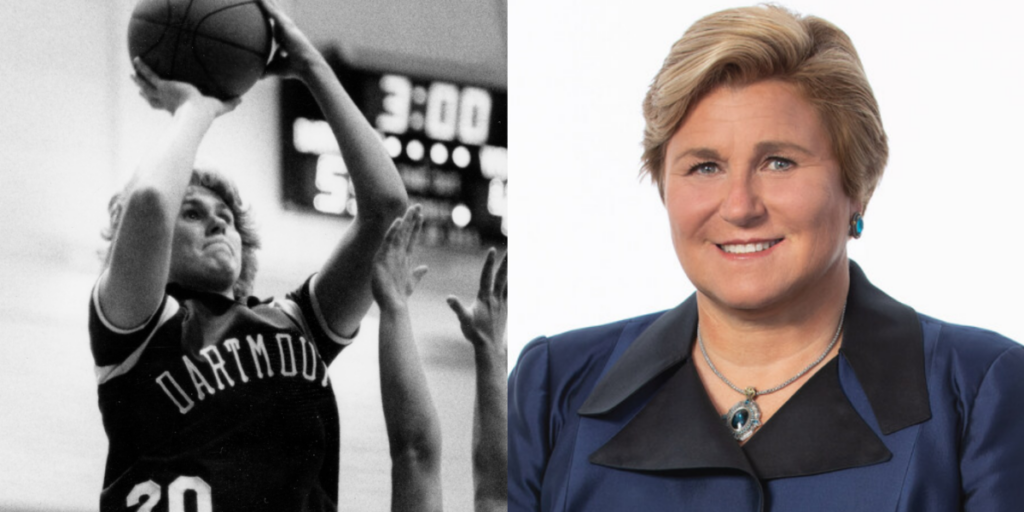
Elevance Health CEO Gail Boudreaux didn’t start her career behind a desk: She started it on a basketball court.
“My first full-time professional job was as a professional basketball player in Versailles, France,” Boudreaux told Fortune in 2019. “Without speaking the language, I got on a plane, moved there for a year, and joined a team that all spoke only French.”
Boudreaux, a then-recent graduate of Dartmouth College, had just spent the past four years balancing a degree in psychology with basketball games and track and field championships. After graduating in 1982, Boudreaux played professional basketball in France for one year before joining health insurance company Aetna at her first corporate job.
“What I learned from that is you can do anything if you’re willing to be open-minded and take on a challenge,” Boudreaux said of her professional basketball career.
That mindset has carried her through nearly a decade at the helm of one of the largest health insurers in the U.S., and one of the largest companies in the world based on revenue. As of Tuesday, Elevance Health ranked No. 31 on the 2026 Fortune Global 500, with $199.1 billion in revenue. Boudreaux is now the highest-ranking female CEO on the list.
Boudreaux has always had game
Long before her C-suite career, Boudreaux was a standout athlete.
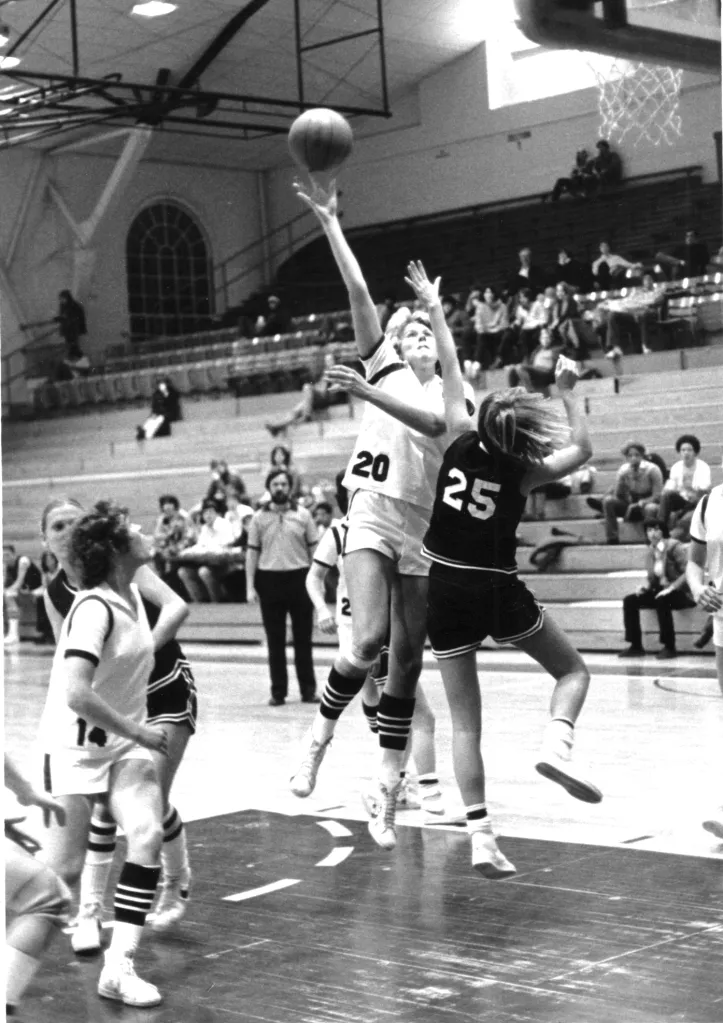
She started playing basketball in seventh grade, often competing alongside her brothers at a local Catholic youth group in her hometown of Chicopee, Mass. By college, Boudreaux anchored Dartmouth’s women’s basketball team as a 6-foot-2 center. She scored a total of 1,933 points and grabbed 1,635 rebounds, frequently leading her team to victory by averaging 21.7 points per game.
She remains the only woman to win the Ivy League Player of the Year award three times. Her contributions to the program were so great that in 2023 Dartmouth formally dedicated her jersey—number 20— in her honor, installing a permanent banner on campus at the Leede Arena basketball court.
“Having participated in sports plays a lot into how I do leadership,” Boudreaux told CEO NA Magazine in 2022. “Business is very much a team market.”
For example, Boudreaux said she keeps her athletic experiences at the front of her mind when she’s making hiring decisions.
“I’ve hired a lot of athletes, and what I love about them is that they are willing to take risks, take on challenges, and the good ones understand their role,” Boudreaux told the NCAA in 2016. “The best skill they bring right out of school is the ability to follow, to take guidance, to learn new things and to be part of a bigger project or team.”
Boudreaux’s approach to leadership closely reflects what she’s learned on the basketball court about roles, accountability, and playing as a team.
“I coach every day at work, and my skills are best suited where I am,” Boudreaux told Dartmouth Alumni Magazine.
From the basketball court to the boardroom
Following her brief basketball career abroad, Boudreaux landed her first corporate role at Aetna, where she spent two decades before leading Blue Cross of Illinois and later becoming CEO of UnitedHealthcare in 2011 as the first woman to hold the role.
In 2017, she took over Anthem, later rebranding it as Elevance Health—part of the firm’s effort to demonstrate their expansion to comprehensive health service, rather than solely providing insurance.
Since then, Boudreaux has overseen Elevance’s acquisition of CareBridge, an at-home health care firm, as part of a larger shift for the company to prioritize chronic conditions management and mental health services. Her business is growing: In 2025, Elevance hauled in $177 billion in revenue, almost $15 billion more than the next largest U.S. health care company, Centene.
The collegiate sports to leadership pipeline
That connection between sports and leadership is more than anecdotal.

A 2025 report from the Women Business Collaborative found that12.7% of women Fortune 500 CEOs played collegiate sports. Of this cohort, two-thirds had a background in health care and consumer goods.
A 2023 Deloitte survey similarly found 69% of women who earn more than $100,000 annually and hold leadership positions had played competitive sports.
Boudreaux’s influence now extends beyond Elevance. Her rise underscores a broader shift in the business landscape: More women are reaching the highest levels of the corporate ladder, but still remain a small minority. Just 38 of this year’s Global 500 companies are led by women, but a record 55 women lead Fortune 500 companies.
“I feel really strongly that you have to be yourself no matter what your challenges are,” Boudreaux previously told Fortune. “It’s really important never to lose sight of what got you to the position.”
The post Elevance Health’s CEO started her career as a pro basketball player. Now she’s the highest‑ranking woman on the Global 500, leading a $199B giant appeared first on Fortune.