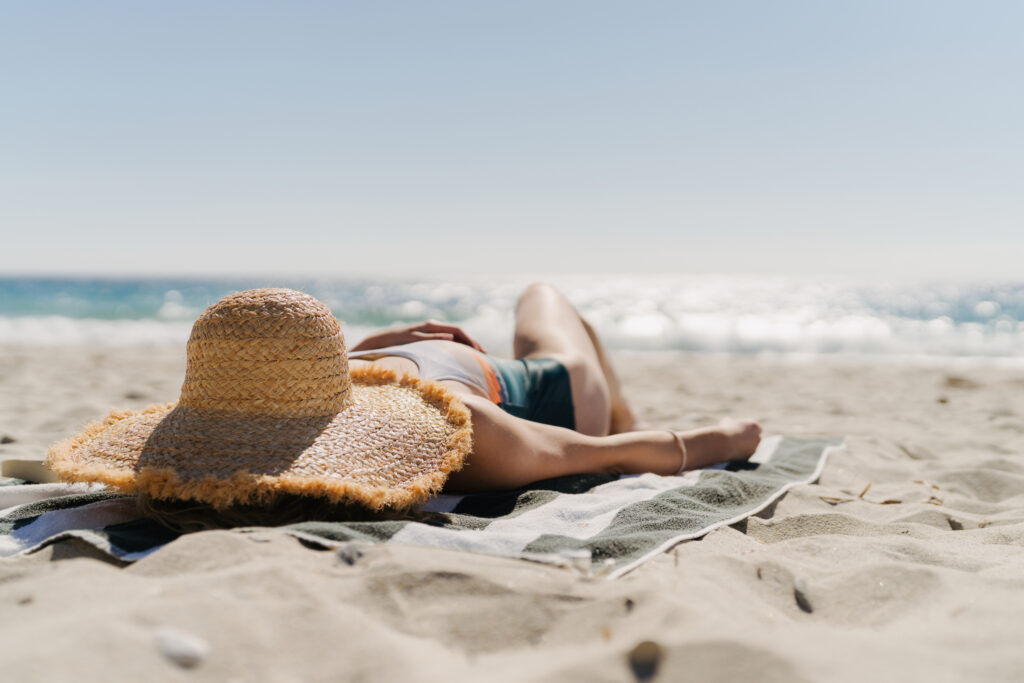
For years, dermatologists have warned about the dangers of too much sun, including that it can damage the skin and increase the risk of skin cancer. Yet “tanfluencers” on social media either haven’t gotten the message or seem to be disregarding it. On TikTok, they’re tracking the ultraviolet (UV) index to bask in the sun when it’s at its peak, and then revealing their tan lines and showing off their bronzed skin.
According to a new study published in JAMA Dermatology, 36 percent of women and 27 percent of men engage in intentional outdoor tanning. The highest rates are among 18-to-24-year-old women, with 52 percent saying they tan on purpose.
This is despite decades of research showing that excess sun exposure is a known risk factor for skin cancer and the fact that skin cancer is the most common type of cancer — about 1 in 5 Americans will develop it by age 70 — with rates increasing among young adults.
While most people recognize that a sunburn is a sign of skin damage, many people aren’t “necessarily connecting the dots” between tanning and skin cancer, said Maral Skelsey, a dermatologist in D.C. and spokesperson for the Skin Cancer Foundation.
But tanning “goes hand in hand with UV damage,” said Jacob Beer, a dermatologist in West Palm Beach, Florida. If you’re accumulating enough UV damage to tan, you’re probably also causing enough UV damage to potentially develop skin cancer later.
Here’s what to know about the “tanmaxxing” trend and whether any amount of baking in the sun is safe.
Why tanning is trendy again
Skelsey called the trend “really disturbing.” She said many of her younger patients are questioning the need for sunscreen and the link between ultraviolet light and skin cancer based on what they see online. And while the desire to be tan isn’t new, she said this phenomenon of wanting tan lines and seeking tanning tips on social media is “really very recent.”
It’s not clear why tanning is seeing a boom in popularity, but experts have some theories.
It probably stems, in part, from the general distrust in traditional medicine today, Beer said. People are shunning long-held advice about the consequences of sun exposure and spreading misinformation that sunscreen is toxic and contains carcinogens. This might lead some people to ignore or even act in protest of expert advice to limit sun exposure.
Lying out in the sun may also be alluring partly because it can make you feel good, and this might reinforce a desire to tan, said Anne Chapas, a New York City dermatologist. Sunlight is known to boost serotonin, a.k.a. the body’s “feel-good” chemical, and research suggests that sun exposure can increase “sun-seeking behavior,” such as tanning.
What tanning does to your skin
There are some benefits of getting sunlight in small doses of five to 10 minutes, Beer said. It can help the body make vitamin D, regulate circadian rhythms and boost mood.
However, spending time in the sun also exposes your skin to UV radiation, which can cause DNA damage to skin cells and increase your risk of skin cancer, said Lu Le, chair of the department of dermatology at University of Virginia Health. Yes, even if you tan instead of burn.
UV light stimulates cells in the skin called melanocytes, which produce the pigment melanin, Le explained. “This causes darkening or tanning of the skin.”
Sun-induced melanin production — when your body makes more melanin than your baseline and your skin gets darker as a reaction to UV exposure — is the body’s “visible defense mechanism, signaling that there are cellular and DNA injuries” to the skin, Le said. This is true for people of all skin tones; even if you have naturally deeply melanated skin, you can still experience UV damage and get skin cancer from the sun, Beer said.
Getting a tan can also prematurely age the skin, Chapas said. Over time, UV exposure breaks down collagen, the protein that gives the skin its smooth, supple appearance. UV damage also increases wrinkles, creates uneven skin texture and contributes to thinning and discoloration, Skelsey said.
Tanning beds can be even worse for your skin than tanning outdoors. Research shows that the devices also raise your risk of skin cancer — even more so than sunlight. One study found tanning bed use was associated with an almost threefold increase in melanoma risk.
Skelsey noted that a common misconception is that getting a base tan, or a light tan before a period of significant sun exposure (such as a vacation), will protect your skin from UV rays. But there’s no safe tan.
“Your skin is saying ‘ouch’ when it gets a tan,” Skelsey said.
How to protect your skin from UV rays
Wearing sunscreen every day will protect your skin from UV rays, reducing your risk of skin cancer and minimizing the signs of aging, Skelsey said. Wearing sun-protective clothing, hats and sunglasses, and staying in the shade all help, too.
Look for a sunscreen with at least SPF 30 that’s broad-spectrum, meaning it protects against both UVA and UVB rays, Beer said. Beyond that, it’s a personal choice: “The best sunscreen is the one you’ll use,” Skelsey said.
Some people prefer chemical sunscreens. Beer said these absorb UV radiation so your skin doesn’t. They tend to have a smoother texture and are easier to apply, but they need about 20 minutes to absorb into the skin and become effective.
Mineral sunscreens, which contain the active ingredients zinc oxide or titanium dioxide, reflect UV rays from your skin, Le said. They’re recommended for sensitive skin and start working instantly. But they can have a thicker texture and leave a white cast; using a tinted variety (often containing the ingredient iron oxide) can help prevent this.
Apply sunscreen to all areas of the body exposed to the sun, including the face, neck, hands, arms and legs, Skelsey said. Reapply it about every two hours or when you’re sweating or swimming.
People with dark skin tones still need to wear sunscreen to protect against UV damage and skin cancer, even though their skin contains more melanin, Beer said.
If you still get tan while wearing sunscreen, Beer said this could be because you’re using a sunscreen that’s not broad-spectrum or one that’s below SPF 30, or you’re not reapplying it frequently enough. Plus, no sunscreen is 100 percent effective, Skelsey said — SPF 30 filters about 97 percent of UV rays, for example.
The safest way to get a tan
The safest way to get a bronzy glow is to opt for a self-tanning lotion or cream, Le said.
Sunless tanners contain dihydroxyacetone, or DHA, a sugar compound that reacts with dead skin cells on the skin’s surface and creates a brownish color, Le said. Spray tans work the same way.
The effect is temporary, lasting about a week, until dead skin cells shed, he explained.
These products also don’t contain SPF, so you still need to wear sunscreen, Beer said.
While sunless tanners are safer than sunbathing, Skelsey urged anyone interested in tanning to focus on health over appearance and think of sun protection as an investment in both areas.
“I hope we can get to a point where people recognize that your natural skin color without ultraviolet light is beautiful and something to be protected,” she said.
The post Tanning is trending, but is it ever safe? Here’s what dermatologists say. appeared first on Washington Post.