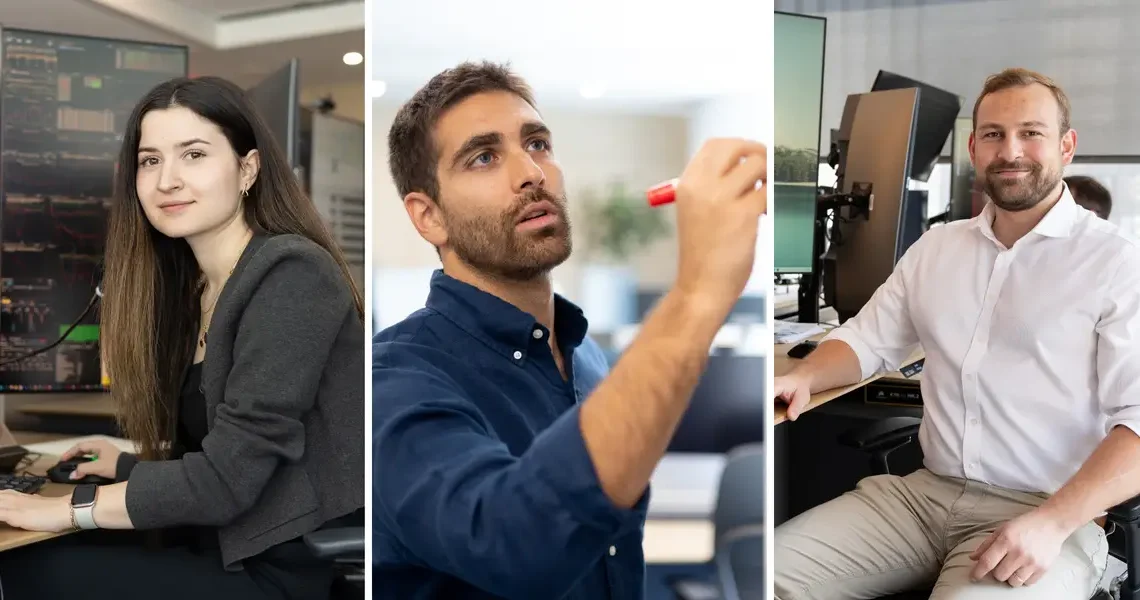

As summer draws to a close for the 0.36% of applicants who landed a summer internship at Citadel and Citadel Securities, the question of how to get a return offer is heating up. And for those who do come back to the hedge fund or market maker next year, the question will become how to stand out among the sea of brainiacs.
Ken Griffin’s companies, like other hedge funds, see investing in young talent as a strategic advantage. Campus hires are about twice as likely to eventually be considered top performers, based on annual performance reviews, and some top leaders joined the firms at the beginning of their careers — Citadel Securities CEO Peng Zhao was hired right after finishing graduate school, and Citadel COO Gerald Beeson was an intern in 1993.
Business Insider spoke to five former interns and campus hires — three quantitative researchers, one engineer, and one trader — about getting a job, moving up, and advice for the youngest class.
Haris Nair

When Haris Nair was a software engineering intern on Citadel’s commodities trading desk in 2017, a trader showed him how much the firm had traded based on his strategy. Nair doesn’t remember the number, but he does remember being “completely blown away.”
Over eight years later, Nair, 30, now manages a global team of 10 engineers on Citadel Securities’ research platform team, working closely with quantitative researchers to speed up their market research.
As Nair has gone from intern to team lead, from Chicago to Miami, he’s learned to focus on projects that are meaningful to the business, rather than make smaller fixes. Nair advises interns to do the same and to take advantage of Citadel Securities’ non-hierarchical structure to tackle big problems.
“Everybody we hire is technically brilliant. Everybody’s a very hard worker. Those are never the real differentiators,” he said. “Do they find opportunities to improve the platform and capitalize on them? Do they have the initiative to identify their own problems and then go solve them?”
Tanya Otsetarova

Tanya Otsetarova learned about Citadel Securities when she was a senior in high school in Bulgaria, competing in math competitions there and internationally. By the time she got to Stanford, other students were telling her it was the “most educational” internship, leading her to apply for a spot in the 2022 summer cohort.
Otsetarova, now 26 and a trader on the semi-systematic options team in Miami, was scared at first. Everyone seemed smarter than her, and the firm itself felt intimidating.
“Not asking enough questions during the first few weeks of my internship was honestly my biggest mistake,” she said. “If you’re not an expert in the field yet, you just don’t know enough. If you don’t ask questions, you get stuck. You waste time and you don’t learn.”
As an intern, the firm tasked Otsetarova with a long-term project, and she made more progress than expected. Eventually, the firm changed its strategy for pricing options based on her work, but it wasn’t just her technical skills that got her a return offer.
“Technology changes and the business can change, but what you really need is a strong problem-solving ability,” she said. “Being genuinely curious about every aspect of the business, why we’re solving the problems we’re solving.”
Now, Otsetarova manages a team of traders, and said the people who stand out are those who take initiative. She’s even a desk manager for interns, fewer than five years after she was in their shoes. When they come by her desk, which features board games and a giant stuffed flamingo, they usually want to talk about the fundamentals of options trading.
Jonas Metzger
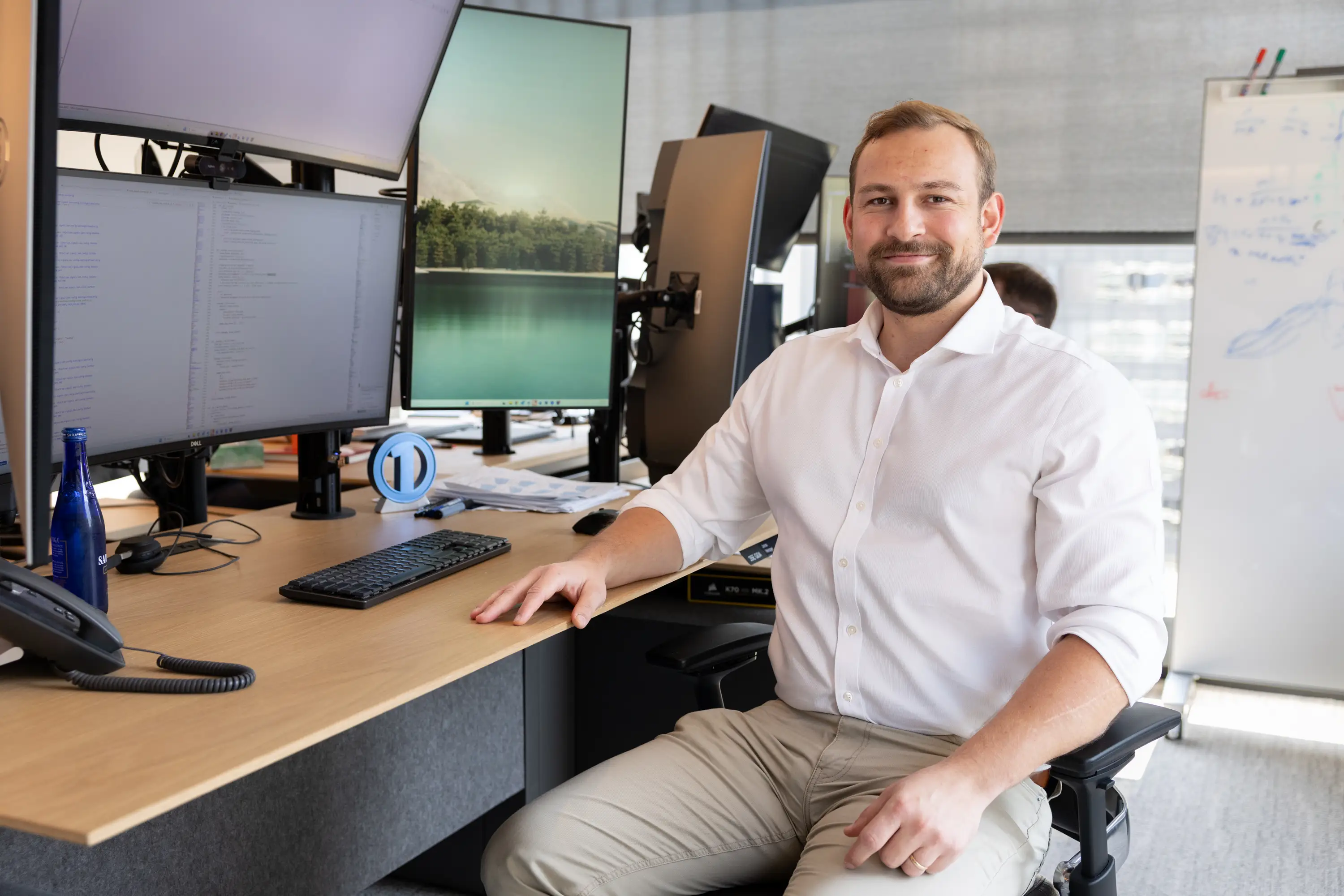
Jonas Metzger, 31, learned about Citadel from two friends, who advised him to join after completing his PhD and postdoc in economics and computer science at Stanford. He hadn’t thought much about markets before joining as a quantitative researcher in the spring of 2025 and still likes to pretend he’s “the new guy” so he can keep asking basic questions.
His first week on the job, Metzger remembers asking what a hedge fund actually does.
“Everyone here is so smart that you feel like you have to seem smart, too, but you shouldn’t. Ask questions. It’s the fastest way to become smarter and the fastest way to learn,” he advised new campus hires.
Metzger said he initially spent too much time focusing on parts of problems that didn’t make a big difference. Now, he instead tries to develop enough confidence in ideas that others may be missing.
“If you can do both — ask questions and then double down on your beliefs once you have conviction — you can have a tremendous amount of impact, and you’re highly rewarded,” he said.
The researcher knows what it feels like to be rewarded — one of his early discoveries helped the firm rethink an algorithm and how it considers certain risks. Having Citadel put capital behind his best ideas is one of the most “addictive” parts of the job.
Lukas Fischer
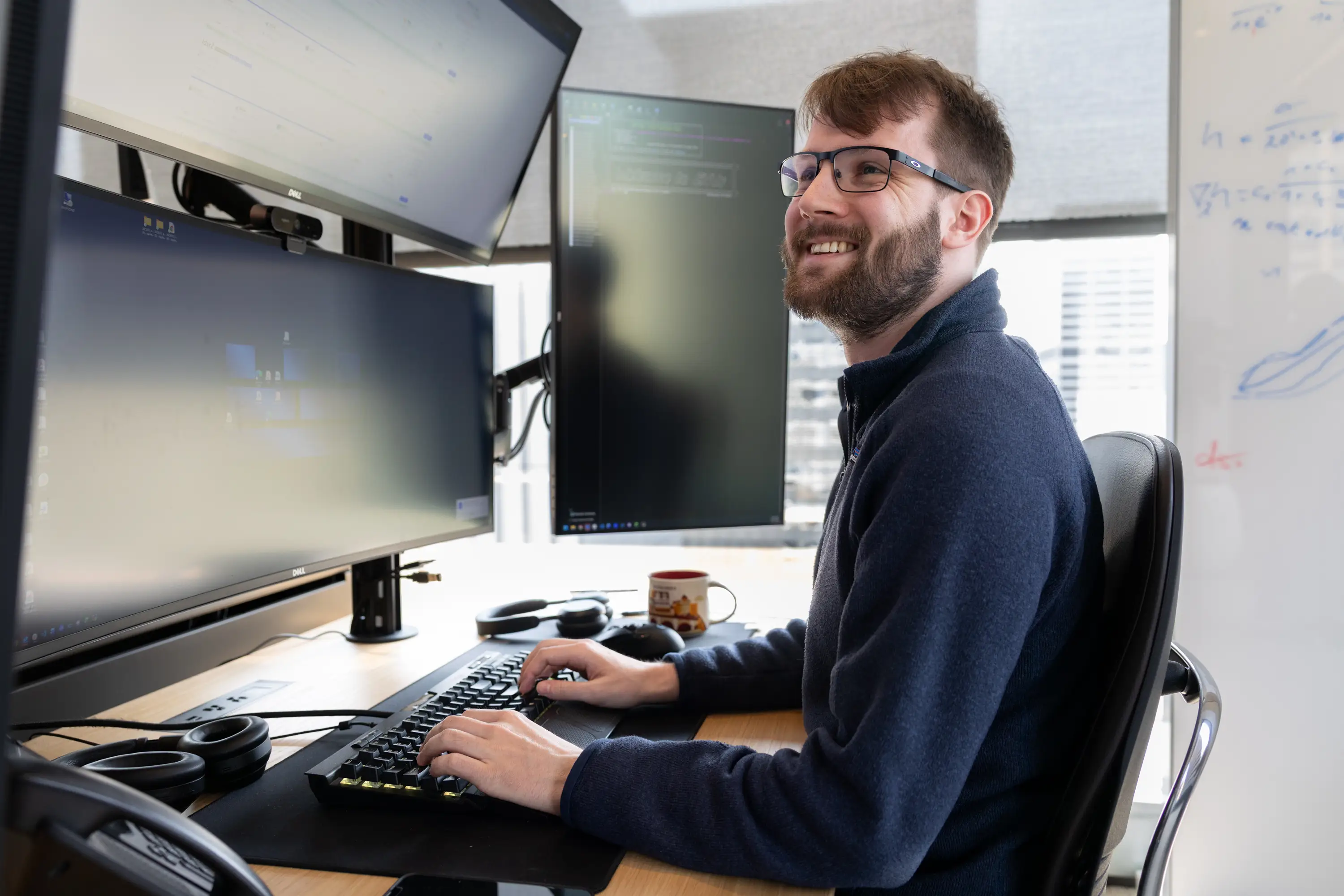
Lukas Fischer gets to Citadel’s crowded equity quantitative research floor early, and colleagues often find him wearing over-the-ear headphones as he combs through market data. He and his big headphones joined as a campus hire two years ago, just after graduating from Columbia with a PhD in finance.
Within his first year at Citadel, Fischer, 31, met with Griffin twice for hourslong meetings, since his first project was “very top of mind” for the CEO. He learned early on that endlessly chasing perfection would hold him back, and that the market is often the best teacher of what is and isn’t working.
“Don’t let the perfect be the enemy of the great,” he said. “You shouldn’t keep going down a rabbit hole trying to improve something that is already more than good enough.”
Fischer now focuses in part on mentoring others and recruiting campus talent. He said he has yet to meet people with the entirely wrong skill set for Citadel, and that candidates need to figure out what they’re more passionate about and better at than others.
As early as Fischer gets to the office, some of his best ideas have come when he’s out with friends or reading a science fiction book at home.
Kirk Willens
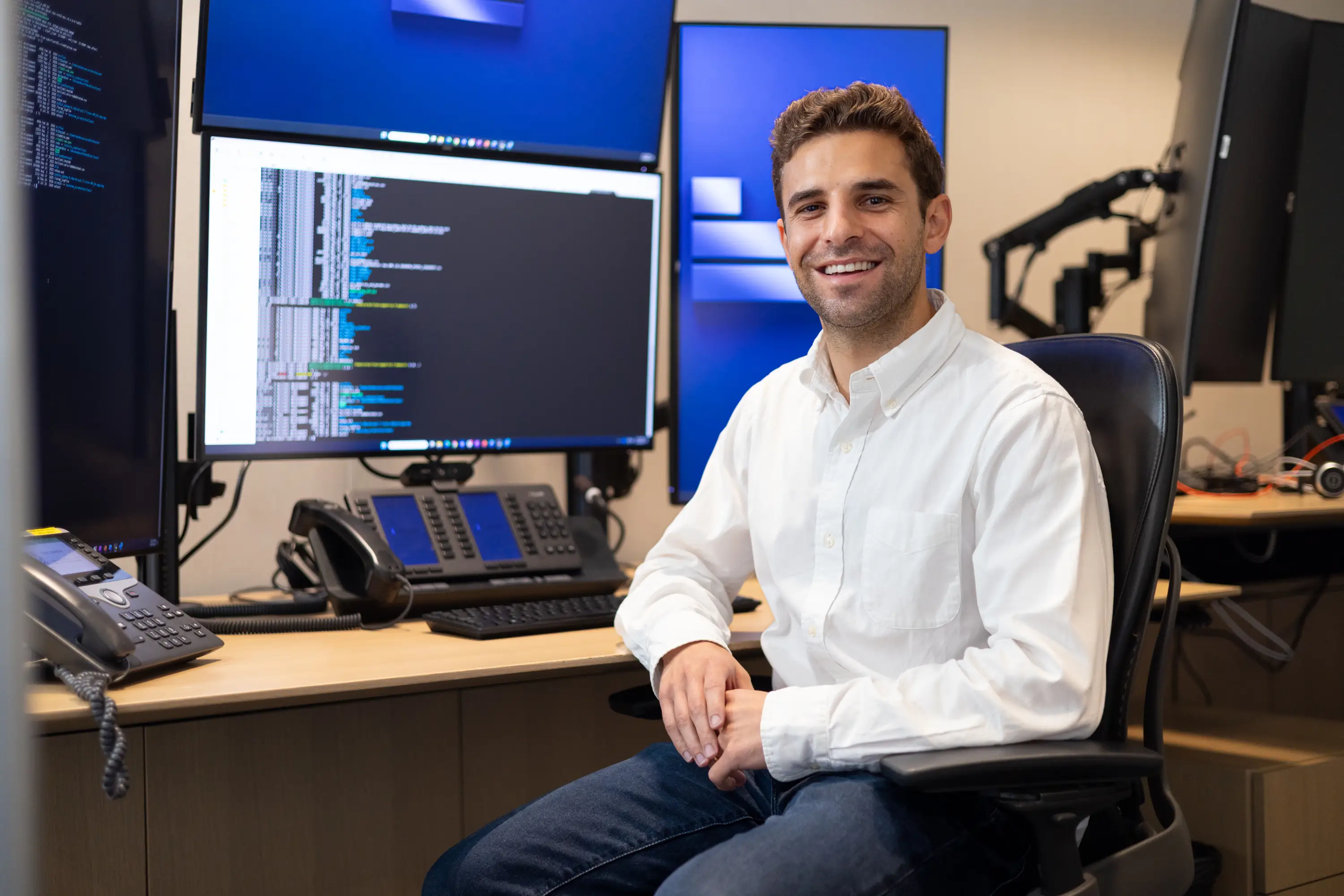
Kirk Willens applied for an internship at Citadel Securities partly because it seemed like the company with “the steepest learning curve.” He expected that, eventually, the curve would plateau. Seven years later, it keeps getting steeper as he keeps taking on new responsibilities.
Willens, 29, completed a software engineering internship in 2018, before accepting a full-time role and eventually switching to quantitative research, where he now leads a team of eight researchers.
“I was always told there’s no shortage of hard problems to solve. The opportunities are there,” he said. “The people who grow the fastest are the ones who raise their hand, ask questions, step up, and take ownership.”
Those who stand out, Willens said, are those who can figure out what the important problems actually are and inspire him to jot down random ideas in the notepad sitting on his desk. He encourages his team to “push the boundaries” of what they think AI is capable of, which the four interns he works with already excel at.
“They use AI more than I thought you possibly could,” Willens said. “I’ve learned a lot about how different ways of prompting it really can lead to different results.”
Correction: July 30, 2026 — An earlier version of this story misstated where Haris Nair interned. He was a software engineer intern on Citadel’s commodities trading desk.
Read the original article on Business Insider
The post 5 Citadel campus recruits on breaking in and getting ahead appeared first on Business Insider.