This is an edition of The Atlantic Daily, a newsletter that guides you through the biggest stories of the day, helps you discover new ideas, and recommends the best in culture. Sign up for it here.
Last week, the Pentagon quietly lowered the death toll of the war with Iran from 18 to 14. This wasn’t happy news about an initial miscount but a sketchy accounting trick. Although the Defense Department at first blamed a data issue, military sources told The New York Times that the Trump administration had removed four recently killed service members from its count “because their deaths occurred after President Trump declared a cease-fire in the war in April.”
Yesterday, the government website that tracks U.S. military casualties was updated again, this time to include the four people, but placing them in a new category: “Overseas operations casualties starting July 7th 2026” is now listed separately from Operation Epic Fury—the military code name for the Iran war. July 7 is the day that the administration restarted strikes against Iran, acknowledging that the April cease-fire had definitively failed. What’s going on here is more than an effort to merely reduce the war’s death toll: The administration is trying to hide a war and ended up hiding the deaths of American service members along the way.
Under the 1973 War Powers Resolution, the president can take military action but must inform Congress. Then, within 60 days, the president must end the conflict, obtain congressional authorization, or invoke a 30-day extension. In April, when the U.S. reached a very fragile cease-fire with Iran, the administration—aided by Republican leaders in Congress—claimed that the war was over, and thus that no congressional action was needed or justified.
Yet the war was plainly not over. Sporadic fighting among Israel, Hezbollah, Iran, and the United States continued for weeks, producing some tortured semantic debates about the definition of cease-fire, until Trump finally declared the cease-fire dead earlier this month. But instead of admitting that this is a return to the original conflict, the White House now says it’s an entirely different clash—which means that Congress won’t have any role until early September, 60 days from July 10, the day the White House delivered formal notification of the conflict. Trump is purporting to follow the letter of the War Powers Resolution while mocking its spirit.
The administration’s concern is a little odd, given its indifference to so many other laws, but the White House is contending with an unhappy public and growing anger among Republicans in Congress, which never authorized the conflict with Iran. Last week, the GOP-majority House passed a resolution calling for the end of the war; four Republicans joined Democrats. The Senate passed a similar measure last month. Neither is binding, but they reflect some Republican members’ fear that the war will drag them down in the midterm elections.
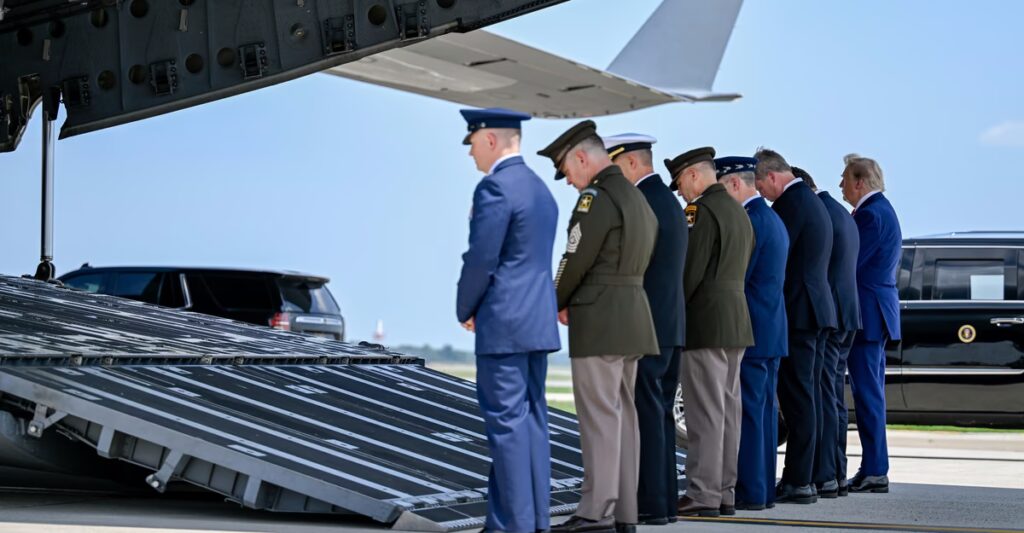
Trump’s rhetoric about Americans killed during the war has been as stomach-churning as one might expect. In a Truth Social post last Tuesday, the president listed the death toll from several more recent conflicts, including Afghanistan, Iraq, Vietnam, and Korea, as well as from the war with Iran, in what looked to many observers like an attempt to downplay the human cost. (Undercutting the Pentagon’s later revisionism, he cited 18 deaths.) Also last week, before traveling to Dover Air Force Base for a ceremony where the bodies of slain troops were returned home, Trump attempted to ventriloquize the dead, claiming that they had endorsed the (current) rationale for the war. “All of them said very strongly, ‘We cannot let Iran have a nuclear weapon,’” Trump said. This results in a ghastly paradox: Trump insists that these service members died supporting the aims of Operation Epic Fury, but, according to his administration, by the time they were killed, Operation Epic Fury was already over.
Over the course of his two terms, Trump has frequently treated the military as a political prop and shown little respect for those killed or wounded in battle. As The Atlantic’s editor in chief, Jeffrey Goldberg, reported in 2020, Trump called Americans who died in wars “suckers” and “losers,” and avoided visiting the graves of men killed in World War I. During his first term, he ended up in a public feud with the widow of a soldier killed in Niger, who, following a phone conversation with the president, said that Trump had forgotten her husband’s name and had implied that the slain man “knew what he was getting into when he signed up.” (Trump, in turn, called her account fabricated.)
Prior presidents have also tried to shroud war deaths from the public. From 1991 to 2009, the press was barred from photographing the returns of remains to Dover. This became a liability for the George W. Bush administration after an activist obtained images via public-records requests, leading to questions about whether the White House was keeping damaging images from the public in order to maintain support for the war. The dustup was a classic instance of the “Streisand effect,” in which someone brings attention to a story by trying to stifle it.
The Trump administration is now in the same situation. The reduction in the death toll brought much greater attention to the 18 Americans killed in the war. When the Pentagon published the recategorized data, it also revealed that the number of Americans wounded is now more than 600, up from a reported 482 last week, according to CNN. The administration sought to hide the war with Iran; instead it showed the painful and growing costs.
Related:
Here are three new stories from The Atlantic:
- Wes Moore isn’t here to save the Democratic Party.
- Adam Kirsch: The Bible belongs in the classroom.
- How Netanyahu lost America
Today’s News
- President Trump said he paused the United States’ military strikes on Iran in order to give peace negotiations another chance, but warned that strikes would resume if the talks do not reach a deal.
- Senator Mitch McConnell said he is still not ready to return to the Senate after his hospitalization last month; he has missed 38 votes in the chamber and didn’t provide a timeline for his return to work.
- Extreme heat is expected to worsen the already record-breaking wildfires in France and Spain this week. Blazes have burned about 287,000 acres in France and 378,000 acres in Spain and forced evacuations.
Dispatches
- The Wonder Reader: Isabel Fattal explores how to open yourself up to a new passion.
Explore all of our newsletters here.
Evening Read
An Odyssey for Our Own Time
By Peter Wehner
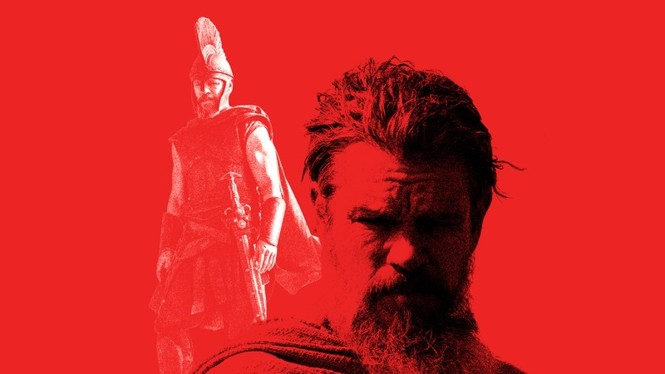
“A war. A man. A trick. A trick to break the walls of Troy. And burn it—screaming—to the ground.” Christopher Nolan’s The Odyssey opens in the great hall of Ithaca, with a bard singing a hymn about the cunning of Odysseus, the hero of the tale, to the men who have overrun his house—courting his wife, menacing his son—while he is absent. A feast has been turned into a desecration.
The law these men broke was the most sacred in the ancient world: “xenia,” the law of hospitality. The stranger at the door stood under the personal protection of Zeus, the greatest of the gods and the protector of strangers. The bond between guest and host was not mere courtesy; it was the covenant that made trust between strangers possible.
More From The Atlantic
- Radio Atlantic: A battle for the future of the Democratic party
- Would you go back to a time before smartphones if you could?
- Another symptom of growing isolation
- The problem with shutting down ICE in blue states
- The ticking clock on the Strait of Hormuz
Culture Break
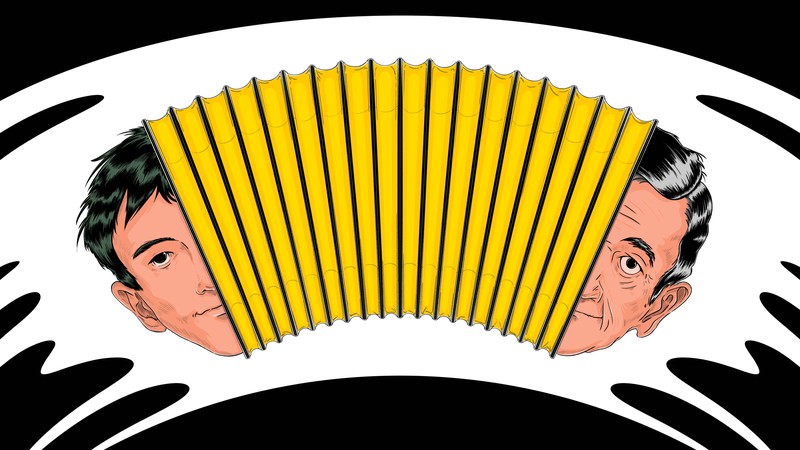
Reflect. When does middle age actually start? Julie Beck tries to attach some numbers to a fuzzy phase of life.
Watch. Christopher Nolan’s blockbuster The Odyssey (in theaters now) seems at times more biblical than Homeric, Luis Parrales writes.
Rafaela Jinich contributed to this newsletter.
When you buy a book using a link in this newsletter, we receive a commission. Thank you for supporting The Atlantic.
The post The War That Shall Not Be Named appeared first on The Atlantic.