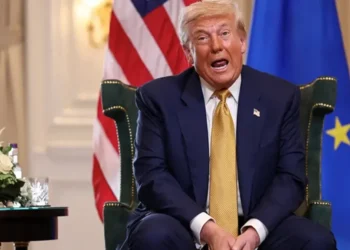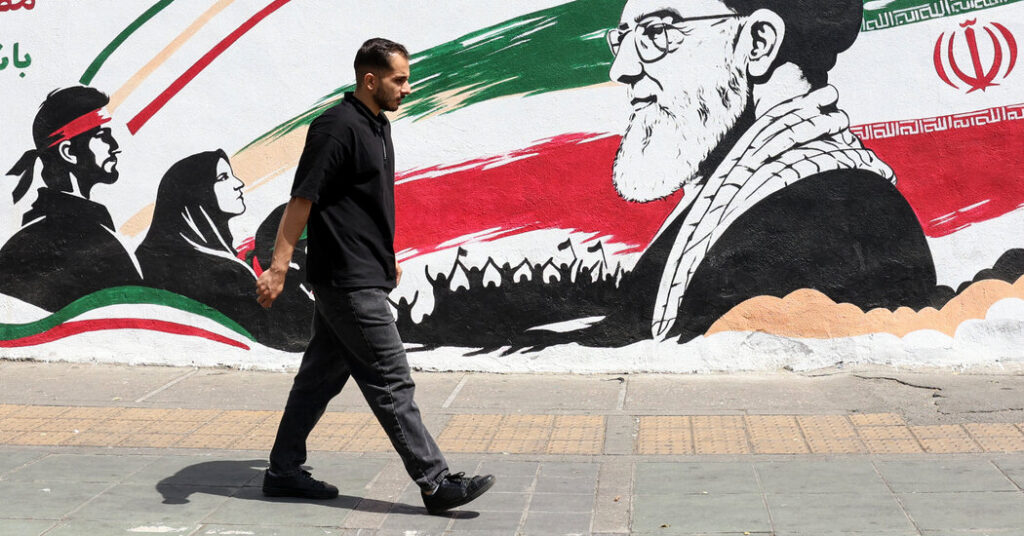
When the United States and Iran cut a cease-fire agreement last month to open the Strait of Hormuz, President Trump was quick to declare victory. “This Great Deal will bring Peace and Security to the whole Region,” Mr. Trump announced on social media.
The tentative agreement, outlined in a June 17 memorandum of understanding, set a 60-day deadline to negotiate limits to Iran’s nuclear program in exchange for economic relief. Weeks in, nearly all of the agreement’s 14 points have been violated and even the president has declared it “over.”
Here’s where things stand:
Paragraph 1
The United States of America and the Islamic Republic of Iran and their allies in the current war by signing this M.O.U. declare the immediate and permanent termination of military operations on all fronts, including in Lebanon, and undertake from now on not to initiate any war or any military operation against each other, and to refrain [from] the threat or use of force against each other and ensuring the territorial integrity and sovereignty of Lebanon. The final deal will confirm the permanent termination of the war on all fronts, including in Lebanon, and other provisions of this paragraph.
Military operations continue on several fronts and Iran rejected a new American cease-fire proposal on Thursday. For 13 consecutive days this month, the United States conducted strikes against Iran.
In Lebanon, the cease-fire has curbed Israeli military advances, but it did not force Israel to withdraw. Israel has continued to strike what it describes as Hezbollah targets; Hezbollah has responded with attacks on Israeli troops in much of southern Lebanon.
Paragraph 2
The United States of America and the Islamic Republic of Iran undertake to respect each other’s sovereignty and territorial integrity, and to refrain from interfering in each other’s internal affairs.
Iran has retaliated against the U.S. strikes by targeting Middle Eastern countries that host American troops, 18 of whom have been killed since the war began on Feb. 28. Some Iranian officials have recently called for Mr. Trump to be assassinated.
Paragraph 3
The United States of America and the Islamic Republic of Iran commit to negotiating and achieving the final deal in maximum 60 days extendable with mutual consent.
This seems increasingly unlikely. The 60-day deadline is now just three weeks away and there has been no sign of substantive negotiations. “The problem we’re having right now is that they’re not serious about talks,” Secretary of State Marco Rubio said this week. “If they’re serious, we’re serious. If they’re not, then we will do what is necessary to protect that, our interests and also the interests of our allies.”
Paragraph 4
Immediately upon the signing of this M.O.U., the United States of America will begin the removal of its naval blockade and any disturbances or impediments against the Islamic Republic of Iran, and will fully end the naval blockade within 30 days. During this period, the traffic of vessels will be in proportion to the numbers of prewar traffic being restored by the Islamic Republic of Iran. The United States of America further undertakes to remove its forces from the proximity of the Islamic Republic of Iran within 30 days after the final deal.
The U.S. naval blockade was reinstated on July 13 in what the Trump administration described as a response to Iranian attacks on commercial oil and gas ships in the Strait of Hormuz a week earlier. Tehran did not claim responsibility for those attacks and accused the United States of violating the cease-fire with military strikes and the reinstatement of sanctions on oil sales.
Paragraph 5
Upon the signing of this M.O.U., the Islamic Republic of Iran will make arrangements using its best efforts for the safe passage of commercial vessels with no charge for 60 days only from the Persian Gulf to the Sea of Oman, and vice versa. The traffic of commercial vessels will immediately start, and considering the need for removing the technical and military obstacles and demining by the Islamic Republic of Iran, will be instated within 30 days. The Islamic Republic of Iran will conduct dialogue with the Sultanate of Oman to define the future administration and maritime services in the Strait of Hormuz, in discussion with other Persian Gulf littoral states in line with the applicable international law and the sovereign rights of coastal states of the Strait of Hormuz.
The strikes have spooked most commercial traffic from sailing through the Strait of Hormuz. Only six ships braved the strait on Thursday, according to the latest data available from the maritime tracking firm Kpler — the lowest number in weeks compared with the roughly 130 commercial vessels that sailed through on a daily basis before the conflict.
Paragraph 6
The United States of America undertakes with regional partners to develop a definitive, mutually agreed plan with at least U.S.D. 300 billion for the reconstruction and economic development of the Islamic Republic of Iran. The mechanism for the implementation of this plan will be finalized as part of a final deal within 60 days. All required licenses, waivers and permissions needed for the relevant financial transactions will be granted by the United States of America.
Vice President JD Vance said the reconstruction funding would come from regional investors only if Iran “ends their nuclear program, ends their enriched stockpile of material and is really open to an inspections and enforcement regime.” In other words: Reconstruction efforts are unlikely to gain steam until the thorniest issue — Iran’s nuclear program — is resolved.
Paragraph 7
The United States of America undertakes to terminate all types of sanctions against the Islamic Republic of Iran, including the United Nations Security Council resolutions, I.A.E.A. Board of Governors resolutions, and all unilateral U.S. sanctions, primary and secondary, in an agreed-upon schedule as part of the final deal. The Islamic Republic of Iran and the United States of America acknowledge the critical importance of the sanctions termination issue above mentioned, and express their intentions to immediately address these issues in the negotiations in order to achieve mutual agreement on them.
Days after the memorandum of understanding was signed, the United States issued a general license allowing Iran to produce, sell and deliver oil for two months while peace negotiations were underway. But it reimposed economic sanctions on July 7 after three ships were attacked in the Strait of Hormuz.
Paragraph 8
The Islamic Republic of Iran reaffirms that it shall not procure or develop nuclear weapons. The United States of America and the Islamic Republic of Iran have agreed to resolve the disposition of stockpiled, enriched material pursuant to a mechanism that will be mutually agreed upon in accordance with the schedule mentioned in Paragraph 7, with the minimum methodology to be down-blending on site under the supervision of the I.A.E.A. The two parties also agreed to discuss the issue of enrichment and other mutually agreed matters related to the Islamic Republic of Iran’s nuclear needs, based on the statutory framework being agreed upon in the final deal. The final deal will confirm the provisions of this paragraph. The United States of America and the Islamic Republic of Iran acknowledge the critical importance of the nuclear issues above mentioned, and express their intention to immediately address these issues in the negotiation in order to achieve mutual agreement on them.
There has been no apparent movement on nuclear negotiations since the cease-fire collapsed. An international deal to limit Iran’s nuclear program, reached in 2015, took years to negotiate, not months.
Paragraph 9
Pending the final deal, the United States of America and the Islamic Republic of Iran agree to maintain the status quo. The Islamic Republic of Iran will maintain the current status quo of its nuclear program, and the United States of America will not impose any new sanctions, and will not deploy additional forces in the region.
A deal by Aug. 16, the 60-day deadline, seems unlikely. While Mr. Trump has agreed to draw down some American forces in the Middle East, including withdrawing troops from Iraq by Sept. 30, he is also sending more warplanes to the region.
Paragraph 10
The United States of America undertakes that immediately upon the signing of this M.O.U., and until the termination of sanctions, U.S. Department of Treasury will issue waivers for the export of Iranian crude oil, petroleum products and derivatives, and all associated services, including banking transactions, insurances, transportation, etc.
The sanctions waivers were revoked on July 7 after the Trump administration accused Iran of attacking ships in the Strait of Hormuz.
Paragraph 11
The United States of America undertakes to make fully available for use the frozen or restricted funds and assets of the Islamic Republic of Iran upon the implementation of this M.O.U. The United States of America and the Islamic Republic of Iran will mutually agree on the procedures related to the release of these funds during the negotiations. Such funds, whether retained in the original account or transferred, shall be made fully usable for payment to any ultimate beneficiary designated by the Central Bank of the Islamic Republic of Iran. The United States of America undertakes to issue all necessary licenses and authorizations accordingly.
President Trump initially agreed to release about $24 billion in frozen Iranian assets from more than $100 billion currently held by financial institutions abroad. The week after the interim understanding was signed, Treasury Secretary Scott Bessent said the United States would oversee how the assets were spent and that “a very large percentage of it will go to buy U.S. foodstuffs and medicines.”
Iran has denied that it would allow the United States to dictate how the funds are used. Iranian officials said they expected the United States to unfreeze assets as part of the negotiations on Iran’s nuclear program that appear stalled.
Paragraph 12
The United States of America and Islamic Republic of Iran agree that an executive mechanism will be established to monitor the successful implementation of this M.O.U. and the future compliance of the final deal.
This never happened, said Ellie Geranmayeh, an Iran expert at the European Council on Foreign Relations. The executive mechanism was supposed to be discussed in technical negotiations that never got underway after the agreement was signed, she said.
Since then, mediators from Pakistan and Qatar have worked furiously to return to the agreement’s terms, including by bringing in other countries to convince each side to ease hostilities. That effort continues but has yet to show much progress.
Paragraph 13
After signing this M.O.U. and subject to the beginning of the implementation of Paragraphs 1, 4, 5, 10 and 11 of this M.O.U., and the continuing implementation of these measures, the United States of America and the Islamic Republic of Iran will start negotiations regarding the final deal exclusively on the other paragraphs.
Paragraph 1 dealt with the start of the cease-fire. Paragraph 4 required the end of the naval blockade. Paragraph 5 called for safe passage of the Strait of Hormuz. Paragraph 10 agreed to waive U.S. economic sanctions on Iran. Paragraph 11 required unlocking frozen Iranian assets. Until each of these is resolved, nuclear negotiations will most likely remain stalled.
Paragraph 14
The final deal will be endorsed by a binding U.N.S.C. resolution.
A new deal to significantly limit Iran’s nuclear program beyond the 2015 accord brokered by the Obama administration remains unlikely, according to experts and analysts.
Should it happen, the United Nations Security Council would likely have a role in endorsing it. But Congress would also have a say in whatever final agreement Mr. Trump negotiates with Iran. A bipartisan 2015 law, approved as international talks with Tehran were concluding, gave Congress the right to regularly review U.S. nuclear deals with Iran.
The post What’s Left of the Cease-Fire Agreement Between the U.S. and Iran? appeared first on New York Times.