In Miami, Abelardo De La Espriella moved in the murky world of “white powder” lawyers — high-priced defense lawyers who help accused Latin American drug traffickers and others avoid harsh sentences by turning them into U.S. government informants or witnesses.
He employed a former trafficker from Colombia who, court records show, helped South Florida lawyers find such business.
Mr. De La Espriella, a lawyer licensed in Colombia, often traveled to his homeland to meet clients embroiled in U.S. cases, including Alex Saab, a wealthy businessman indicted on charges of laundering millions on behalf of Venezuela’s leaders.
And he himself was scrutinized by federal prosecutors as they investigated Mr. Saab’s money laundering, according to five people with knowledge of the investigation into Mr. Saab.
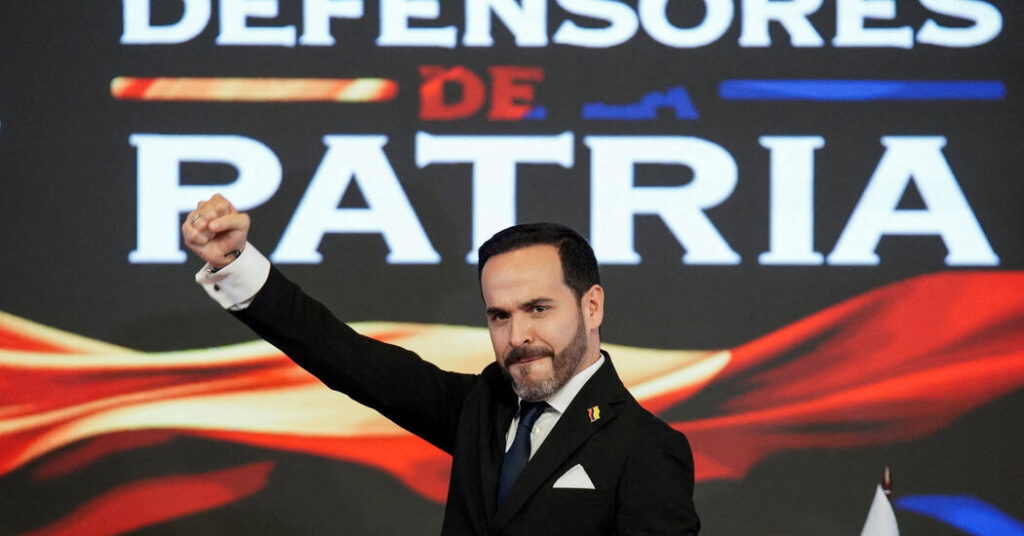
Now, Mr. De La Espriella, with no past political experience, is suddenly Colombia’s next president, and promising to help the Trump administration escalate a regional drug war against the traffickers he once represented.
He returned to Colombia last year, reinventing himself as a law-and-order candidate determined to oust the left and wield an iron fist against the country’s criminals and resurgent armed trafficking groups. After receiving President Trump’s endorsement, he was elected in June.
Though his lavish Miami lifestyle of luxury cars, private jets and Italian designer suits may have been bankrolled in part by clients entangled in trafficking and laundering cases, he has pledged to help Mr. Trump crush “narcoterrorists,” bomb alleged drug boats and extradite accused traffickers.
The Past
In response to detailed questions about Mr. De La Espriella’s activities in Miami, his presidential office said in a statement that the matters “were extensively discussed during the presidential campaign” and that it did not “consider it appropriate to revisit them.”
But as Mr. De La Espriella prepares to take office in August, the opposition leader whom he defeated in the election, Iván Cepeda, is demanding answers about his work and relationships in the United States, urging supporters to mount a “peaceful resistance” until they are provided.
And with his best-known client, Mr. Saab, in U.S. custody awaiting trial on charges of acting as a financial agent for Venezuela’s former leader, Nicolás Maduro, more questions about Mr. De La Espriella’s past could emerge.
Mr. De La Espriella was himself scrutinized by federal prosecutors in Florida and New York as they investigated how Mr. Saab’s illicit funds moved through the U.S. financial system, according to the five people who spoke to The Times. They spoke on condition of anonymity to discuss a sensitive political matter.
The precise focus of that scrutiny is not clear. But Mr. De La Espriella’s onetime employee, the former trafficker, pleaded guilty to laundering money from Mr. Saab’s overseas accounts around 2017. That money, court documents show, was intended to pay Mr. Saab’s lawyers, whose names were redacted from the documents, which do not provide any indication that the lawyers were part of the scheme.
Mr. De La Espriella was never charged. His office declined to respond to questions related to Mr. Saab. In its statement, it said, “The president was never investigated or charged in any of the matters you mention,” adding, “His conduct as a lawyer and as a private citizen has been absolutely impeccable.”
Republican lawmakers, including Senator Bernie Moreno of Ohio, have said he was vetted by U.S. officials. Representative María Elvira Salazar of Florida said on Colombia’s Election Day, “Abelardo De La Espriella doesn’t have any kind of investigation open in the United States.”
The Justice Department declined to comment.
The Assistant
When Mr. De La Espriella moved to Miami around 2013, he was seeking safety and a break from the heavy security detail that his risky work in Colombia had required, according to friends and political allies.
But there were also lucrative opportunities. Mr. De La Espriella, who is not licensed to practice law in Florida, opened a Miami office, brought on locally licensed lawyers and began spending time with the former trafficker, Jorge Luis Hernández.
Mr. Hernández was a known client hunter, and court documents say he worked as a paralegal with multiple South Florida law firms. He also worked for Mr. De La Espriella, according to three of the people who spoke to The Times. A Florida lawyer, who also spoke on the condition of anonymity for fear of retribution, said Mr. Hernández described himself as Mr. De La Espriella’s assistant.
While Mr. Hernández was deeply involved in the so-called narco-defense world, court documents show he was also a longtime informant for federal law enforcement agencies, including the Drug Enforcement Administration. According to those filings, he had admitted to running drug shipments in fast boats from Colombia for right-wing paramilitary commanders before becoming an informant decades ago.
Colombia’s paramilitary forces rose to fight left-wing guerrillas, but became a scourge of their own, trafficking cocaine and committing atrocities. Early in his career, Mr. De La Espriella advocated for paramilitaries to be treated as political actors and defended politicians accused of having ties to the groups.
Mr. De La Espriella has acknowledged that he knew Mr. Hernández but has not publicly said they worked together.
During the campaign, their relationship sparked debate. Photos emerged of the two together, and critics called Mr. De La Espriella a “lawyer to the mafia,” a label he disputed. Mr. Cepeda questioned his suitability for office after the election, saying, “Abelardo De La Espriella has maintained a close connection with the paramilitary Jorge Luis Hernández.”
The Client
Mr. De La Espriella has said Mr. Saab came to him in 2013 seeking help with “reputational matters.” Venezuelan and Colombian journalists had raised questions about how Mr. Saab, a relatively obscure Colombian businessman, had obtained a Venezuelan government contract worth more than $150 million to supply materials for a housing program.
The two would seem an odd pair. While Mr. Saab worked with Venezuelan officials, Mr. De La Espriella was so opposed to Mr. Maduro, Venezuela’s former authoritarian president, that he wrote a book in 2018 making the case for his assassination.
Mr. De La Espriella has said that when U.S. authorities began investigating Mr. Saab, he urged him to cooperate and arranged meetings with federal agents. Mr. Saab ultimately refused, and his family fled to Venezuela in 2018 after Colombian officials said Mr. Saab was tipped off about a plan by Colombian authorities to arrest him.
Mr. De La Espriella has said he cut ties to Mr. Saab in 2019, after U.S. authorities indicted Mr. Saab and placed sanctions on him — as a U.S. permanent resident, he could not legally represent someone facing sanctions without a license.
In 2020, Mr. Saab was detained in Cape Verde. Before being extradited to the United States in 2021, he told Colombian journalists in an interview that Mr. De La Espriella no longer represented him, but had been “a great lawyer and friend.”
Around that time, Mr. De La Espriella’s Washington-based lawyer met with U.S. authorities to address his client’s exposure in the Saab investigation, according to two of the people who spoke to The Times.
According to these people, Mr. De La Espriella was investigated not for being Mr. Saab’s lawyer but in connection to the movement of Mr. Saab’s funds.
Prosecutors had charged Mr. Hernández with laundering more than $2.5 million from Mr. Saab’s overseas accounts into U.S. accounts alongside a former University of Miami professor, Bruce Bagley, who was charged in 2019.
According to the court documents that redact the lawyers’ names, the transfers took place between 2017 and 2018 and were meant to pay Mr. Saab’s lawyers in the United States for advising Mr. Saab and “accompanying him to meetings with the United States government” where Mr. Saab supplied information on the Maduro government.
Mr. Hernández and Mr. Bagley pleaded guilty to money laundering in the Southern District of New York. Mr. Hernández is now in U.S. custody on unrelated fraud charges. Lawyers for Mr. Hernández and Mr. Bagley declined to comment.
Among Mr. De La Espriella’s Miami acquaintances was a veteran D.E.A. agent who had overseen the investigation into Mr. Saab, according to two of the people who spoke to The Times. That agent was later indicted in an unrelated bribery scheme.
The Fortune
Mr. De La Espriella has declined to say how much Mr. Saab paid him, but Mr. De La Espriella’s longtime accountant, Daniel Diaz de la Rocha, said the lawyer had not grown fabulously wealthy because of his client. “Not by a stretch of the imagination,” he said in an interview.
Despite starting several businesses and showing off an extravagant lifestyle online — a private jet, jaunts to Italy, his own rum brand — Mr. De La Espriella was not extremely rich, Mr. Díaz said. His private jet was shared with others, Mr. Diaz said. He took out mortgages on his Miami homes, he said, which would not have been necessary if he had large sums on hand.
Mr. De La Espriella moved from a condo in a waterfront tower, to a house in Coral Gables, a well-heeled Miami suburb, and finally to a 7,500-square-foot mansion in Pinecrest that is now valued at more than $5 million. He also bought real estate in Colombia, records show.
The accountant, who was reached by phone and said he had not been asked by Mr. De La Espriella to speak to reporters, stressed that his businesses were legitimate. Mr. De La Espriella was a “straight shooter” in business, Mr. Díaz said, even if his ventures largely failed.
His recent businesses in Coral Gables — a piano bar, liquor store and gelato shop — all closed or were sold, Mr. Díaz noted.
“He’s more of an artist than a business person,” he said of Mr. De La Espriella, an amateur opera singer.
While running for president, Mr. De La Espriella often alluded to a fortune that allowed him to finance his campaign. But, Mr. Diaz said, except for his law firm in Colombia, “he lost in pretty much everything but real estate.”
The Influencer
This year, Mr. De La Espriella said he had stopped practicing law three years ago. Colombians who followed his career in Miami said he had become more of an influencer.
He promoted his fashion line, De La Espriella Style, started a podcast featuring Colombian luminaries, published noir fiction and worked out with the Miami-based trainer for Colombian reggaeton stars J Balvin and Maluma.
He opened the piano bar and restaurant Místico in Coral Gables in 2023 with partners including another Colombian music celebrity, Silvestre Dangond, with whom he launched the rum, Ron Defensor.
Mr. De La Espriella often took the microphone at Místico, belting out Italian classics like “O Sole Mio,” said Carlos Reyes Lesmes, the head bartender, and turned up at Místico and at his liquor store, Liquor Dreams, with former Colombian presidents.
At Liquor Dreams, which has been sold to new owners, Mr. De La Espriella often held court with a cigar and a drink in hand.
“This filled up because people wanted to come see him,” said María Sánchez, a liquor store employee from Colombia who said she had known Mr. De La Espriella since he was a boy.
The Return
After Mr. De La Espriella was naturalized as a U.S. citizen in 2023, he said he had found peace. But the following year, he packed up his family and left for Florence, saying only that he wanted his four children to connect with their Italian heritage.
Friends and associates say Mr. De La Espriella, who was a vocal critic of Colombia’s left-wing government, had been planning his presidential run before leaving Miami.
He reappeared in Colombia last year. Over the course of the campaign, he shed his old image as a sharply dressed lawyer, becoming a populist in a straw hat and soccer jersey.
Interviewers often asked him why he had traded his seeming picture-perfect life abroad for the dangers of Colombian politics. His response was that God — and patriotic duty — had called.
He had to save Colombia from drug traffickers.
Jorge Valencia contributed reporting from Bogotá, Colombia, and Genevieve Glatsky contributed reporting from Barranquilla, Colombia. Alain Delaquérière contributed research.
The post From Defending Colombian Drug Traffickers to Waging War on Them appeared first on New York Times.