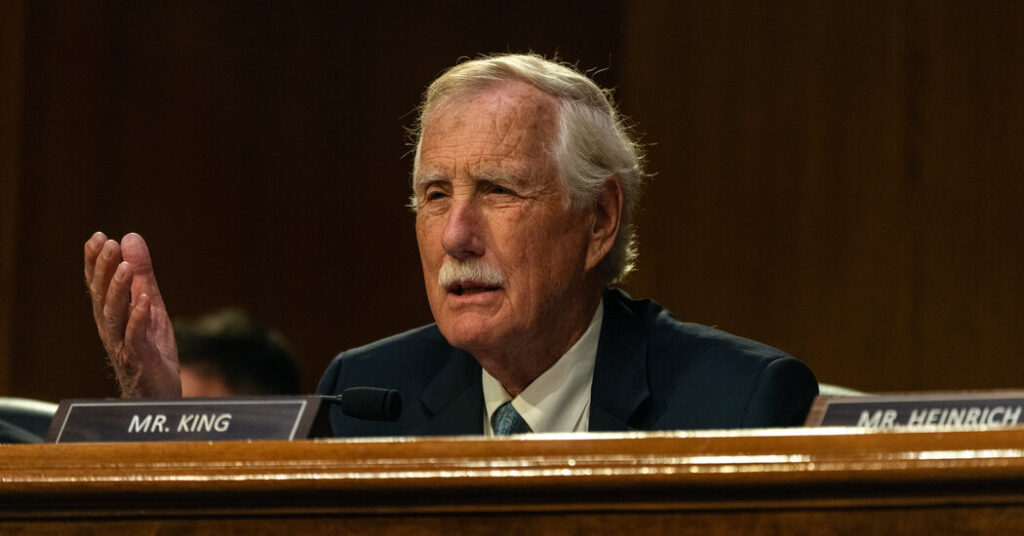
Senator Angus King, the Maine independent aligned with Democrats, has never in more than a decade in Congress opposed the annual Pentagon policy measure, a bill that traditionally draws overwhelming bipartisan backing by lawmakers eager to show support for America’s military.
Yet Mr. King this month crossed what was once considered a political red line, by joining Senate Democrats in unanimously blocking a bill that would lay out more than $1.15 trillion in Pentagon spending.
On Wednesday, 205 House Democrats voted against that chamber’s version of the legislation, a striking break from the past when only the most liberal Democrats dared to oppose the annual defense bill.
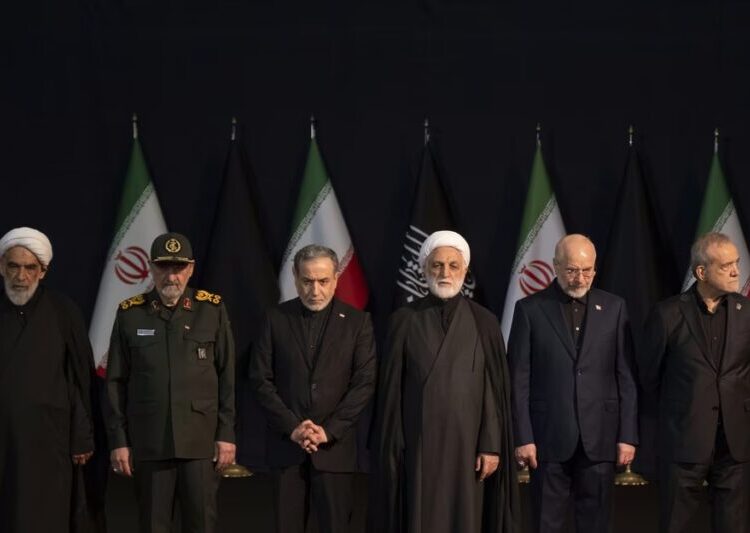
The shift underscored the hardening partisan divide over the war with Iran and its elevation as an issue in the coming midterm campaigns. It also highlighted an evolution in the strategy of leading Democrats in Congress, who have become more responsive in recent months to pressure from voters to reject the status quo.
“It is hard to go home and say we need this level of increase when I just learned that, for example, over 4,000 kids are losing SNAP benefits in Maine,” Mr. King said, referring to federal nutrition assistance.
The turnaround reflects what Democrats see as strong voter sentiment against the war. It also points to a realization born of the two recent government shutdown fights Democrats waged with President Trump and congressional Republicans that positions that were once viewed as politically treacherous — such as opposing a defense bill, voting against homeland security spending or blocking government funding overall — can sometimes be political winners instead.
“I said to our caucus, ‘We cannot do business as usual,’” Senator Chuck Schumer, Democrat of New York and the minority leader, said in recounting the argument he made for Democrats to band together to block the Pentagon legislation as a proxy for their resistance to the war in Iran.
In an interview, he called the war a “horrible fiasco.”
“It is not just political,” Mr. Schumer said. “It is how we really feel and how the American people feel. So we are just doing our job by voting against these things.”
The Pentagon measure is just one notable break from ingrained voting patterns by Democrats who have become more responsive to pressure from voters.
This month, almost half of House Democrats voted to cut off federal aid to Israel over its conduct of the war in Gaza, an almost unthinkable rupture after decades of unflinching support for the Jewish state. Democrats, along with a handful of Republicans, have also blocked the extension of a terror surveillance tool that was previously sacrosanct in a fight with the president over his appointment of an inexperienced loyalist to a key intelligence position.
The votes came after Democrats, in a running spending fight with Republicans and Mr. Trump, voted multiple times to block funding for government agencies and the Trump administration’s immigration crackdown after years of avoiding such votes out of a fear of causing a constituent backlash.
The unwritten rule in Washington has long been that the party deemed responsible for opposing a national security measure, blocking government funding or standing in the way of a raise for the troops would pay a steep political price. But the old rules do not appear to be applying the way they once did. Instead, when Mr. Schumer initially cleared the way last year for a spending deal with Republicans to avert a shutdown, he faced an onslaught of criticism from the Democratic ranks.
Democrats say their opposition votes have now been proved correct, particularly in light of public opinion against federal immigration tactics and the war.
“I think sometimes members of Congress put themselves in the Washington bubble and scared themselves in a way that was not justified by public sentiment,” said Senator Chris Van Hollen, Democrat of Maryland. “But when it comes to a bill that essentially endorses an illegal war in Iran, you better stand up because the American people have been way ahead of Congress on some issues.”
Republicans quickly sought to blame Democrats for playing politics and shame them for stalling Pentagon legislation that Democrats had helped mold.
“Do Democrats think that voting against our national defense and our nation’s military will gain them points with their base?” Senator John Thune, Republican of South Dakota and the majority leader, asked on the Senate floor. “Or do they simply think they can afford to ignore our nation’s defense needs until some hostile actor takes advantage of our weakness?”
“I don’t know,” he added, “but I do know that our nation is less safe because of Democratic actions.”
Democrats, however, believe they are on solid ground given their reservations about the conduct of the war and the substantial spending increases being demanded by the Trump administration.
They shrugged off the potential political repercussions for opposing what is officially known as the National Defense Authorization Act, a bill that has passed annually for more than 60 years and is a particular point of congressional pride.
“I have never voted against the N.D.A.A., but I will because it is perceived, understandably, as a referendum on the Iran war,” said Senator Richard Blumenthal, Democrat of Connecticut and a member of the Armed Services Committee. “We’ve been given no opportunity to vote on the war, which is not only our obligation but our right. We have been stonewalled.”
Even the two top Democrats on the military panels, Senator Jack Reed of Rhode Island and Representative Adam Smith of Washington, are opposing the measures they were closely involved in writing. It has been a wrenching decision for both.
“They are taking us down roads that I think are incredibly dangerous and make it very hard to maintain that bipartisan spirit,” Mr. Smith said on Wednesday about the Trump administration as he voted against the Pentagon legislation. “I can’t support this bill. It profoundly hurts me, because I believe in this process.”
Other Democrats say there are too many unanswered questions about the war and the administration’s strategy, as well as the spending increases being sought, for them to agree to move forward now with the Pentagon legislation. It has in the past been approved late in the year, and Democratic defense hawks still see a path to backing it at a later date.
“I hope that I am going to be able to vote for an N.D.A.A. before the year is over,” said Senator Jeanne Shaheen, Democrat of New Hampshire.
For now, Democrats are holding tight against it despite their track record of support.
“Although the bill doesn’t specifically address Iran, it is inevitably part of the discussion,” Mr. King said. “It’d be hard to explain a vote to say: ‘Well, I’m against the Iran war. It’s never been justified. It’s never been authorized. But I voted for a bill that funds the department.’”
The post Opposing Defense Bill, Democrats Shift Their Tactics appeared first on New York Times.