This is an edition of The Atlantic Daily, a newsletter that guides you through the biggest stories of the day, helps you discover new ideas, and recommends the best in culture. Sign up for it here.
Welcome back to The Daily’s Sunday culture edition, in which one Atlantic writer or editor reveals what’s keeping them entertained. Today’s special guest is Janay Kingsberry, a staff writer who has covered Donald Trump’s takeover of the Kennedy Center, the president’s beautification projects, and more.
Janay has been on a memoir-reading spree, and one in particular inspired her to explore writing her own. She also enjoys wandering around with her film camera, has plans to watch The Odyssey twice, and wishes that capri pants weren’t back.
— Stephanie Bai, senior associate editor
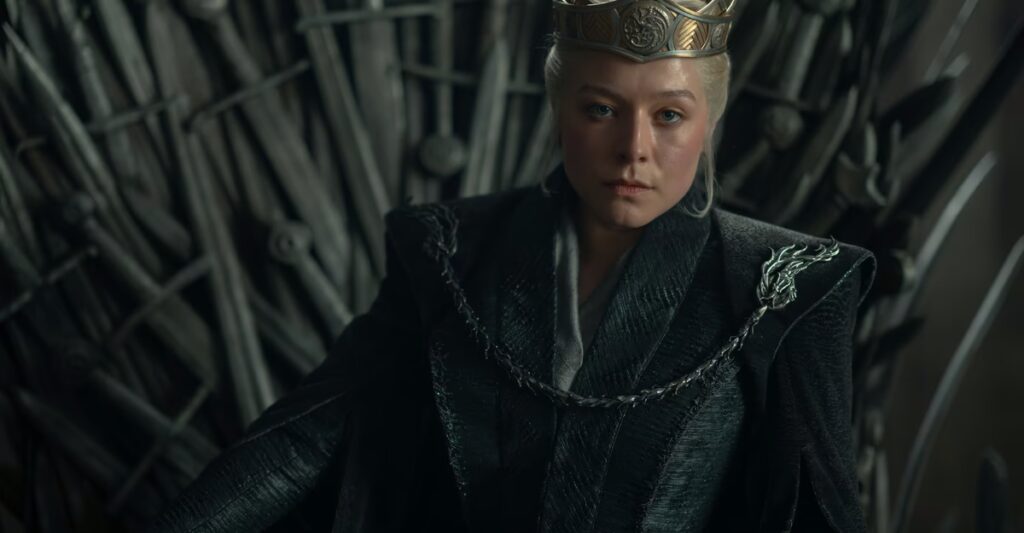
The television show I’m most enjoying right now: House of the Dragon is a double-edged sword for me. Every Sunday brings equal parts joy and emotional torture. But like the rest of the internet, I’m completely captivated by Emma D’Arcy’s adept portrayal of grief, and I can’t believe we have to wait a whole year for their Emmy win. [Related: What Game of Thrones never got around to showing]
The best novel I’ve recently read, and the best work of nonfiction: Ariel Lawhon’s The Frozen River is the type of sweeping historical fiction I never would have chosen for myself, but it was my book club’s April selection—and three months later, it’s still lingering with me. The story pulls off the incredible feat of blending fact and fiction, inspired by the real life of Martha Ballard, an 18th-century midwife whose meticulous diary recording every birth, death, crime, and scandal in her town of Hallowell, Maine, becomes central to both a sexual-assault case and a murder mystery in the book. I loved Lawhon’s vivid writing and the way she threads romance, charm, and wit through some dark material.
For nonfiction, I will never stop recommending Elizabeth Alexander’s The Light of The World. It arrived at my doorstep two years ago as one of the most meaningful gifts I received in the months after my husband’s death. I read it in a single sitting, then immediately started it again. The way Alexander writes about her late husband, Ficre, and their marriage—as a mosaic of intimate, ordinary moments; memories; and Eritrean recipes—quietly reshaped how I approach personal narrative. Her grief is palpable on every page, as is the joy of having loved so deeply. It was the first book that made me want to write my own, setting me on a path to read more memoirs about loss, including Joan Didion’s The Year of Magical Thinking and the book currently on my nightstand, A Grief Observed. Most of all, Alexander’s reflections helped me see that my memories of Michael—our courtship, our marriage, our individual passions and shared dreams—could become something more than just a private refuge.
The upcoming entertainment event I’m most looking forward to: Until now, The Odyssey was, as Christopher Nolan recently put it, an “odd” cinematic gap for an entertainment industry obsessed with great epics and existing IPs. But I’m glad that he’s the one bringing it to the big screen with the scale it has always deserved. So far, I’ve purchased two sets of tickets: one for my neighborhood theater, and another for an IMAX showing at the Smithsonian’s Air and Space Museum—one of those distinctly Washington, D.C., experiences that I too often overlook but that is probably the best way in which to fully indulge my inner Greek-mythology nerd.
A cultural product I loved as a teenager and still love: I hesitate to say that 15-year-old me was an early adopter of film photography, because it obviously predates me by about 100 years—but as analog cameras enjoy another resurgence, I feel a little ahead of the curve. I still pick up a disposable camera or two for quick weekend getaways, and the photos I treasure most are the ones I take with the Canon AE-1 that Michael gave me for Christmas eight years ago. The beautiful thing about shooting film (and maybe one of the reasons so many people are turning to it) is that its limitations force you to slow down and be more intentional about what you want to capture—something that I think gets lost with digital cameras and smartphones today. I love tinkering with shutter speed and aperture, waiting for my rolls to be developed, and discovering the soft grain, happy surprises, and quirky imperfections that emerge.
Something I loved as a teenager but now dislike: Capri pants, which are also, apparently, back.
The last museum or gallery show that I loved: As a Georgia girl, I have a soft spot for art museums across the South. The last one I visited was the Gibbes Museum of Art; it’s housed in a gorgeous beaux arts building in Charleston, South Carolina. I was really taken by its Mary Jackson Modern and Contemporary Gallery, which features a rich mix of works by artists in the region. But my favorite part of the visit was discovering Leo Twiggs. He creates batik paintings, a traditional textile art form that uses wax and dye, to explore southern identity and challenge symbols of bigotry. His career spans roughly six decades, and Gibbes was the first museum to present a full retrospective of his work in his home state. It felt really meaningful to see his pieces honored in that way, as I think more about the stories I want to tell.
My favorite way of wasting time on my phone: Admittedly, there are days when I don’t read a single story with my New York Times subscription—I just play the games. In the morning, I start with Wordle, the Mini Crossword, and Connections. Throughout the day, I’ll chip away at Pips, a visual-logic puzzle where you arrange a set of dominoes to satisfy specific conditions on a board. Numbers have never been my thing, so it’s a tiny victory when I can complete all three difficulty levels of the game.
A favorite story I’ve read in The Atlantic: I am lucky to have once called the former Atlantic fellow Lena Felton my editor when we were at The Washington Post, but it always feels like a gift to read her own writing. Before she hired me, I came across her Atlantic essay “Rewriting My Grandfather’s MLK Story,” which begins with a long-held piece of family lore and then unfolds into a deeper discovery about her grandfather’s role in America’s civil-rights fight and his legacy as a physician at Harlem Hospital. Felton writes with such grace that you almost forget how much reporting is holding the story together. I think about it often when I need a reminder that some of the most powerful stories are waiting to be excavated and elevated within our own families.
The Week Ahead
- Stuart Fails to Save the Universe, a spin-off of The Big Bang Theory about a comic-book-store owner who tries to save the universe, with predictably disastrous results (out Thursday on HBO Max)
- Cool Machine, the concluding installment of Colson Whitehead’s Harlem Trilogy (out Tuesday)
- Sheep in the Box, a Japanese sci-fi drama about a married couple who decide to welcome a humanoid robot as their son (in theaters Friday in the U.S.)
Essay
Reading a 3,000-Year-Old Poem to a 3-Year-Old Boy
By Chris Moody
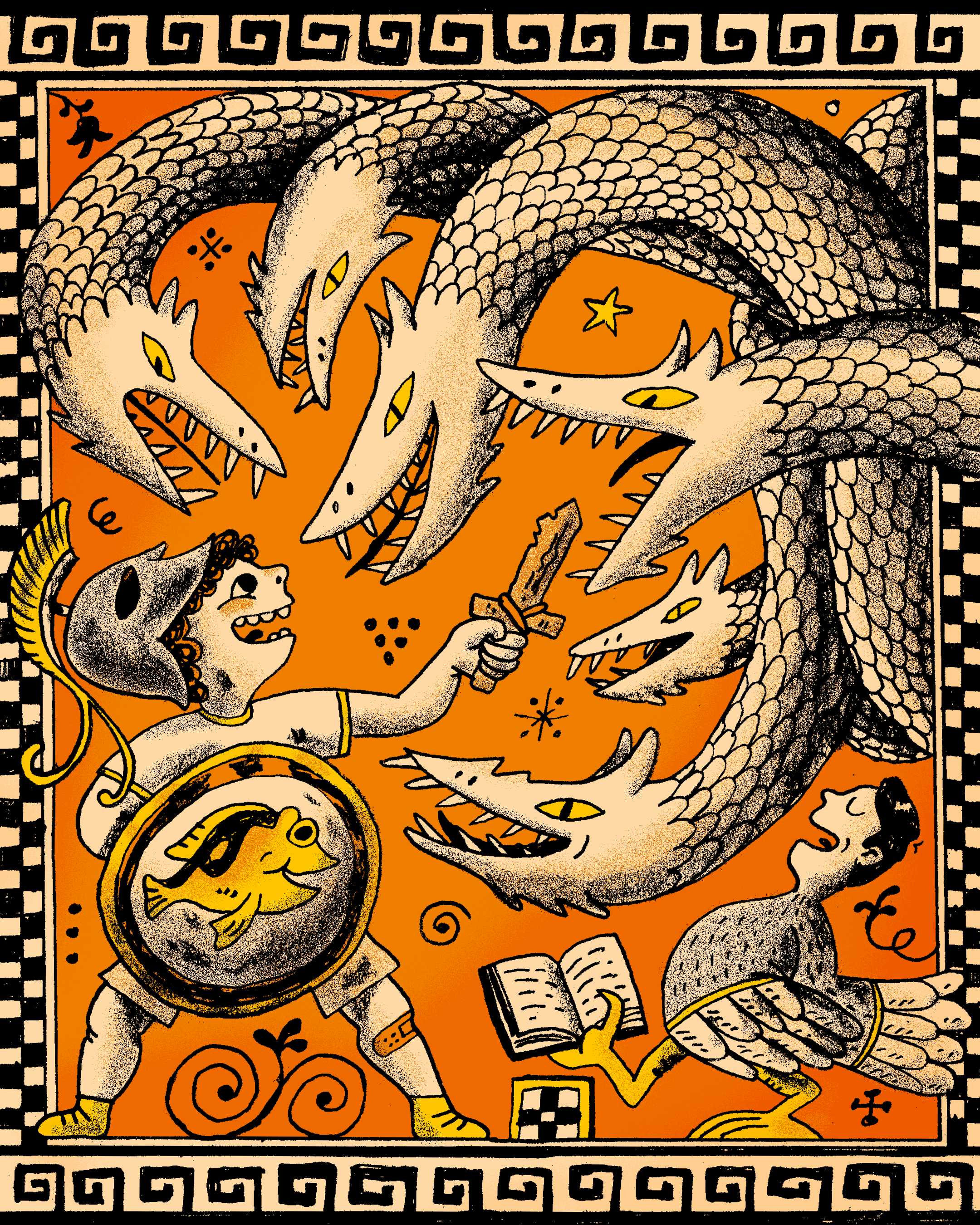
In Book 12 of Homer’s Odyssey, a band of war-weary sailors is navigating home when a narrow strait appears on the horizon. The ship, captained by their king, Odysseus, is blocked on one side by a high cliff where a six-headed monster named Scylla is waiting to devour those who pass beneath. On the other side lies a whirlpool called Charybdis that could swallow the ship whole. Odysseus orders his men to row on. Scylla pounces, snatching members of the crew between her jaws. As she consumes them, Homer writes, they shriek, stretching out their arms in “horrifying death-throes.”
It’s a gruesome scene, one of many in this confusing, archaic poem composed some 3,000 years ago. One night this winter, hearing Scylla’s tale read aloud to him for the first time, my 3-year-old son, bundled in his pajamas before bedtime, had a request.
More in Culture
- All the cool kids are birding.
- An Odyssey deserving of the biggest screen possible
- The 40-year-old man-child
- How the elite see Rome
- The Odyssey was never about the gods.
- When did sports get so loud?
Catch Up on The Atlantic
- Tom Nichols: Trump owes Americans a better explanation about Iran.
- David Frum: Trump dooms his own party.
- The shooter in Maine was a new ICE recruit.
Photo Album
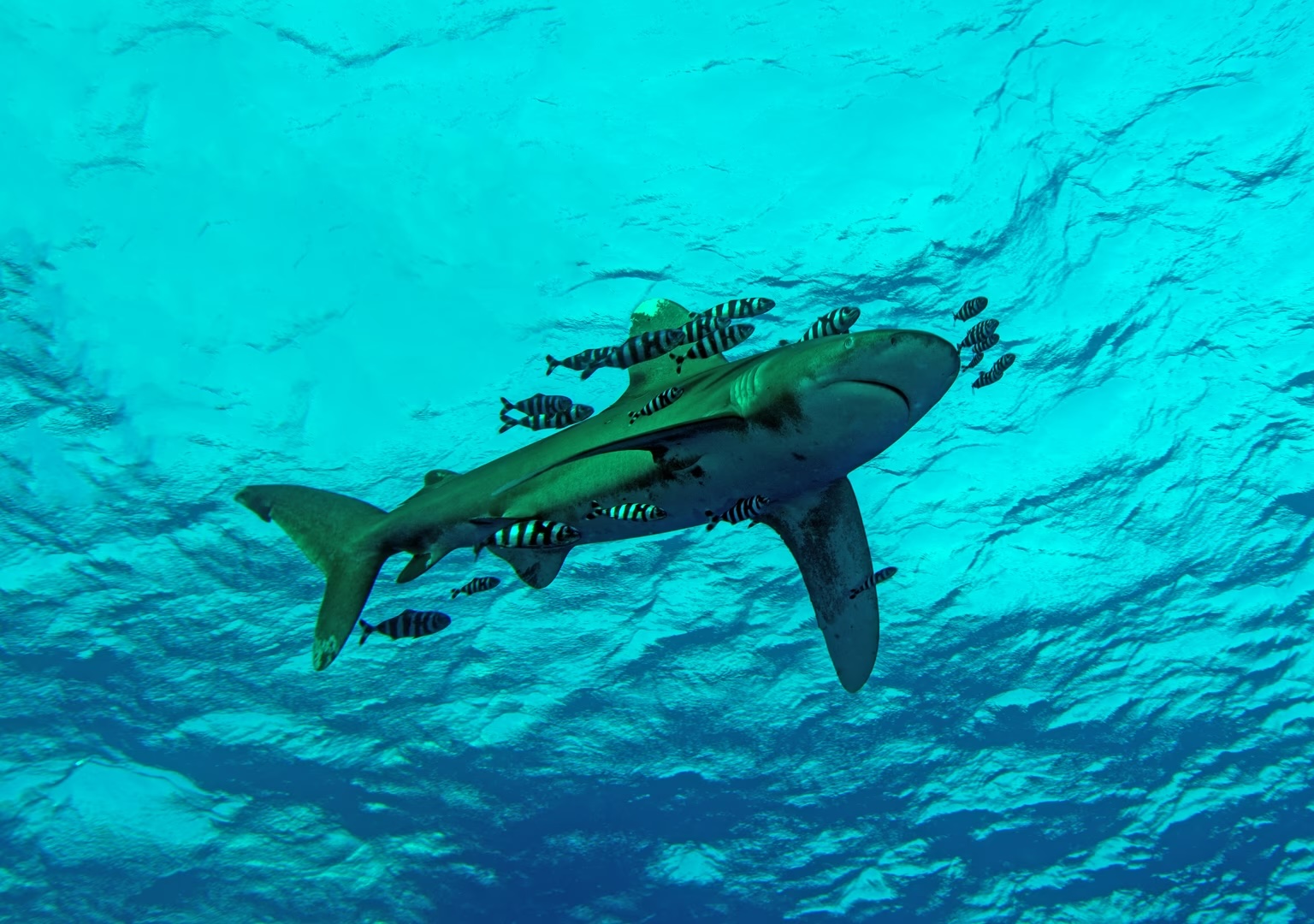
Explore a collection of images of the wonders of ocean life.
Rafaela Jinich contributed to this newsletter.
Explore all of our newsletters.
When you buy a book using a link in this newsletter, we receive a commission. Thank you for supporting The Atlantic.
The post A TV Show That’s Equal Parts Joy and Torture appeared first on The Atlantic.