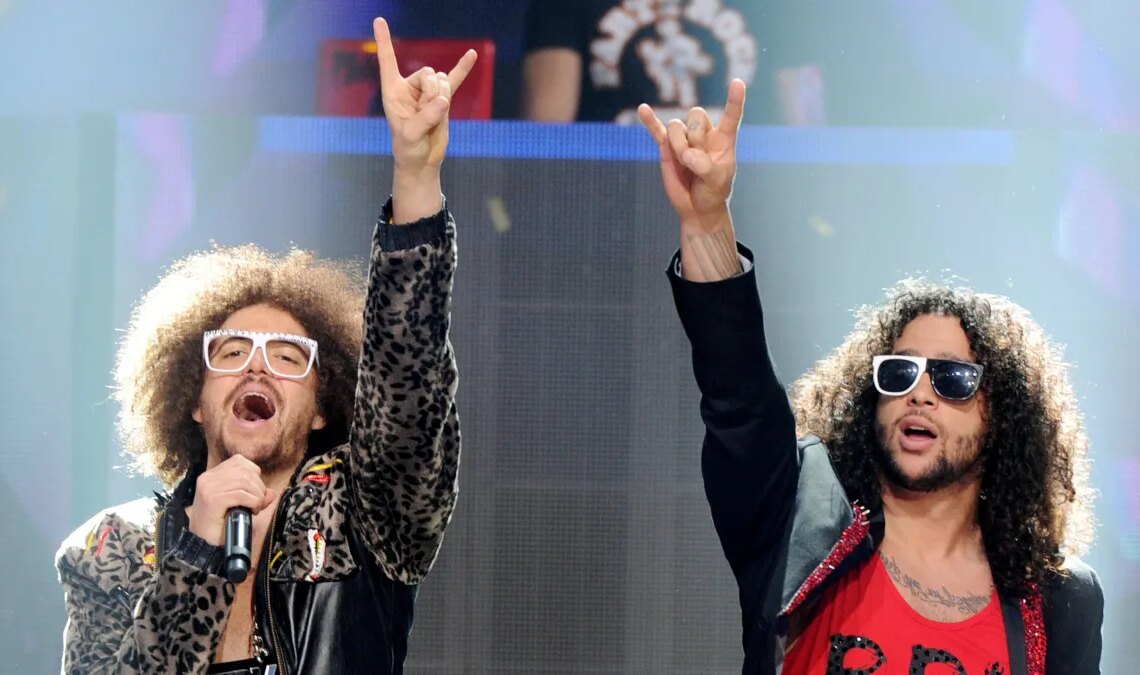
On July 16, 2011, a little song called “Party Rock Anthem” peaked at No. 1 on the Billboard Hot 100 and stayed there for six weeks. Despite (or maybe because of) its in-your-face everything, the song saturated the airwaves, gaining traction with the Millennial set. It sparked confusion and derision as well. But there was a time when “Party Rock Anthem” was unironically beloved.
Nowadays, we often consider LMFAO’s “Party Rock Anthem” with nostalgic fondness and a fair share of embarrassment. But for the youth of 2011, clearly that song’s target audience, the world seemed like it could really be party rock all the time. Obviously, not the case. But recession pop’s charm, as it’s now known, held the idea that this golden age of youthful ambition could actually last.
So with what seems like a decline of Western civilization in the past decade, we’re now forced to look at “Party Rock Anthem”, of all things, through a philosophical lens. How is it possible that we ever experienced a world where “Party Rock Anthem” not only existed, but was No. 1 on the Hot 100 for six weeks? It seems impossible now. Not only at our cultural crossroads today, but with the way the music industry has changed so drastically in such a short time.
‘Party Rock Anthem’ is Undoubtedly Absurd, but It Was the Song of the Summer in 2011
What would be LMFAO’s last lead single spent a total of 68 weeks on the Billboard Hot 100, and was the third-best-selling single of 2011 worldwide. This phenomenon wasn’t just contained to the U.S. This was a global sensation. “Party Rock Anthem” doesn’t happen in a vacuum.
In 2025, the music video reached 2.5 billion views. Additionally, it’s still ranked as the seventh most successful song of all time, according to Billboard. Clearly, this song had Billboard in some sort of chokehold. The publication named it their 2011 song of the summer. And really, when you think about it, that was the perfect time for a song like this. Brat Summer pales in comparison to whatever was happening in summer 2011.
But is it possible we could be on the cusp of a “Party Rock Anthem” for a new era? Maybe some have already tried, but none have reached the same level of widespread popularity. The roadblock, it seems, is sincerity. “Party Rock Anthem” wasn’t done in jest, or irony, or satire. It was a sincere reflection of the obnoxious youth culture in the 2010s.
Maybe nostalgia and time have distorted this recollection of LMFAO’s summer hit. But it doesn’t hurt to remember your roots every once in a while. And unfortunately for a lot of us, our roots include “Party Rock Anthem”. Even if it’s against our will.
The post 15 Years Ago, This Millennial Anthem Began a Record Number of Weeks on the Hot 100, Despite Being Super Annoying appeared first on VICE.