The U.S. missile attack on Greater Tunb island in the Strait of Hormuz on Wednesday struck at the heart of a longstanding dispute between Iran and the United Arab Emirates.
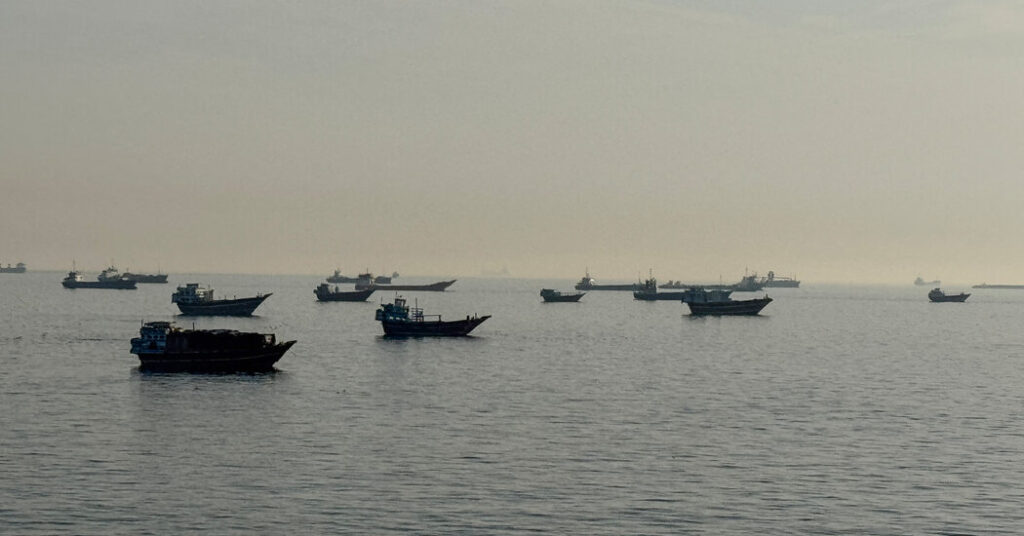
Greater Tunb is one of a string of islands in the strait that Iran uses to control shipping through the Persian Gulf. The outposts enable Iran to blanket the narrow shipping lanes with drones, antiship missiles and fast-attack speedboats.
Beyond its strategic utility, Greater Tunb holds historical and political significance for Iran. Its forces seized control of the island, along with the islands of Lesser Tunb and Abu Musa, from the United Arab Emirates in 1971.
More than half a century later, the U.A.E. continues to designate the islands “occupied.” The Emirates claim that since the 18th century, the islands had belonged to the Qasimi tribe, the rulers of two emirates that became part of the U.A.E. at its formation in 1971.
The U.A.E. says it has sought to negotiate with Iran since its invasion, and taken the matter to the International Court of Justice, to no avail.
Iran’s Islamic Revolutionary Guards Corps has a presence on the island, though the number of its permanent inhabitants is unclear. In 2023, Iran began initiatives to lure more people to live on the islands and conducted military exercises in an apparent bid to reinforce its control of them.
Wednesday’s bombardment follows a pattern of U.S. attacks and threats on islands in the Persian Gulf during the war with Iran. President Trump has repeatedly threatened to take Kharg Island, home to Iran’s biggest oil terminal, which lies some 400 miles away from the Strait of Hormuz, near the northern end of the Persian Gulf. Any such U.S. operation would require American ships to take a risky journey across the whole of the Persian Gulf.
The post U.S. Strikes Hit Tiny, Disputed Island in Strait of Hormuz appeared first on New York Times.