“Everyone is getting strapped,” explains my source.
He comes off as highly-cautious, insisting on anonymity as we message back-and-forth. He handles five- and six-figure transactions regularly, and worries about becoming a target. You might think I’m talking to a drug or weapons dealer here, or perhaps a pimp.
In actuality, the person tooling up in self-defense is a high-end Pokémon card collector.
Pokémon cards are worth a lot of money these days, leading to a string of brazen armed robberies set up as in-person deals. One particularly violent incident went down in broad daylight on July 3 in Los Angeles. Writing on Instagram, a seller of Pokémon and One Piece cards who trades under the name “Spicy Duck” says he was assaulted during a deal arranged on Facebook Marketplace. “I got around seven stitches in the back of my head,” he tells VICE. “I have a very bad pain in my head and short-term memory loss.”
According to Spicy Duck, the deal went down at a Bank of America. He claims security did nothing but watch as he was beaten with a baseball bat and then punched in the head by two attackers, after a third person snatched his cards. “I was yelling ‘help’ and they didn’t help,” he says. When it was over, a massive pool of his blood covered the sidewalk outside.
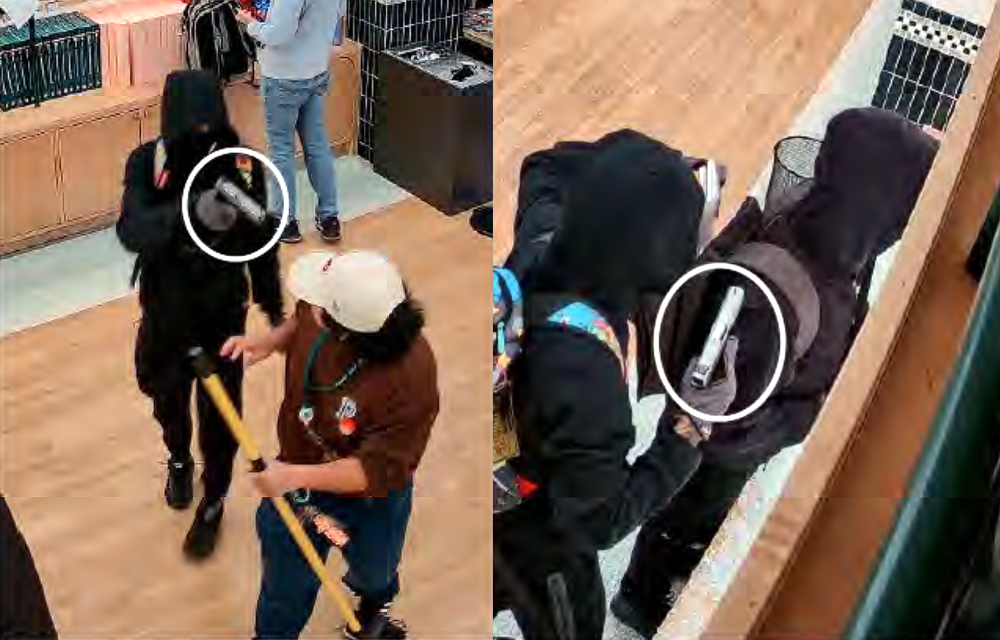
These kinds of robberies are becoming more frequent, and they generally follow a similar playbook: criminals set up an in-person deal for expensive cards, a fairly common type of transaction in the trading card game economy, then pull out a weapon and/or beat the seller into giving up the goods. In Durham, North Carolina, two teenagers are facing felony charges for a pair of armed robberies that followed this exact method.
A similar meet-up-turned-mugging recently occurred in San Francisco, where a thief pepper sprayed a seller, grabbed the cards right out of his hands, and bolted to his getaway vehicle. At the end of June, a father and son were leaving a card show in Woodbridge, New Jersey, when they were pistol-whipped by two men and taken for a whopping $150,000 in cards and $12,000 in cash.
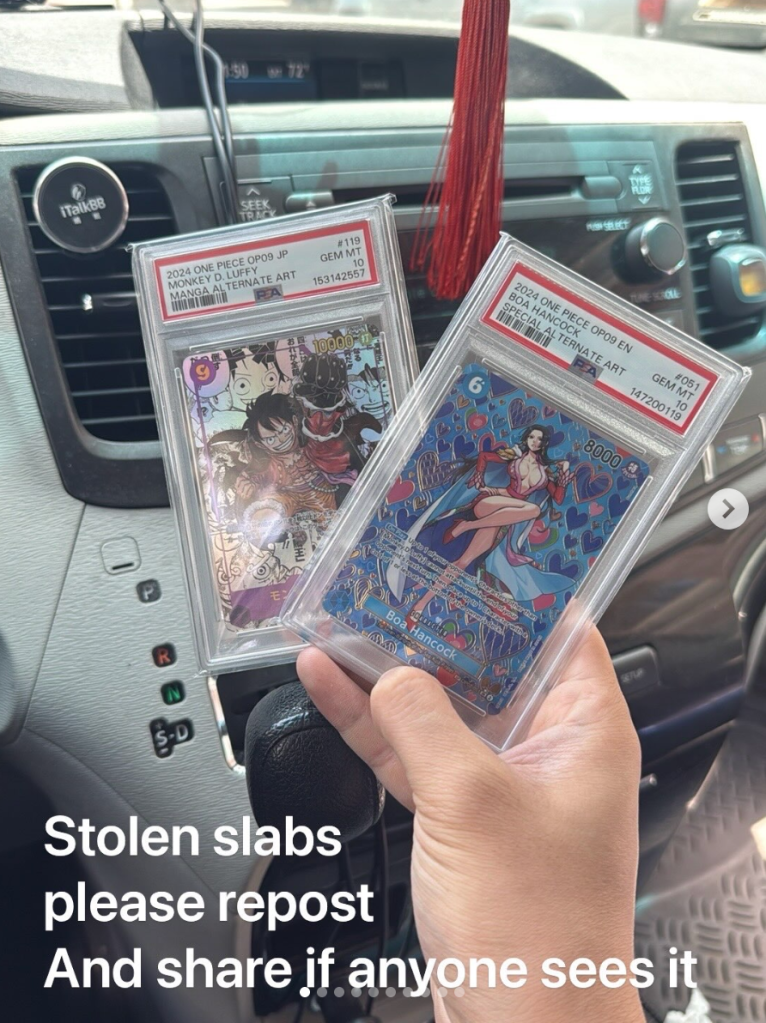

For buyers and sellers of expensive cards, the risk has now become too large to ignore. Specialty trading card stores are ramping up security, installing video cameras, and encasing their product in smash-proof glass cases. Some are even considering hiring armed security, if they can afford it.
But for smaller sellers without a storefront, many feel they have to take matters into their own hands. One collector of high end cards, requesting anonymity for reasons that should now be obvious, told VICE he no longer makes any trades in person. “Any risk on life is not worth [engaging] in real-life deals,” he said. “If I feel like I need to go to the police station for a deal—or bring a gun—that is already a problem.”
Others are more willing to consider alternative options. “People should bring something to be armed up,” another seller told VICE. “[Pokémon cards] are real things. People have eyes on them. Bad people.”
When you were collecting first–generation shinies as a kid, you probably weren’t thinking of them as a shrewd investment in your retirement. Now, there’s a chance—albeit a slim one—that it actually could be. At the very least, you could get a few hundred to a few thousand bucks for it. Newer cards, fresh from the printing factory, can command a premium too, with some desirable ones clearing four figures in perfect condition. If you’re lucky, you can pull one of these cards out of a pack today and walk out of the store with a small fortune.
“If I feel like I need to go to the police station for a deal—or bring a gun—that is already a problem”
As with everything, where there’s money, there’s crime—but for Pokémon cards, probably a lot more crime than you’d expect. The cards themselves are the perfect targets for theft, scams, scalping, and even money laundering. Light and easy to carry, inconspicuous, extremely liquid, essentially untraceable, and regularly bought and sold with cash, a stolen collection can be fenced to a buyer at 60-80+ percent of market price, no questions asked. Pricier cards can be purchased with dirty money and taken around the world, where again they can be sold for straight cash in almost every major city on earth, avoiding banks, the tax man, and customs.
High-profile robberies of specialty trading card stores have made headlines recently, such as the broad-daylight $100,000 robbery of The Trainer Court in New York City or the forty-second $15,000 heist of The Card Lab in Brentwood, California, but the frequency of low-level “street” crime is what is really staggering. And no one is more acquainted with the seedy underworld of Pokémon cards than the administrator of “PokéStreetz”, a social media account on X, Instagram, and Facebook that catalogs Pokécrime.
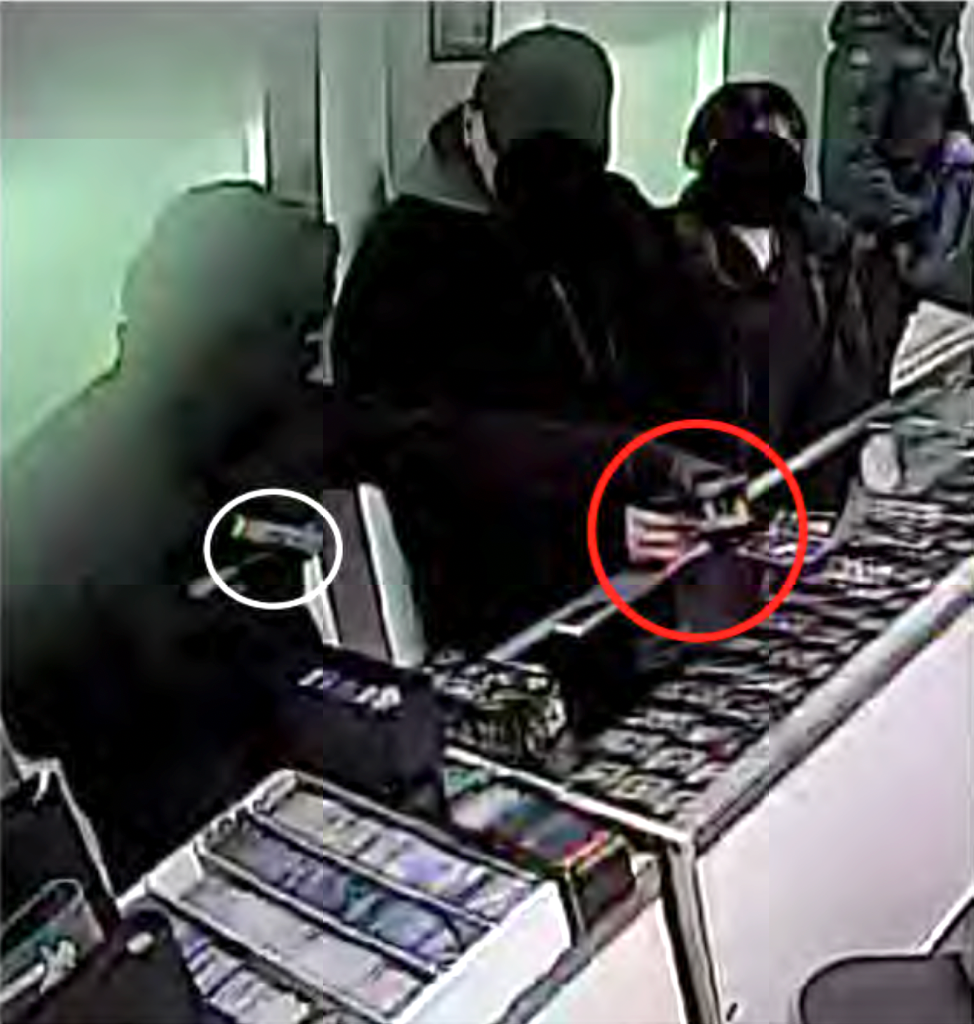
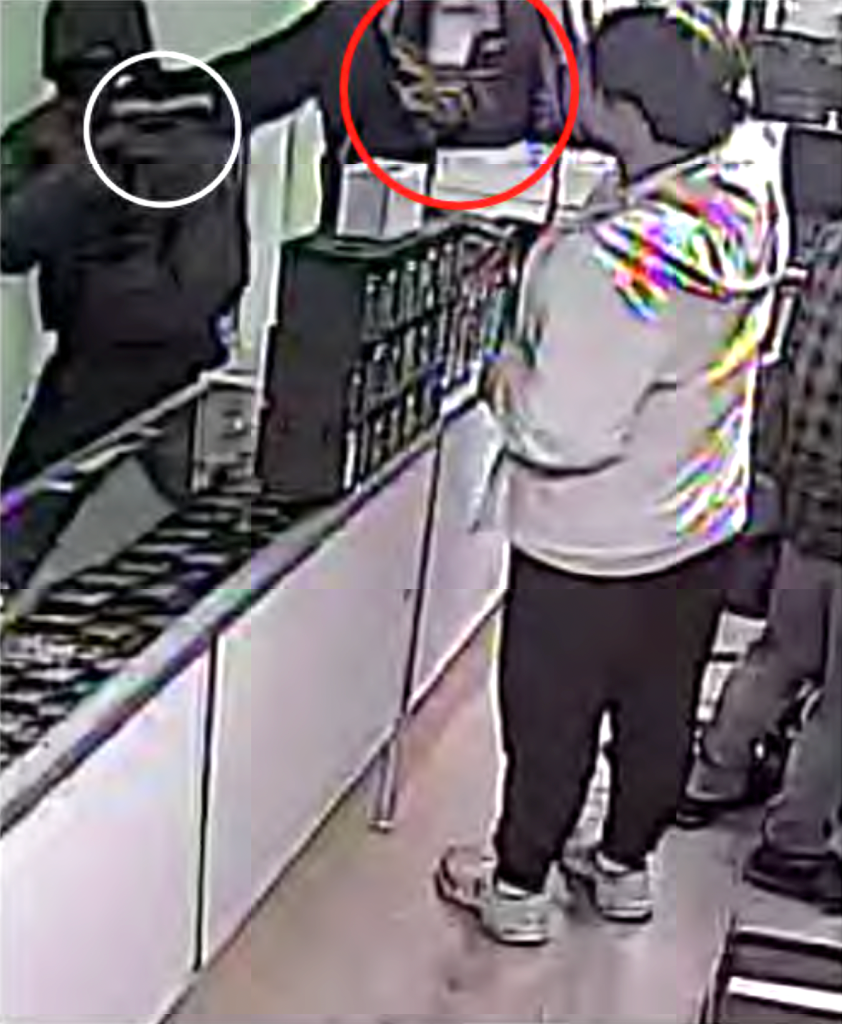
“I’ve heard people talk about sellers and buyers taking more extreme precautions, including claims that some are carrying protection to deals,” the administrator told VICE. “The fact that people are even having these conversations shows how much the hobby has changed.”
A cursory look at PokéStreetz will tell you this is a phenomenon bigger than anyone quite realizes, and much more violent. There are daily videos of grown adults fighting, arguing, and threatening each other over Pokémon. In one video, an alleged scalper crew stacks $40,000 in “product” in a sketchy parking lot deal; in another, a hooded mob of London youths ransack a trading card store. In April, a man was shot after cutting the line to buy cards at an Indianapolis Kroger.
“When people see a $50 item flip for double or triple, the hobby starts attracting people who don’t care about collecting at all,” the administrator explains. “The more serious stuff we’ve seen or had submitted includes fights, threats, robberies, attempted robberies, people following others after purchases, and allegations of backdooring.”
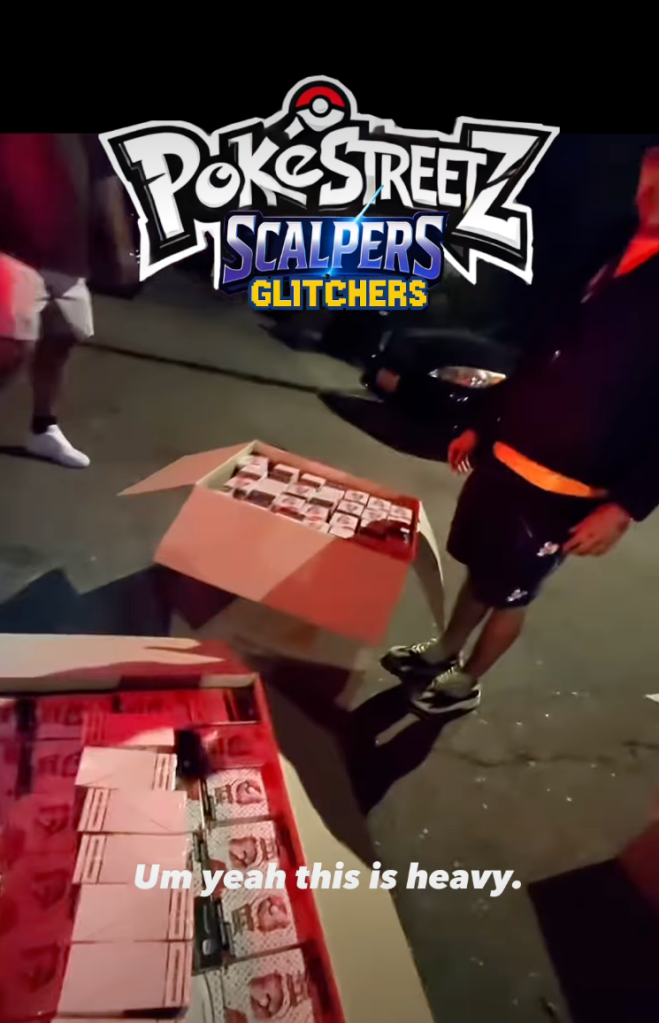
The reasons for the mind-boggling level of scalping and retail theft—as well as the fights and robberies that it foments—are slightly convoluted. First, there’s the simple economic factor: demand far exceeds supply. If you can purchase a “sealed” Pokémon product from a retailer, you can flip an $8 pack or $40 booster box (a package of multiple packs) for easily twice or even three times the MSRP on Facebook, eBay, or dozens of other similar marketplaces.
“Light and easy to carry, inconspicuous, extremely liquid, essentially untraceable, and regularly bought and sold with cash, a stolen collection can be fenced to a buyer at 60-80+ percent of market price, no questions asked”
Scalpers (or, as they prefer to call themselves, “resellers”) have it down to a science. They form group chats that know when stores will restock and camp out before they open for business. There are rumors that some even have connections with store employees, giving them a further advantage over other scalpers and legitimate buyers. If there’s no limit on quantity, they’ll buy out an entire shelf. If there is a limit, they’ll have others with them—their “crew”—to purchase as much as possible.
But when scalpers raise prices through the roof, typical collectors are priced out. So who is actually buying? Some people are simply willing to cough up the dough. But the answer also lies partly in America’s newest obsession, online gambling. On platforms like WhatNot and TikTok, influencers known as “rip and shippers” have managed to gamify and monetize the act of opening up packs of Pokémon cards.
Here’s how it works: “Rip and shippers” will buy significant amounts of sealed product at a slight markup from scalpers, or, in some cases, may be part of a scalping crew themselves. They will then auction off packs from the sealed boxes on livestream, with users pre-purchasing whatever cards are inside a specific pack they won the bid on. The pack is opened on stream to dramatic fanfare, and the cards later shipped to the buyer.
Because finding packs at retail prices is so difficult, and because some people really just have a gambling problem masquerading as a trading card hobby, audiences are ready to pay not only far above retail, but even above the scalping price. The language and presentation of a rip-and–ship stream often resembles that of a casino, too; landing a pricey card is known as a “hit,” and some streams will involve a spinning wheel.
On any given day, scalpers, scammers, and fraudsters are trying to find the product that eventually makes its way to the online casino. That’s the bit you don’t see so much online, but it’s very much causing problems in real life. A common refrain among hobbyists rings true: the PokéStreetz are not for the weak. “People are worried about robberies, being followed, or getting set up,” the PokéStreetz administrator says.
“[Pokémon cards] are real things. People have eyes on them. Bad people”
At a newly opened Pokémon store in New York City’s Lower East Side, owner J.P. tells VICE that taking fraud and theft seriously was one of the first lessons they learned after a slew of chargebacks from presumably stolen credit cards. “We’ve upped the security; you have to ID match or we’ll just say no.”
Like other sellers I’ve talked to, the shop is hesitant to handle more expensive cards, keeping them out of their storefront for the time being. “You could have the strongest glass possible,” J.P. said. “At the end of the day they can point a gun at you. We have a lot of kids in here.”
When I asked about sellers buying guns to protect themselves, he didn’t mince words. “I think they should, 100 percent.”
Edwin authors the newsletter In A New World, a New Wave-inspired project aiming to explore original imaginations in speculative fiction.
The post Why Pokémon Card Collectors Are Buying Guns: ‘The PokéStreetz Are Not for the Weak’ appeared first on VICE.