Iran’s decision to attack ships transiting the Strait of Hormuz and the U.S. decision to retaliate and threaten to abandon diplomacy have pushed both sides close to the resumption of a war that neither wants.
For the United States—which joined Israel in late February in a war to end Iran’s nuclear ambitions, among other goals—allowing Iran’s continued attacks on ships in the strait risked signaling that Tehran still holds the whip hand over one of the world’s most strategic waterways. But the resumption of large-scale military operations in an unpopular war, ahead of November’s midterm elections and with no guarantee of changing Iran’s behavior, is hardly an attractive alternative. So the Trump administration this week attempted to thread the needle: using missile and drone strikes to try to open the strait without reigniting a broader conflict.
Iran’s memorandum of understanding with Washington, signed three weeks ago, threatened to chip away at its sway over the strait. Despite the commitments it made to offering safe passage when the MOU was signed, Tehran has since repeatedly targeted ships as they pass, asserting its newfound leverage.
The MOU offered Iran extensive financial incentives through sanctions relief, outside investment, and access to frozen funds in exchange for its cooperation. But Tehran has not yet seen the promised financial gains. And Tehran views a recent agreement between Israel and the Lebanese government, brokered by the U.S., as circumventing the MOU, which also promised a cease-fire in Lebanon between Israel and the Iran-backed militia Hezbollah. All of this has made Iran more determined than ever to preserve its control of the strait. So although Iran may not be seeking a resumption of full-scale conflict, it may find that prospect preferable to conceding authority over the strait and losing access to the fees it seeks to charge.
“Iran believes the U.S. is trying to encourage shipping through the strait to take away Iran’s leverage over it, so that Iran has nothing to negotiate,” Vali Nasr, a professor of international affairs and Middle East studies at the Johns Hopkins University School of Advanced International Studies, told us.
“Iran attacked with a clear agenda, and Trump pushed back,” Nasr said. “And the result is we may sleepwalk our way back to war.”
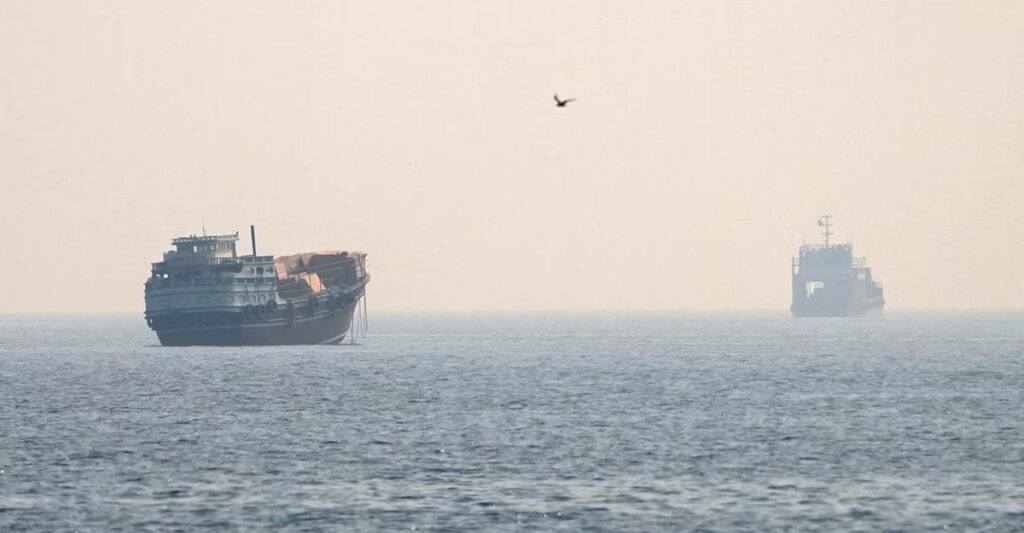
The tit-for-tat strikes began Monday when Iran attacked three commercial vessels sailing through the Strait of Hormuz. U.S. forces then struck more than 80 Iranian targets, including small boats that Iran uses to threaten ships in the strait, and Iran responded with drone and missile attacks on Kuwait and Bahrain, both of which are home to U.S. bases. By today, the cycle showed no sign of abating, as the U.S. conducted another round of strikes this afternoon. “We hit them very hard last night,” Trump said at the NATO summit hours earlier. “We’ll probably hit them hard again tonight.” He added: “I’ll give them a little warning: We’re going to hit them hard tonight. But we’ll see how it all works out.”
The president was clearly losing patience with the 60-day negotiating period that the MOU ushered in. He said talks can continue but that, from his perspective, negotiations were “over.” “I don’t want to deal with them anymore,” he added.
Trump has been frustrated for weeks about his inability to make the Iran problem go away. He has bitterly complained to advisers about the media coverage depicting the memorandum of understanding as a defeat, particularly when it is compared unfavorably with the Iran nuclear deal struck by President Obama a decade ago.
[Read: Trump dreads an Iran deal worse than Obama’s]
His team has also received worried messages from Gulf States deeply concerned about Iran’s plan to try to exert control over the Strait of Hormuz by charging some sort of toll or fee. Those nations had already borne the brunt of Iran’s attacks in the region—and being forced to fill Iran’s coffers to use a waterway that was free to all prewar is “simply unacceptable,” according to one diplomat in the region. “There is no way we will stand for this,” the diplomat told us.
But that does not necessarily signal that a return to full-on hostilities is imminent. A White House aide pointed us to the president’s suggestion that negotiations could carry on even as Trump threatened more bombing.
“The U.S. military option is what I would describe as controlled escalation, a sustained military campaign largely consisting of strikes that are focused on degrading Iran’s ability to influence the Strait of Hormuz,” retired Army General Joseph Votel, who led U.S. Central Command, which is responsible for U.S. military operations in the Middle East, told us.
The Iranian government, meanwhile, is signaling its own displeasure with the talks. The millions of mourners at the funeral of Iranian leader Ayatollah Ali Khamenei, who was killed on the first day of the war, may have put pressure on the regime to show resolve against the nation’s long-standing foes. Some Iranians urged their leaders to fight back and avenge Khamenei’s death. His funeral proceedings, which moved to Shiite holy cities in Iraq earlier today, end tomorrow.
U.S. and Arab officials told us that talks between the two sides, although not abandoned, could be suspended until cooler heads prevail. These officials all pointed out that neither side trusts the other. Qatar’s role as a mediator of the negotiations was complicated by Iran’s attack on one of Qatar’s LNG tankers in the strait, igniting an engine fire. The attack raised questions about Doha’s ability to remain an impartial broker after what its government considers an attack on the nation.
The strikes were the second exchange since the extended cease-fire took effect in mid-June. Conflict during cease-fire negotiations is hardly unprecedented. Some of the Korean War’s bloodiest battles, for example, were fought after armistice talks began. And major fighting accompanied the negotiations to end the Vietnam War, as both sides sought to use the maximum pressure available: the stick of military action and the carrot of diplomacy. In Korea’s case, the war ended in a stalemate, leaving the peninsula formally at war. In Vietnam, negotiations stretched over several years and ultimately ended direct U.S. involvement, though fighting continued until the fall of Saigon two years later. The U.S. and Iran may be following that carrot-and-stick strategy. More likely, both sides are keeping one finger on the trigger because neither trusts that the proposed process will end the fighting.
“Sometimes lengthy cease-fire negotiations produce a conclusive result, even if it takes decades to achieve it, as happened with the Vietnam War,” Peter Feaver, a professor of political science and public policy at Duke University, told us. “Other times, it just produces another chapter in a long-running and occasionally violent standoff, as was the case in Korea, which remains a dangerous geopolitical flash point 70 years on.” Which way are the U.S. and Iran tilting? “It is too early to say where the Iran conflict will fall on that spectrum,” Feaver said, “but recent developments are not encouraging.”
Trump has at times praised Tehran’s new leaders as “reasonable” while at other times lashing out at them as “scum” or “sick people.” And on many, many occasions he has threatened to devastate Iran and not followed through. The White House aide categorized Trump’s most recent threat as part of a negotiation and said all options were available. The president’s advisers have signaled to us for weeks now that he is eager to move on by turning to Cuba, to domestic matters, and to his renovation plans for Washington. And Trump is keenly aware of what a return to war would mean for the economy; White House aides today were monitoring the financial fallout from the intensified conflict and from Trump’s comments at the NATO summit in Ankara.
[Read: The U.S. had no choice but diplomacy—yet again]
Oil prices surged today by more than 7 percent to nearly $80 a barrel, roughly $9 above its prewar level of about $71, though still well below the $100-plus reached at the height of the war. The price may keep rising as ships once again avoid the strait. Meanwhile, the U.S. mission appeared to shift in between strikes. Yesterday, Central Command said that any U.S. attack was intended “to hold Iran accountable when the agreement is not adhered to or obeyed.” By today, the mission was to further degrade Iran’s “ability to threaten freedom of navigation in the Strait of Hormuz.” That is, successive days of strikes appear to have already moved the conversation further away from the agreement that was supposed to end the war.
The post Why Do Iran and the U.S. Keep Fighting During a Cease-Fire? appeared first on The Atlantic.