The mourners wailed as one, their cries rising above the Iranian capital in a display of grief that was impossible to ignore.
Four months after Ayatollah Ali Khamenei was killed in the U.S.-Israeli war, millions of Iranians descended on Tehran to pay their respects to the slain supreme leader.
They arrived by bus, in private cars and on foot, streaming in for ceremonies at the Grand Mosalla, the mosque complex where the funeral prayer was held, and later at Azadi Square, where mourners gathered to see the coffin.
Mostly dressed in black, they cried out in sorrow as they waved flags and spoke of an uncertain future for themselves, and for their nation.
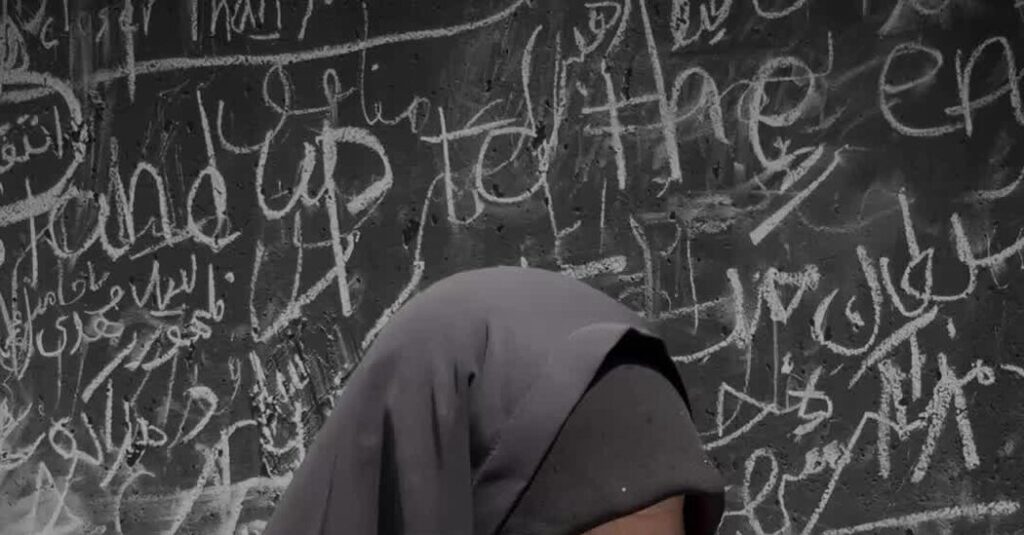
At the Grand Mosalla, Amir-Hossein Noe Doost stood praying for Ayatollah Khamenei against a wall that separated the men’s and women’s sections, as close as he could get to his coffin. Dressed in black robes and a white turban, he repeatedly touched a black memorial wall where mourners had left messages of condolence and defiance.
He and others had driven 12 hours from Ayatollah Khamenei’s hometown, Mashhad, to attend the funeral prayer, he said. They planned to return home and wait for the body to arrive on Thursday.
Mr. Noe Doost compared himself to “a lover” driven by devotion.
He said he had hoped to be among those praying behind Ayatollah Khamenei during his lifetime. He never got the chance, so instead, he said, he was now honored to pray for him.
“He was my love,” he said. “He was my world.”
The New York Times met these mourners while reporting from Iran on a government-approved tour that determined which events the journalists could attend and required the use of a government interpreter and guide. The views expressed by people interviewed at these events may not represent those of many Iranians, while others may have felt unable to speak freely.Many parents brought their children, hoping to show them what they described as the achievements and sacrifices of the patriarch of Shiite Islam — though his legacy has also been marked by the suppression of dissent and the imprisonment, torture and killing of critics.
Across the country, many Iranians have quietly expressed dismay over the hero’s treatment being accorded the slain leader, but those sentiments were absent from the tightly-controlled ceremonies, where the people we interviewed spoke almost exclusively in praise of Ayatollah Khamenei.
Zeynab Tabbakh, 30, a family therapist from Tehran, sat with her 3-year-old son, Mohammad-Hassan, and her 7-year-old daughter, Fatemah-Hosna. She said they had arrived at the Grand Mosalla at 4 a.m. on both days she attended.
She said she had raised her children with Ayatollah Khamenei’s teachings and wanted them to carry his message into the next generation.
“He was the greatest man for all of us — not only for Iran, not only for Muslims, but for all freedom lovers of the world,” she said. “Our children, and the children of our children, will be nurtured by his message.”
The public mourning ceremonies drew people from every walk of life — soldiers, doctors, engineers and day laborers. Whatever their profession or social standing, their grief looked remarkably similar. They beat their chests and cried together.
Cyrus Ghorbani, 55, from Lorestan Province in western Iran, rhythmically struck his chest as he stood among the crowds at the Grand Mosalla.
With most people wearing black, Yussif Ahmadi, 45, an electrical engineer wearing a red headband, stood out in the crowd.
He said he had planned to dress like everyone else and had even ironed his clothes the night before. Overnight, he said, he felt compelled to put on his military uniform instead, to signal both solidarity and his readiness to avenge Ayatollah Khamenei’s death.
“My black clothes were ready,” he said, but the fatigues were “most suitable for this day.”
In the women’s section, Minoo Zolf’ali Poor, 30, a software programmer, had swollen eyes after days of mourning. She said she had spent nearly all her time at the Grand Mosalla, returning each day.
“It’s hard for me to leave his side,” she said.
By Monday, the mourning had shifted to Azadi Square, where millions again filled the heart of the capital despite the oppressive heat.
As the crowd surged through the square, Abolfazl crouched against a nearby wall.
“We have great sadness in our hearts,” he said. “But we have to endure.”
A few blocks away, Fereshteh Sultan-ali, 48, had traveled from Malard, about 24 miles west of Tehran. Between bouts of tears, her expression hardened into one of anger and defiance.
She said she opposed any negotiations between Iran and the United States and was prepared to become a martyr so she could avenge Ayatollah Khamenei’s killing.
“Trump cannot scare us with death,” she said.
The post The Many Faces of Mourning: Iranians Bid Farewell to the Ayatollah appeared first on New York Times.