I understand that we’re all dressing more casually these days, especially so since the pandemic. But there is something special about going to a play or a nice restaurant, and increasingly I’m seeing folks at such places dressed in what they’d wear to the supermarket or to do chores around the house — which kind of makes me sad. Are we losing something? — Janet, New York City
Dressing up can be one of the great joys of life. It is a shared human ritual, a mode of self-expression and a sign of respect. It helps mark time and set moments apart. It is an external expression of inner psychological and emotional states. It is a message to those around you.
That’s not me speculating or playing up the importance of clothes because I’m a fashion critic. It’s an actual thing, known as enclothed cognition — and that’s what you’re sensing has been lost.
A term coined in 2012 in The Journal of Experimental Social Psychology by Hajo Adam and Adam D. Galinsky, enclothed cognition refers to “the systematic influence that clothes have on the wearer’s psychological processes.” Essentially, the paper posited that the physical experience of wearing clothes, when combined with their symbolic meaning, affects how we think about ourselves and about other people.
That hypothesis was proved through an experiment involving white lab coats. When people, like doctors, wore them, they tended to pay more attention to what they were doing. The act of wearing the coat changed their behavior.
That is why fairy tales almost always invoke the literal magic of getting dressed. Why people used to dress for the theater, for dinner, for travel, for job interviews, for church, for cocktails, for parties. Why, when I am working at home, I put on my shoes to tell myself it’s time to focus.
But as you say, while we still dress for the big rituals of life, it seems increasingly that more everyday events are considered … well, not worth the trouble.
Somewhere between Silicon Valley’s declaration of independence from the suit and the rise of athleisure, dressing up became conflated with dressing expensively, uncomfortably and (even worse) according to outdated social conventions. Doing so was seen as something you were supposed to do, rather than something you might choose to do, and rejecting those conventions was seen as progress.
What is actually happening, though, is that we are scrambling our signals.
That doesn’t mean we should rush back to the safety of old-fashioned dress codes. At this point, those have definitively gone the way of the dodo. But it does mean we have to reconsider what getting “dressed up” really means, and that has less to do with any mass social definition than with a simple state of mind. Or so I found when I started asking around.
“To me, dressing up is about intention,” the designer Joseph Altuzarra said. “It has to do with the act of getting dressed with purpose and thoughtfulness, with a conscious decision to step into a particular version of yourself.”
Ikram Goldman, the owner of the Chicago retail emporium Ikram, had much the same response. Dressing up, she said, is about “looking polished” — though that term is largely in the brain, and eye, of the individual.
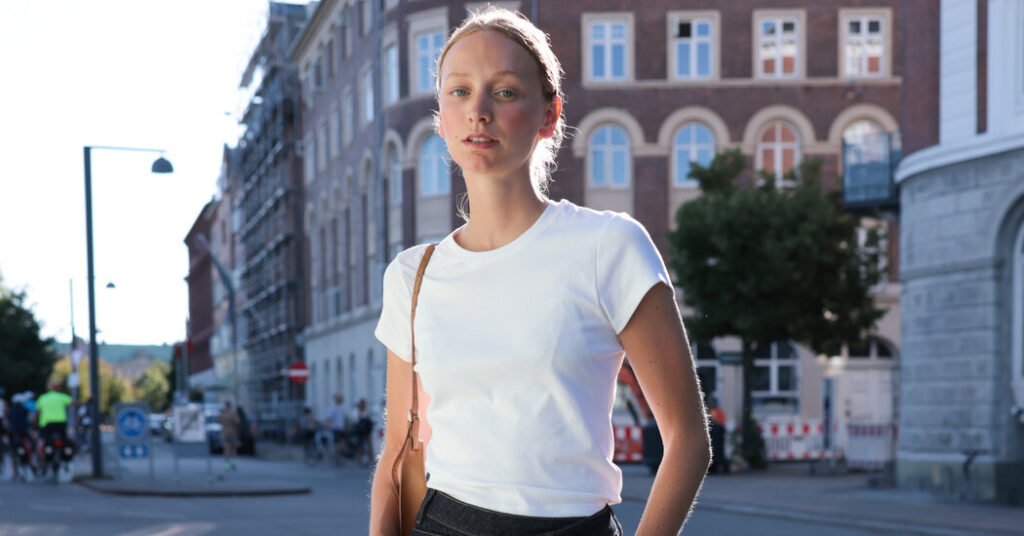
Goldman’s definition of polish: “Never wear jeans; no flip-flops; hair, nails and makeup done.” For Altuzarra, you can dress up in “perfectly fitting jeans and a crisp white T-shirt” as long as there is emphasis on the “perfectly fitting” and the “crisp.”
For his part, Law Roach, the “Project Runway” executive producer and Zendaya’s image architect, said he feels dressed up when he’s wearing “jeans held up with an Hermès scarf for a belt” or one of the “vintage Armani suits from the ’80s I get from a little store in Brooklyn.”
The point, he said, “is putting something on that makes you feel special.” Something that implies a certain amount of care and consideration. Something that signals to your brain, as Adam and Galinsky might say, that what is about to happen is worth anticipating — and triggers the dopamine hit that comes when you realize, as Roach said, that “having somewhere to go is more of a luxury than ever before.”
Your Style Questions, Answered
Every week Vanessa will answer a reader’s fashion-related question, which you can send to her anytime via email or X. Questions are edited and condensed.
The post What Does Dressing Up Mean Today? appeared first on New York Times.