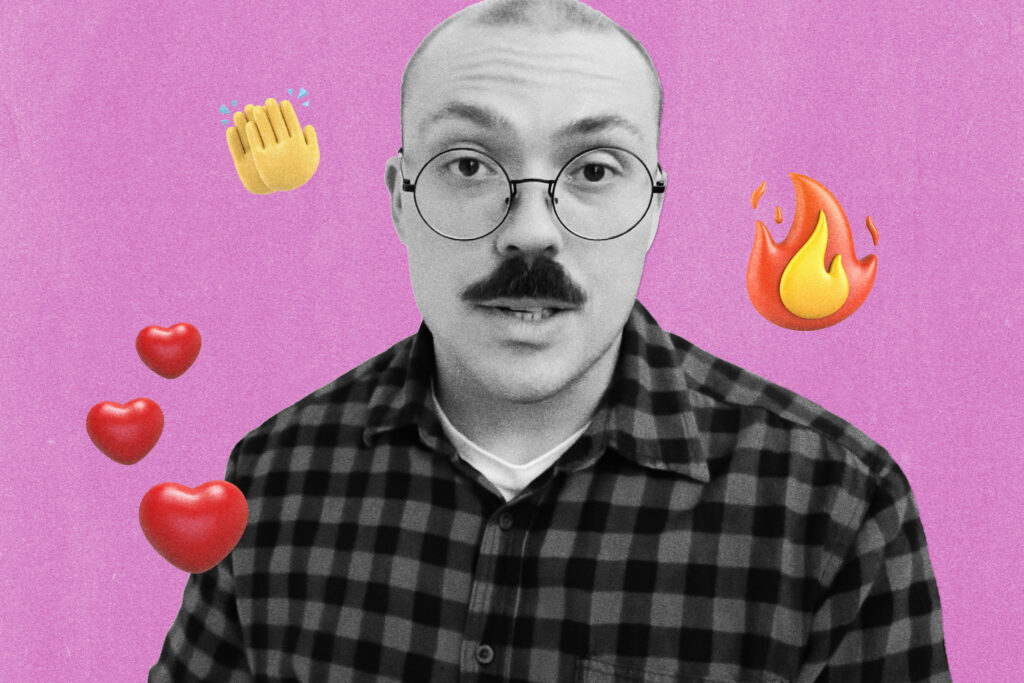
At first it looked like another celebrity spat. A scathing two-year-old YouTube review of Halsey’s album “The Great Impersonator” found a second life last month, after a music account on X observed that fans still seemed angry over it.
The critic, the self-proclaimed “internet’s busiest music nerd” Anthony Fantano, responded with a joke that Halsey’s fans are “more into the review than the album,” ended with a snickering emoji. Hours later, Halsey fired back to her 12 million followers: “I’m certain my least memorable song will be remembered more fondly and for more time than anything you ever do with your life will be.”
The exchange reopened a debate over the role of criticism in the social media era, where fandoms organize in real time, and a negative review can be interpreted less as an opinion than as an attack on not just the artist, but their fans as well.
Fantano is no internet upstart, starting his career as a music director for Southern Connecticut State University college radio. He wrote for music weeklies and in 2007 worked at the state’s NPR affiliate, creating “The Needle Drop,” which would become his personal brand and YouTube channel. He commands more than 3 million Needle Drop subscribers on YouTube, 2 million more on his personal channel, 1.3 million followers on Instagram. By many metrics, he is no longer only self-proclaimed, but the self-made busiest music nerd.
In an interview with Variety after the dustup, Fantano defended himself by proclaiming he is “the most relevant and impactful music critic of my … generation for over 10 years now. You can’t really debate that.”
I wouldn’t.
Challenge anyone under 40 to name another pop music critic and they would struggle. I’m over 40 and am a longtime reader of music criticism: I’d beg music fans to read Hanif Abdurraqib or former Washington Post music critic Chris Richards; their words are reminders that criticism itself can be an art form.
But no other working critic appears to exert as much gravitational pull. Complex’s hip-hop media power ranking for 2026 placed Fantano at No. 6, the highest ranking critic on the list. The fact that Drake has publicly targeted Fantano should be evidence enough, and Halsey’s response to an old review only reinforces his place in the broader pop culture conversation.
I wanted to ask Fantano about what this Halsey episode reveals about being a critic in the age of rabid online fandom.
I’m certain my least memorable song will be remembered more fondly and for more time than anything you ever do with your life will be. Everything you say is more “whiny” and “edgy” than I was at any point on that album. But at least I had the excuse of going through chemo. https://t.co/h2dFzOqpKH
— halsey (@halsey) June 21, 2026
“There’s definitely something going on where America’s obsession with celebrity has morphed into this really weird, parasocial thing, where people feel incentivized to be deputized defenders of that person and are there to attack anybody who says anything at least a little bit negative about them, even if the negative thing is just a factual, true thing,” Fantano said.
Fantano is quick to acknowledge that criticism invites criticism. He started his career because he often disagreed with prominent reviews in mainstream publications.
“But simultaneously, I don’t feel that anybody deserves to be harassed in any coordinated way just because they don’t think an artist’s new album is particularly good,” he said. “Where it really sticks in my craw is when I see it happening to other people.”
The internet also democratized music itself; Halsey’s career blossomed from her expert usage of Tumblr. At the same time, fan communities grew from loose connections of enthusiasts into organized online activists with their own language, norms and rituals.
Late film critic Roger Ebert recognized this as early in 2009. In his review of “Fanboys,” he wrote, “A lot of fans are basically fans of fandom itself. … Their objects of veneration are useful mainly as a backdrop to their own devotion.”
One reason Fantano’s criticism lands so differently than Ebert’s is that he doesn’t just exist as a critic, but as a personality who commands his own fandom. His online empire includes Twitch streams and short-form comedy and takes on TikTok and Instagram. There’s a Fantano for almost every platform.
“When I started doing music reviews, the term influencer wasn’t really vernacular yet,” he said. “I accept the influencer archetype because it’s just the way people consume content on the internet now.”
But he’s quick to distinguish himself from other creators. He likes to do interviews. He says he cares about getting the facts right. He just conducted a high-profile interview with Olivia Rodrigo, who admitted to him she cares about his reviews. In 2024, he built his website into something that resembles a traditional news magazine with several freelance writers and a lovely fanzine-like design.
“I used to write for weeklies. I used to write for NPR Music’s ‘Song of the Day’ column. My degree has a journalism concentration,” he said. “At the root of what I do, I’m still trying to express something that is journalistic or deliver some kind of serious commentary.”
That’s a challenge when so much of online discourse rewards hyperbole and negativity. Anyone who has spent time online — on X, YouTube, Twitch, Facebook — has watched conversation collapse into like-minded camps and childish competition.
I don’t disagree with Fantano. But I hesitated to dismiss Halsey’s reaction outright. I’ve never listened to Halsey closely before, but I streamed “The Great Impersonator,” which Fantano rated 1 out of 10. It was written as Halsey struggled with cancer and chemotherapy treatment. She cites this experience in her post reacting to Fantano.
In 2022, I was diagnosed with Stage 4 colon cancer. I spent a year in chemotherapy, which didn’t just damage my body, but rearranged my emotional landscape. My patience is shorter and I’ve become protective of myself in ways that are difficult to explain to anyone who hasn’t lived inside a body that’s killing you.
Listening to Halsey, I heard sweet music, some of which I loved, written by someone wrestling with illness and mortality in a very public and vulnerable setting. Indeed, some of it can off as corny, as pop often does. I think the album is better than a 1 out of 10.
And then I heard Fantano’s review, and I can’t agree with her fandom that he was mocking that struggle. I hear him criticizing the writing and execution of the music. Allowing myself some parasocial connection to Halsey, I can also understand why she might’ve reacted so personally years later.
Fantano doesn’t dismiss that view or anyone disagreeing with him. Halsey’s fans seem to take particular issue with his description of her lyrics as a product of “main character syndrome.”
“If somebody feels like that went a little too far, that’s totally fair, it’s totally fine,” he said. “But I’m not going to silently stand by as people act like I’m the most evil person on the planet when there are truly evil people running our government right now, jailing people for punching pool water.”
He said he made a conscious choice to avoid discussing Halsey’s health struggle because he didn’t want to come off as insensitive, but that happened anyway. He’s frustrated that some have a “crazy takeaway that I don’t like people who talk about being sick.”
I laughed as he said if he had a “weird thing” against sick people in music, he would just admit the bias.
“You’re somebody with your experience and laughing because we know how ridiculous of a proposition that is,” he tells me.
We laugh together because we acknowledge criticism can hurt or miss the mark, even during the worst moments in someone’s life. But it isn’t the same thing as cruelty, and disagreement isn’t evidence of malice.
I noticed that Fantano has only responded on X but hadn’t yet made a video about the dustup, despite the fact that he often talks about internet drama, including his own. That’s intentional, as he said he’s more interested in a video discussing fan culture and the state of criticism.
“I don’t want to make it seem like I’m going to war with this person,” he said. “The conversation around stan culture, the state of criticism, that’s maybe a smarter way to approach all of this.”
He’s right. This wasn’t about him or Halsey. It was the latest flash point in how criticism and online fandom evolved together. We have more critics and fans than ever.
Criticism invites disagreement, but when it’s mischaracterized as malice, the conversation shifts away from the art. Criticism is supposed to incite conversation, while fandom should enrich our appreciation for the work. As Fantano says, it doesn’t need to be a war.
The post Is he the most important music critic? Don’t ask pop fans. appeared first on Washington Post.