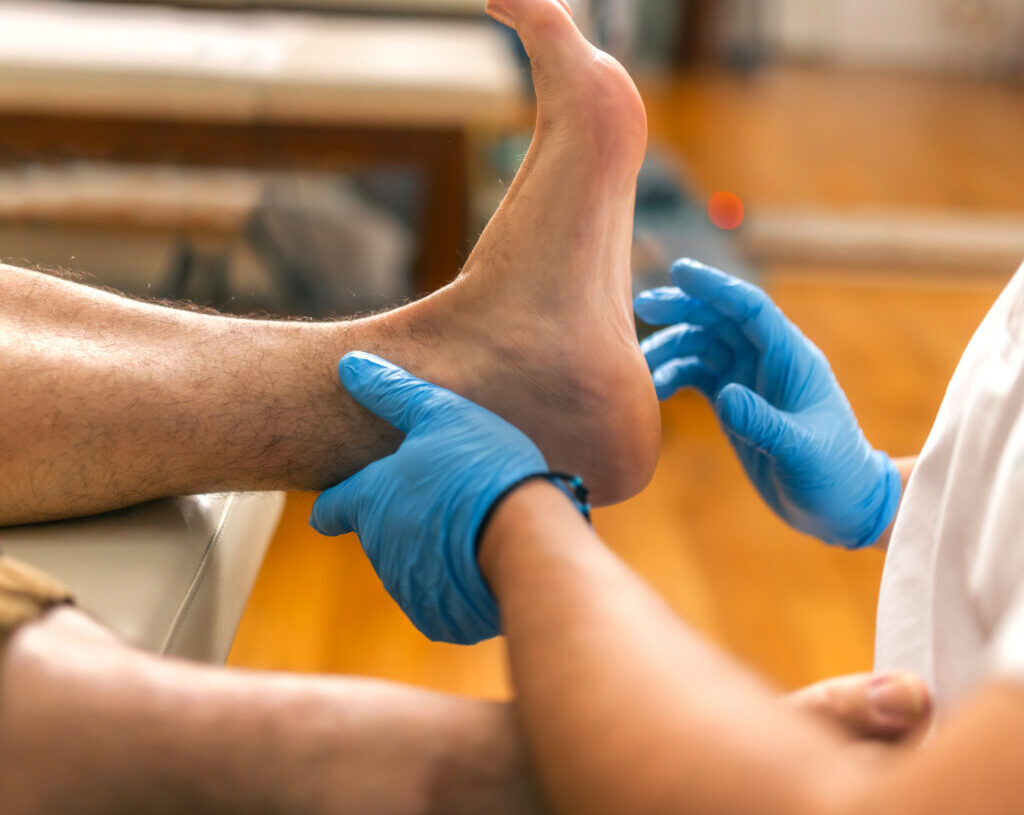
Feet issues can fly under the radar until suddenly, you’re wearing sandals and they see the light of day. Should you glance down and notice something looks or feels off, it could just be the result of ramping up your physical activity or stepping out in the often minimally supportive shoes of summer. Any strange or lingering foot symptoms, though, could be a sign of a bigger health condition.
“Feet are the farthest body parts from our heart and our lungs, so they’re the last to get the message — the oxygen, the nutrients, the growth factors,” said Miguel Cunha, a podiatrist and founder of Gotham Footcare. Several body systems have to be operating smoothly to get blood and nerve signals all the way down and back up, Cunha said, which means that when a systemic issue occurs, feet can be the first to reveal it.
The below symptoms might initially seem like minor nuisances but could point to underlying health issues.
Loss of hair on the feet and toes
If the hair on your lower extremities starts to disappear, it can be an early sign of a vascular issue. “It signifies that there’s not enough nutrition [in the area] to support hair growth,” said Gary Goldenberg, an assistant professor of dermatology at the Icahn Sinai School of Medicine at Mount Sinai.
Jeffrey DeLott, a podiatric surgeon at Connecticut Orthopaedics, said he is often the first doctor to see patients experiencing early signs of peripheral artery disease (PAD), a circulatory problem where narrowed arteries limit blood flow to the legs. Beyond hair loss, people with PAD tend to have pale, thin, dry or discolored skin on the feet and chilly toes, he said, and they may experience leg cramps or pain.
DeLott usually refers these patients to a vascular surgeon who can perform testing to get a sense of the potential blockage and determine a treatment plan.
A red, itchy patch on the inner ankle
This kind of rash can be the manifestation of a different vascular issue, this time tied to veins. Weakened valves in the veins, called venous insufficiency, can cause blood to pool in the feet rather than flowing back to your heart, Cunha said.
The backup then leads bits of blood to spill out of vessels, staining the inside of the ankle, he explained. A scaly, itchy area can appear next, and if that skin cracks, you could be at risk for an open wound called a venous stasis ulcer. Of course, there are many other health conditions that can cause itchy patches of skin, so consult a doctor for a diagnosis.
If you do have venous insufficiency, a vascular specialist can recommend lifestyle solutions to shuttle blood upward (such as compression or elevation) or in some cases, do procedures to redirect blood to other veins.
Numbness, burning or tingling in the toes
Sensation changes or zaps typically point to damaged or dysfunctional nerves, a.k.a. neuropathy, which can have a few different causes. This can be a side effect of chemotherapy, for instance, but one of the most common causes is uncontrolled diabetes. In this case, foot issues probably wouldn’t be your first sign, DeLott said. Symptoms such as frequent urination or fatigue are more likely to show up first and prompt a call to your doctor.
Feeling pins and needles in your feet regularly without any other symptoms is more often caused by a compressed nerve root in the spine, possibly because of a herniated disk, DeLott said. (This often triggers low back pain, too.) That warrants evaluation by a spine doctor or physiatrist, who can do imaging and get a closer look at the problem.
Another possibility is a vitamin deficiency, typically of B12, DeLott said. Without enough, the protective sheath coating nerves can break down, disrupting signals on their way to the feet.
A sore that won’t heal
It’s easy to rack up blisters and cuts on your feet from a day spent running errands or walking in heels. But if one lingers for more than a week, it could point to a vascular issue such as PAD, DeLott said, especially if nearby skin darkens (which indicates dead tissue). That’s because PAD restricts the blood flow necessary for wound healing.
If the sore turns yellow or green, oozes pus or smells foul, you could be dealing with an infection — which is also more likely to occur in the setting of a circulation problem.
In some cases, diabetes can be the root cause of the vascular disease, as prolonged high blood sugar can damage the small vessels that feed the skin in the feet, Goldenberg said. Diabetic foot ulcers typically occur on the soles of the feet or between the toes, where pressure or friction causes the injury, and then poor circulation and immune function keep it from healing. You also might not initially notice the ulcer, because of neuropathy, which can make it worse, Cunha said.
A podiatrist will help with immediate care (i.e., cleaning the wound and removing dead tissue, plus prescribing antibiotics in the case of infection) and then recommend seeing a vascular surgeon or endocrinologist depending on the underlying issue, DeLott said.
Sudden-onset big toe pain
A rush of red-hot pain and swelling in this joint is often the first sign of gout, a type of inflammatory arthritis that DeLott said he has been seeing more often. It stems from extra uric acid in the blood, which forms needlelike crystals that settle into the big toe joint. Uric acid is a natural waste product excreted by the kidneys, so a surplus may point to an underlying metabolic issue or kidney disease.
While it most commonly occurs in the big toe, gout can less often cause painful swelling in other toes, the ankles or other joints throughout the body.
A podiatrist can treat the pain by prescribing medications to reduce inflammation (like short-term steroids or nonsteroidal anti-inflammatory drugs, a.k.a. NSAIDs) or offering cortisone injections. But Delott said he also encourages patients to see their primary care doctor, who can help determine what is driving the excess uric acid and help reduce it with medication or lifestyle changes like a special diet.
Thick, yellow toenails
A white or yellow patch that starts at the nail edge and creeps toward the cuticle is a common sign of fungus, as is a nail that thickens to the point where it’s tough to cut. People who are immunocompromised, including those with diabetes, are more prone, Goldenberg said.
But the same nail change can also be a sign of psoriasis, an autoimmune condition affecting the growth of skin cells. “In people with psoriasis, the body overreacts to external stimuli, like friction, and forms skin plaques — and the same response can happen in nails, too, even with a normal level of friction in shoes,” Cunha said. Treatment for psoriatic nails typically starts with corticosteroid creams but may require biologic drugs used to control the disease overall.
Brittle, ridged or spoon-shaped nails
Nails that crumble or crack when you cut them or develop horizontal ridges can point to any form of “systemic insult,” Goldenberg said, referring to, for instance, a major illness such as pneumonia or uncontrolled diabetes. “The body has to shuttle more nutrients to vital organs, so your hair and nails may not get enough,” he said. “Ridges occur when there’s a period of growth, a period of nongrowth and then a period of growth.”
Goldenberg said nails can also become brittle in the setting of nutritional deficiencies, which he’s seen, for example, in people on fad diets low in protein and key minerals.
Iron deficiency, more specifically, can cause koilonychia, or spoon nails, where the nails get thin and indented, creating a shape that could hold a drop of water. A lack of iron may affect the enzymes that form nail tissue or limit how much oxygen gets to nailbeds. This tends to follow other symptoms of anemia like pale skin, fatigue and hair loss, Goldenberg said.
If you spot any of these symptoms, you don’t need to panic, DeLott said, but it’s “always better to discuss early findings with a health care provider.” A general practitioner or podiatrist is a good place to start. “It could be a simple, ‘No, this is just a normal finding or is related to this localized issue,’” DeLott said. But if they do suspect it points to a systemic cause, they can refer you to the right specialist to address the underlying condition and resolve the foot symptom, too.
The post What your feet are trying to tell you about your health appeared first on Washington Post.