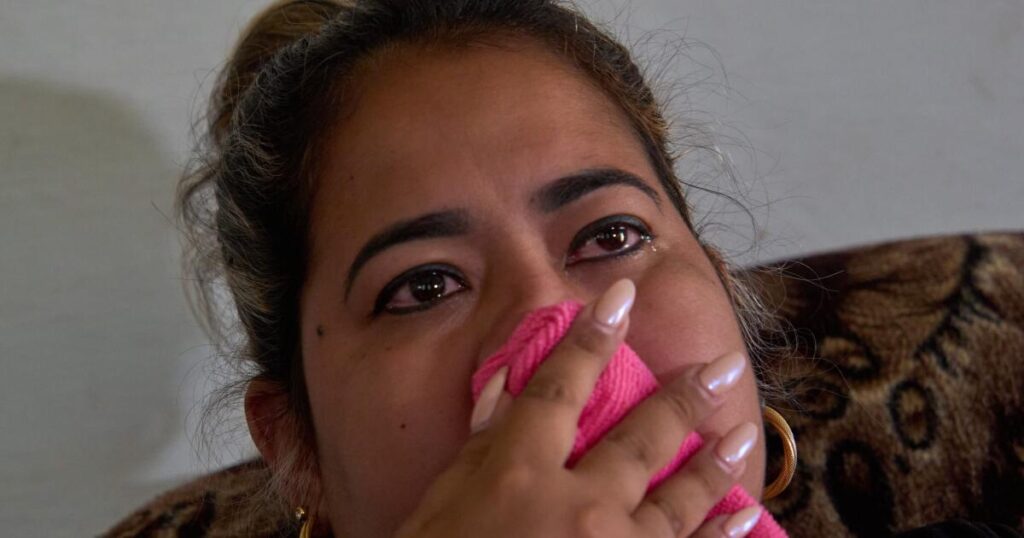
BATABANO, Cuba — After two surgeries and several rounds of radiation therapy over the past four years to treat a tumor, Irisleydis Tristá has spent the past seven months unable to get a CT scan to determine whether the cancer has grown or spread.
The CT scanner at Havana’s Hermanos Ameijeiras Hospital, the country’s leading hospital, is broken. Doctors have told her that, because of a lack of resources, they cannot operate on her again in Cuba, she said.
“I feel like my life is in danger,” Tristá, 34, a mother of a 13-year-old from Batabanó, a town 43 miles south of Havana, told The Associated Press. “I don’t know if it has grown. We have no way of knowing,” she said.
Cuba’s once-vaunted system of free universal healthcare has deteriorated sharply. The crisis, say analysts, has been compounded by fuel shortages they attribute to tightened U.S. sanctions on the island’s energy sector, worsening an economy that had already been struggling for years.
The Trump administration is pressuring Cuba’s socialist government to implement major economic reforms and change its way of governance in return for a lifting of sanctions.
Hospitals across the island face shortages of supplies including syringes, gauze, vaccines and anesthetics. They also lack spare parts to repair equipment such as hemodialysis and CT scan machines, leaving patients like Tristá without critical care. Food shortages have also made it difficult for her to follow the diet prescribed by her doctors.
Medical specialists and technicians have left the country in large numbers.
Children among the hardest hit
Cuba was already grappling with an economic crisis following the COVID-19 pandemic and the tightening of U.S. sanctions. The situation worsened after U.S. authorities captured then-Venezuelan President Nicolás Maduro in early January, depriving Cuba of one of its staunchest allies. The White House then threatened countries that sold fuel to the island and stepped up pressure on foreign companies and individuals to stop doing business with Havana.
The result was persistent power outages lasting more than 20 hours, gasoline rationing and declines in industrial and food production, among other effects.
For Cuba, a country with health indicators comparable to those of developed nations — including low mortality, high life expectancy, broad vaccination coverage and widespread prenatal care — the situation “is shocking,” said Mario Cruz Peñate, the Pan American Health Organization and World Health Organization representative in the island.
Cruz Peñate said the fuel shortages have caused “quite large” disruptions to health services, affecting not only the service itself, but the entire process around the continuity of care.
He added that PAHO and the WHO themselves also faced difficulties in distributing humanitarian aid. The United Nations, on which they depend, launched a $94 million emergency plan in March to address the foreseeable humanitarian crisis resulting from the energy blockade.
A government report released in June said the survival rate for children with cancer had fallen to 65% from 85% before the energy restrictions began in January.
“We have had children die. Two so far this year,” said Yolainy Romero, a specialist at the National Institute of Oncology and Radiobiology in Havana, during a tour of the pediatric ward. “This situation is terrible.”
Romero said some children, particularly those from distant provinces, must return to the hospital every 21 days for treatment.
“Sometimes a week or even 15 days go by before they can come because of the fuel shortage,” she said.
“It’s very hard,” said Adriana Felipe García, whose 4-year-old daughter, Nashly Zerquera, is being treated at the hospital. They traveled about 217 miles from their home in Sancti Spíritus, east of Havana, for her treatment.
Rodríguez writes for the Associated Press.
The post Once a source of national pride, Cuba’s healthcare system declines as energy shortages deepen crisis appeared first on Los Angeles Times.