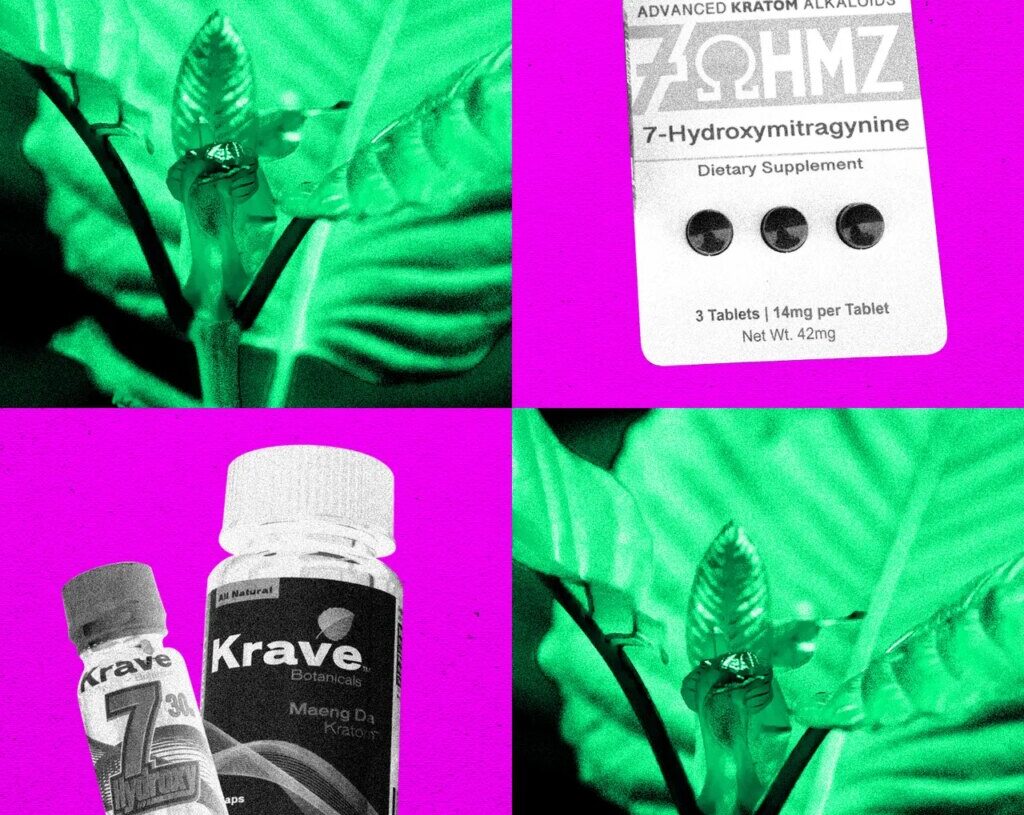
The Drug Enforcement Administration plans to temporarily ban 7-OH, a component of kratom that has opioid-like effects and is sold in gas stations and smoke shops around the country in the form of gummies, drinks, and capsules.
In a draft notice of intent in the Federal Register, scheduled to be published Monday, the federal agency says it will temporarily make 7-OH a Schedule I drug in the Controlled Substances Act, the same category as heroin.
The ban would apply to products that go over a specific threshold of 7-OH and would be applicable for two years, with the potential to extend it for a third. The DEA claims 7-OH “presents severe risks to public health, including tolerance, dependence and addiction.”
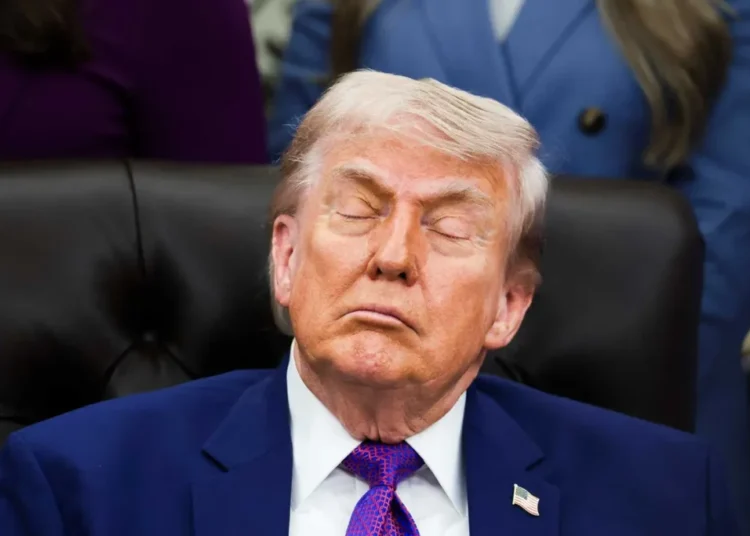
The move is a major win for the mainstream kratom industry, which has been fighting 7-OH with the backing of government officials, including President Donald Trump.
Kratom is a Southeast Asian plant that has analgesic and antidepressant properties when taken in low doses. Natural kratom contains trace amounts of 7-OH. But in the last few years, there has been an explosion in the production and sales of unregulated 7-OH products, which can be much more potent than natural kratom products.
In May, Trump endorsed “natural 7-OH,” meaning kratom, saying the administration was looking at “getting that approved.”
As WIRED previously reported, both Health and Human Services secretary Robert F. Kennedy Jr. and Department of Homeland Security secretary Markwayne Mullin have strong ties to the kratom industry. Kennedy has been photographed with JW Ross, a convicted criminal and founder of Botanic Tonics, which produces Feel Free—a brand of kratom drinks that was subject to a federal raid in 2023. At the time, the FDA, which was involved in the raid, noted that there was inadequate information on whether or not kratom, marketed as a dietary supplement, presents “a significant or unreasonable risk of illness or injury.” Mullin has invested up to $1 million in Botanic Tonics.
Many Feel Free consumers have claimed to suffer crippling withdrawal symptoms tied to its use. In December, the Department of Justice dropped its case against Botanic Tonics; several months later, an LLC associated with Feel Free gave $500,000 to the MAHA PAC.
The DHS did not immediately respond to a request for comment but a spokesperson previously told WIRED that Mullin “acts to ensure full compliance with all ethics and conflict of interest rules.”
7-OH has been dubbed “gas station heroin” by some because it activates mu-opioid receptors in the brain and therefore has potentially addictive qualities. But even kratom products that aren’t marketed as 7-OH can cause similar issues when taken at higher doses.
Kratom lobbyists are celebrating the proposed ban on 7-OH.
“This DEA action should end the debate,” said Mac Haddow, senior fellow on public policy for the American Kratom Association, in a press release. “Chemically manipulated 7-OH opioids are not kratom. They are dangerous products that exploited the reputation of natural kratom leaf, misled consumers, and created a public health threat that responsible regulators can no longer ignore.”
The 7-OH industry is pushing back, arguing that there is no scientific basis for the ban, which would take effect after a 30-day public comment period.
“Hundreds of thousands of consumers are eager to share how 7-OH has helped them manage pain, return to work, care for their families, and reclaim their life,” said Jeff Smith, executive director of the Holistic Alternative Recovery Trust, a 7-OH advocacy group, in an emailed statement.
One 7-OH user, who does not want to be named due to concerns of professional repercussions, tells WIRED she’s already stockpiled a “formidable stash” in anticipation of a ban. She says using 7-OH has allowed her to completely stop taking other opioids, including street drugs.
“I don’t want to go back to that,” she says, adding she is concerned about what products people in her situation might start using once 7-OH is banned.
The DEA also announced this week it is taking action against 7-OH derivatives and other synthetic opioids, highlighting the whac-a-mole nature of trying to control synthetic drugs.
The post The DEA Plans to Ban Opioid-Like Kratom Compound 7-OH appeared first on Wired.