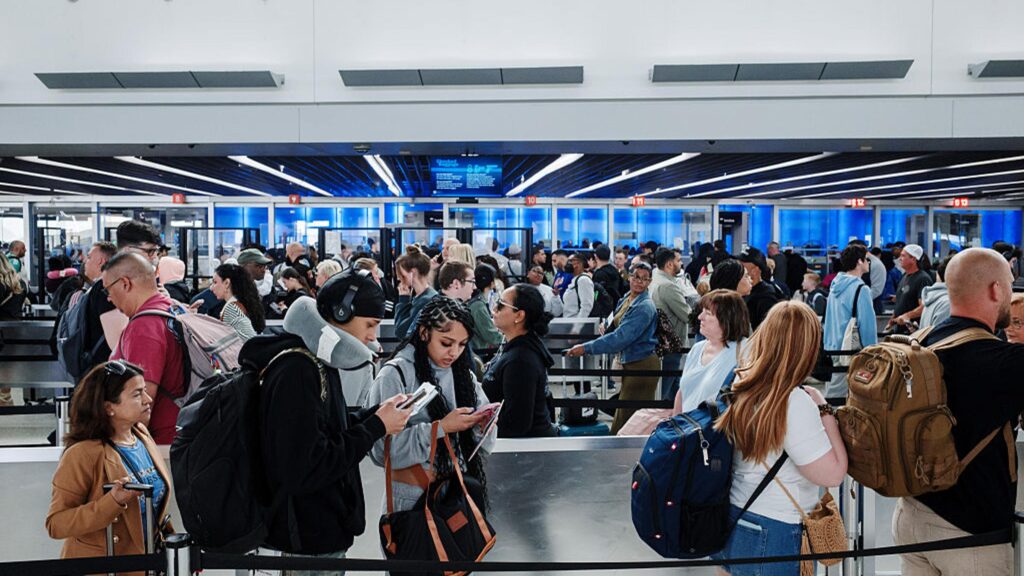
A record number of Americans are expected to travel the week of the Fourth of July.
AAA estimated earlier this month that 72.2 million people would travel a minimum of 50 miles from their homes between June 27 and July 5. That figure would break the previous record of 71.8 million people who traveled over the holiday last year. The number of people anticipated to be traveling by car or air, though, is “relatively flat compared to last year,” AAA said; in contrast, the number of people traveling using other methods of transportation, such as cruises, is likely to increase.
“For many Americans, traveling the week of July 4th is tradition,” Stacey Barber, Vice President of AAA Travel, said in a statement. “While the overall number of Independence Day travelers appears to be plateauing, we’re still expecting record volumes this year.”
AAA projected that more than 61 million people would be driving the week of the Fourth, while 5.85 million will be flying within the U.S. The Transportation Security Administration (TSA), meanwhile, expected notably higher air travel: The agency said last week that it expects its staffers will be screening about 18.7 million people at U.S. airport security checkpoints between June 30 and July 6.
Read More: Why Summer Travelers May Still Be Met With High Airfares Despite the U.S.-Iran Deal
TSA also noted that in addition to marking the 250th anniversary of the adoption of the Declaration of Independence, this year’s holiday aligns with the ongoing FIFA World Cup—both of which will contribute to the crowds at travel hubs this week.
Here are some tips on how to make your travel plans go as smoothly as possible during the busy period.
Try to travel on the least busy days around the holiday
Travel organizations expect that July 2 will be the busiest day across the board: According to the car rental company Hertz, that day will be the busiest pickup day, while the transportation analytics company INRIX predicted that July 2 through the weekend will be the days with the worst traffic. TSA also said it anticipates that July 2 will see the highest passenger volume, estimating that it will screen more than 3 million travelers.
If you’re still trying to decide when to set out on your trip, consider leaving on another, less busy day. Off-peak travel days tend to be those in the middle of the week rather than the weekend. AAA suggested that people who are driving hit the road early in the day or think about embarking on their trip on Monday or Tuesday to avoid the expected traffic.
Be prepared for crowds, delays, and other disruptions
If you’re flying, it’s always a good rule of thumb to get to the airport early, but it’s especially a good idea during peak travel weeks. If you’re going to check a bag or if you’re traveling with multiple people, consider arriving at the airport even earlier than you normally would. You may even want to consider skipping checking a suitcase and just traveling with a carry-on bag to avoid waiting in more lines at the airport.
You can also sign up for text or email alerts for your flight—that way, if there are any changes to your trip, like a gate change or a delay in your departure time, you’ll be notified right away.
If you’re driving, make sure you plan the route you’re taking before you hit the road. Pack water and snacks, in case you’re stuck in traffic for longer than you anticipate. And check your car—its battery, tire pressure, and fluids—before you start your trip so you don’t have any unwanted surprises as you’re driving.
Practice patience
Traveling is always stressful, and it’s especially stressful when there are long lines and hectic crowds. But remember that many people are working during the holiday weekend—from airport employees to hotel staff—and are navigating this chaos as well. So even if you get frustrated, or things don’t go according to plan, try to stay calm and practice patience amid the mayhem.
The post More Than 72M Americans Are Expected to Travel the Week of July 4th. Here’s How to Make Your Trip Go Smoothly appeared first on TIME.