The federal government is the largest owner of U.S. real estate, including more than half a billion square feet of office space. That is far more than it needs, and the cost of maintaining it has ballooned to unsustainable levels.
The Public Buildings Reform Board recently identified 26 buildings across 15 states — totaling more than 7.3 million square feet — as potential candidates for the government to dispose due to poor usage and high maintenance costs. It’s the third set of disposal recommendations since Congress created the board in 2016.
That’s a great start, but the government needs to go much further to dump unneeded properties. Doing so is essential not only to protect taxpayers but to unlock valuable real estate that cities could use for more housing and economic development.
The government’s bloated property portfolio only gets worse as buildings age. The total backlog of maintenance and repairs was $370 billion in 2024, the Government Accountability Office estimated. That was more than double what it was in 2017.
Just the General Services Administration, which manages about 40 percent of the government’s office space, has accrued $50 billion in such backlo. That’s because the government has chronically underfunded the upkeep of buildings. Industry standards recommend property owners spend 2 to 4 percent of a building’s replacement value on maintenance each year, but the GSA has historically spent an estimated 0.4 percent.
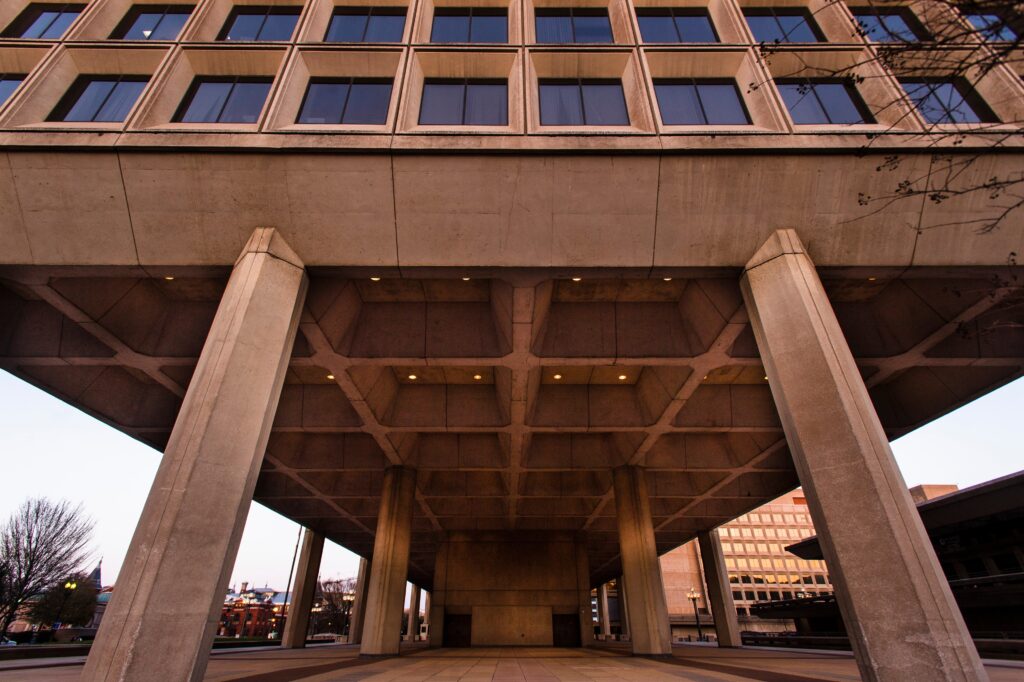
The result is deteriorating work conditions: leaky roofs, malfunctioning elevators, poor air control systems. The problem is particularly acute for properties constructed during the middle of the last century, when the government went on a building binge to house the growing administrative state.
Even more frustrating is that many of these buildings are barely used. A law enacted last year requires the GSA to start collecting data on how well agencies utilize their buildings, based on a standard of 150 square feet of working space per person. The first set of data, which reviewed more than 9,700 buildings, found that none met the law’s 60 percent usage threshold. Many are far lower.
The underutilization alone wastes $1.34 billion a year, according to the Public Buildings Reform Board.
The GSA’s data is imperfect, but the problem has been known for years. It worsened with the surge in remote work following the pandemic. A GAO report on 24 federal agencies in D.C. found that over the course of three weeks in 2023, 17 agencies used on average a quarter or less of their headquarter buildings. None used more than half their capacity.
The Trump administration, to its credit, has been pushing to quickly sell federal properties. It’s also laid out plans to relocate agencies, either by consolidating them in federal offices or moving them to leased spaces.
But disposing large amounts of real estate is difficult work that will take years, complicated by aggravating bureaucracy. Making the government’s property portfolio sustainable will require long-term commitment from Congress and future administrations.
The post The federal government’s big fat real estate problem appeared first on Washington Post.