Jubilant after she first saw the musical biopic “Michael,” Alex Braybrooke, a content creator and Michael Jackson fan from Surrey, England, recalled “moonwalking badly out the cinema.” Her emotions were markedly rawer on her way to her next viewing of the film.
“I think it was just before my second screening, at the thought of going to watch the movie again, I actually cried,” Braybrooke, 25, said. “I was hit with the sudden feelings of how this man had impacted my childhood, his talents, and then reflecting on the legacy he left behind.”
Few performers were better than Jackson at leaving fans crying in adoration. And his sudden death in 2009 at age 50 plunged many of those same admirers into grief.
Now, a new wave of mourning and reminiscence has struck die-hard fans and newbies alike after watching “Michael,” which dramatizes his early life and rise to superstardom. Since the movie’s release in April, viewers around the world have been reporting bouts of crying, grief and a sadness that can linger for weeks. Social media users have even given the phenomenon a name combining “Michael” and “psychosis”: michosis.
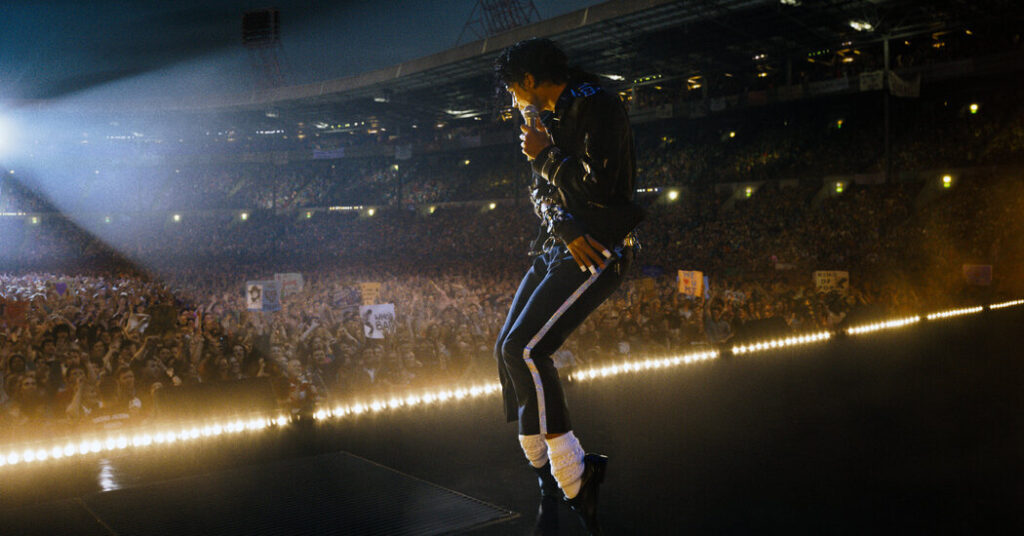
“Michael” vividly recreates pivotal moments of Jackson’s life, and heartbroken fans say their first viewing brings on a sense of nostalgia so deep that they relive their grief for him. Many take comfort in putting Jackson’s hits on repeat or cycling through music videos and interviews with the star.
After returning to the theater to watch the film over and over again, hard-core fans — called moonwalkers — have shared profound feelings of loss and longing on TikTok, Instagram Reels and Reddit, some saying they regularly think about Jackson from morning to night, and even see him in their dreams.
The multiple screenings, listening sprees and social media shout-outs characteristic of michosis have helped the film set box office records — this week it surpassed “Bohemian Rhapsody” to become the highest-grossing musical biopic — as well as counterbalance a legacy damaged by allegations of child sexual abuse that the singer denied.
Michosis is a multigenerational phenomenon. A number of Gen Z fans, who were children when Jackson died in 2009, have reported falling into distress, while a trending meme on TikTok shows Gen Alpha children collapsing into sobs upon learning that their newly favorite performer is dead.
The movie, in effect, resurrects Jackson, only to remind viewers that he’s gone, fans say. “This is why people are being so mournful,” said Diana Crippa, 21, a student from Bologna, Italy. “Because it brought Michael back, in a sense.”
Awa Cham, 28, a content creator in London, agreed, saying via video chat, “I feel like I went through this whole grieving process again. I was, like, this is not fair, he should be here.”
JaRed Cameron, a musician from the Bronx, said by email, “I cried, laughed, and I cried some more throughout the whole film.” He added, “It took me about a week to shake off the rain cloud of ‘Michael’ ‘withdrawal’ since watching the movie.”
For others, Jackson’s lifelong loneliness and the abuse he endured as a child added a dimension to their sadness.
“Watching young Michael cry alone in the corner of the bathroom made me so sad,” Victoria Tappa, a physician assistant student in Davenport, Iowa, said via email. “Even writing this, I have tears in my eyes.”
Mariam Elatouby, 35, a political analyst who lives in Rabat, Morocco, and Dubai, lamented that too few observers in Jackson’s lifetime took time to “try to dig deeper, try to understand the person. And that’s what really made me sad, because he was really, really misunderstood.”
Michosis isn’t characterized only by sadness. The movie watchers who were more likely to drown themselves in Jackson’s music rather than tears said they enjoyed a renewed appreciation of his artistry.
“I absolutely went on a couple of Michael marathons, I relistened to most of his songs and rediscovered all the music I’d loved years prior, just to cope with the feelings that I’d gotten from the movie,” said Crippa, the student in Italy. “I’ve just been consuming Michael content and Michael content on top of Michael content.”
Another symptom of michosis is its duration.
Tappa, who said her first of 10 screenings of the movie “altered my brain chemistry,” noted that weeks afterward she is still deep in it.
Cham, too, said she was still mourning. “I’m now seeing that people are calling this hysteria michosis,” she said, adding, “That’s what it is. It feels like I’m going through some sort of, like, episode but Michael Jackson related.”
Why are so many reeling? After all, the last musical biopic smash, “Bohemian Rhapsody,” didn’t sweep viewers up in Freddie Mercury fever.
“I think Michael Jackson has not just his music, but his persona, his dancing,” said Carrie Landin, a faculty member in the University of Denver’s doctor of clinical psychology program.
“More so than I’ve seen with some other trends that I’ve observed and kind of monitored, I’m seeing this kind of distress when people are not engaging and listening to his music, talking about him,” she added.
Though social media can be an emotional outlet and offer community for mourners, it can also trap them in a feedback loop of sadness and recovery, Dr. Landin added.
It used to be that people were able to let go of this kind of experience after a few days, but now, Dr. Landin said, “they can talk about it with other people from around the world that are feeling the same way we do.”
Braybrooke turned to social media to cheer up fellow moonwalkers, saying the movie inspired her to “create content and silly videos to connect with other fans who are feeling the same way.” Several TikTok users also organized “Michael” screenings, including one that sold out an IMAX theater in London, she said.
Still, after seeing the film, many Jackson fans have likened their heartache to mourning the loss of a friend or family member. “I can’t think of any other musical artist that’s ever triggered something like this,” Dr. Landin said.
Fans have taken a variety of approaches to ease their sorrow. Like Braybrooke, Cham shared her feelings of revived grief through TikTok videos. Tappa started building a physical collection of Jackson’s work. Elatouby deeply researched Jackson to broaden her knowledge of his life. And all immersed themselves in his songs.
“Listening to his music made me feel better over time, and I developed a sense of wanting to carry on his legacy,” said Cameron, who saw Jackson perform in 2001.
Dr. Landin said there were ways to counteract michosis: “Watch something else, listen to something else. Choose to connect on social media about something else,” she said. “You don’t just quit the behavior without anything to replace it. That is just not effective for people.”
But not everyone wants to get over their michosis. Some say the movie has had a positive effect: uniting fans in their love for Jackson, who sang of healing the world amid deep global divisions.
Others simply don’t want michosis to end because it keeps their mind on Jackson. A TikTok creator with the handle @jenuinejordy wondered, “What is it going to be like after it passes?” she said. “I don’t want it to stop!”
The post Feeling Mournful After ‘Michael’? It Might Be ‘Michosis.’ appeared first on New York Times.