Although the exact number is impossible to pin down, experts estimate Americans are exposed to anywhere from 4,000 to 10,000 ads per day. Advertising is an impossibly lucrative business. Global spending on ads, not their revenue, is expected to reach $1.26 trillion this year. Ads are quite literally everywhere, and we’re all thoroughly desensitized to it; we don’t think twice about it. Except now, we do.
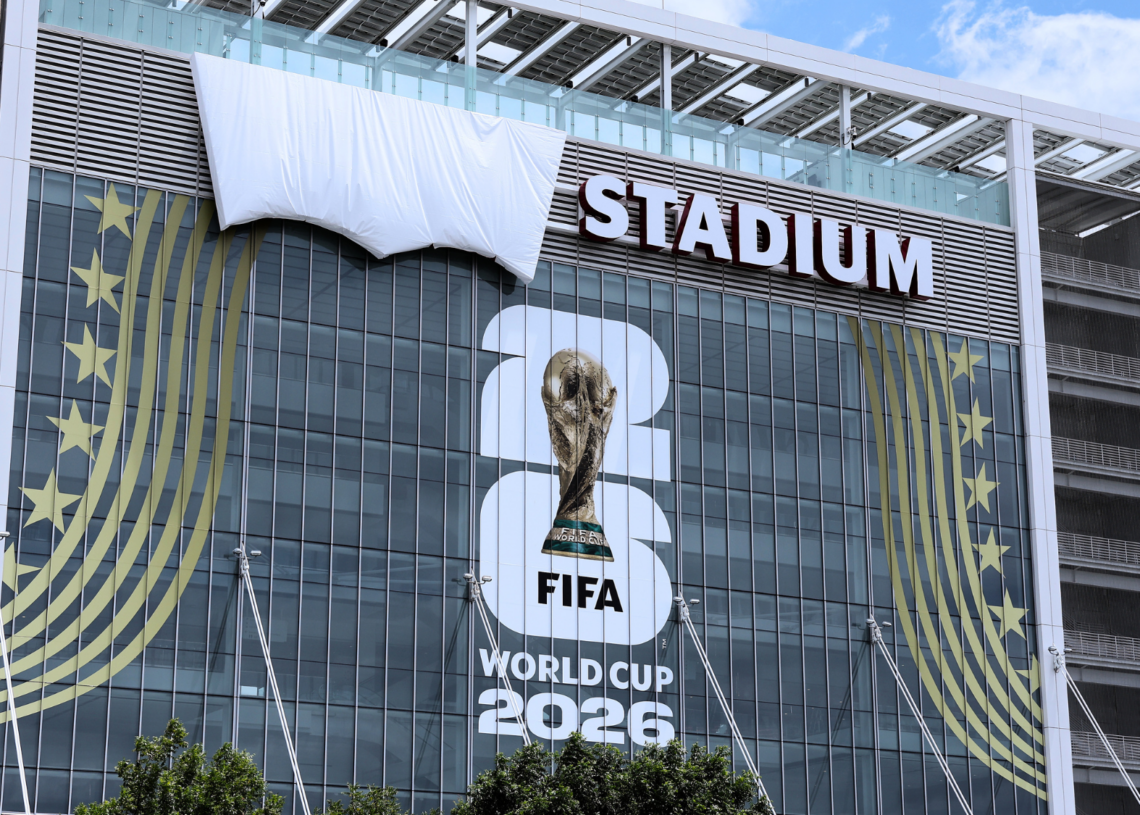
Or rather, stadiums across North America must, because one of the peskier rules around the World Cup is that FIFA requires all venues to rid themselves of any pre-existing branding. Is this because FIFA wants to shield viewers from advertising so they can focus solely and fervently on the football match at hand? No, of course not. It’s because the stadiums’ ads get in the way of their ads. FIFA must “protect its brands and the exclusive rights of its sponsors,” after all.
All 16 stadiums hosting the World Cup across the United States, Mexico, and Canada were required to debrand ahead of time, and all 16 set to work with varying degrees of difficulty ahead of them.
The easy part was renaming each stadium for the event. For example, the Mercedes-Benz Stadium is now the “Atlanta Stadium”, Gillette Stadium is “Boston Stadium”, and AT&T Stadium is “Dallas Stadium” until the festivities are complete. Pretty much every stadium was cleverly renamed with the name of the town they’re located in.
The harder part was trying to make venues like Atlanta’s Mercedes-Benz Stadium compliant, as it has a gargantuan Mercedes-Benz star stamped across the roof. (FIFA agreed that one was fine to leave, no need to demolish the building in the name of branding.)
World Cup Stadiums Are Hiding Their Names, and Brands Are Having Fun With It
But it wouldn’t be the World Cup without some antics, would it? Scottish revelers, for instance, have completely drained Boston of its plentiful booze supply. Incredible stuff. Keep it up, fellas.
And while they’re spending an absurd amount of time and effort scrubbing the stadiums of their branding, why not create a viral moment for themselves, stadium execs no doubt thought. Two World Cup venues, in particular, have enjoyed massively popular social media posts around their haphazard attempts at debranding.
Levi’s, which owns the naming rights to Levi’s Stadium (currently known as San Francisco Bay Area Stadium) in California, took it the furthest by far.
“Welcoming the world to the beautiful [redacted] stadium!” Levi’s wrote in an Instagram post alongside a montage of the various “Levi’s Stadium” logos around the venue artfully covered with plain white sheets…in the shape of the Levi’s logo.
The brand created an entire marketing campaign on the loss of their name, including a mobile billboard reading “NOTHING TO SEE HERE” and “#DefinitelyNotLevis” around a covered version of their logo.
I love Levi’s response to this.
FIFA strictly requires all host venues to cover up pre-existing corporate branding, sponsor logos, and even non-official stadium names to protect the exclusive marketing rights of its official tournament sponsors. pic.twitter.com/8YfFlCbDxd— Bobbi (@kittenaround_51) June 20, 2026

Similarly, Gillette Stadium covered its logos with white sheets, but caught the attention of millions online with a simple edit of the photo to make the sheets appear to be shaving cream. Millions of people with a sudden interest in Gillette Stadium (and Gillette shaving cream), no manual labor or truckloads of papier-mâché required.
La FIFA también le pidió a Gillette que ocultara su logo en el estadio Gillette Stadium por no ser patrocinador oficial del Mundial. La marca lo hizo ocultando su logo simulando una crema para afeitar.
https://t.co/bBaGblbniq pic.twitter.com/u3lxsT3xwA
— Futbol de Inglaterra (@Mercado_Ingles) June 20, 2026


A mixture of white sheets, black tape, and the actual dismantling of massive metal signage has been employed to bring all World Cup stadiums up to FIFA’s standards.
Ryan Asdourian, EVP and CMO of Lumen, which holds the naming rights to Lumen Field (currently known as Seattle Stadium), tried to capitalize on the moment with an Instagram video of the EVP trying to debrand the venue himself. As of this writing, the video has only 268 likes. A for effort, Ryan.
The post How FIFA Forced World Cup Stadiums to Hide Their Names (and Accidentally Created Viral Ad Campaigns) appeared first on VICE.