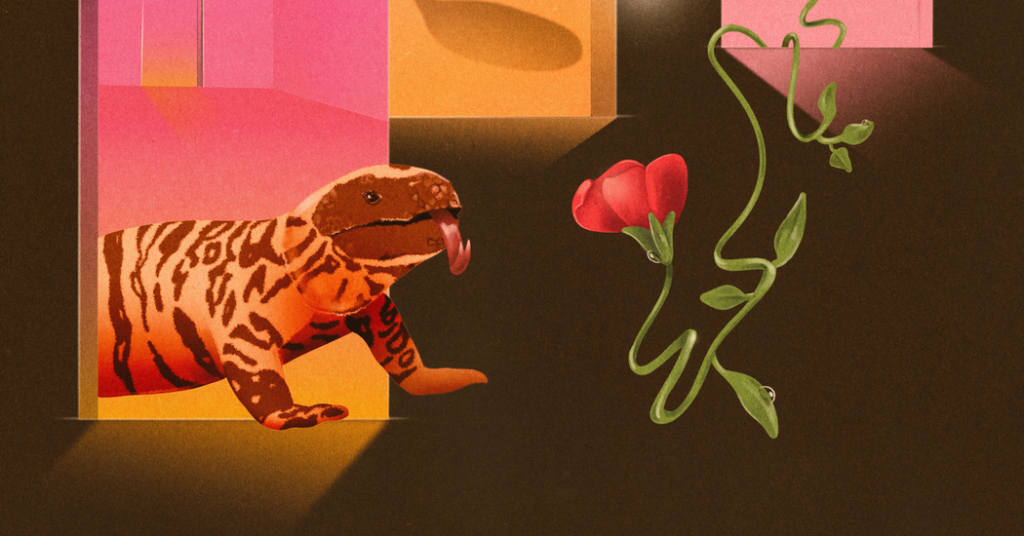
A slow, heavy desert lizard called the Gila monster can go months between meals. In the early 1990s, a physician-scientist named John Eng grew curious about how it keeps its blood sugar steady across those long fasts. Working with modest funds at a Veterans Affairs hospital, he and a colleague studied the lizard’s venom and isolated a molecule that behaved like a human gut hormone, except that it lasted for hours instead of minutes.
Years later, a synthetic version of that molecule became the first of the GLP-1 drugs, the class of drugs the world now knows through Ozempic and Wegovy. They are reshaping how we treat diabetes and obesity and show promise for heart disease and other conditions. They are expected to save tens of thousands of lives a year, if not more. Dr. Eng’s discovery cost almost nothing.
The system that turned that lizard into a medicine is now being dismantled. In 2025, the Trump administration froze or canceled billions of dollars in research grants. Courts have forced the release of much of the frozen money, and Congress rejected proposed cuts to the agencies, but neither controls the checkbook. Over the past year and a half, the agencies have funded fewer grants nearly each month compared with previous years.
As Congress takes up next year’s budget, the Trump administration is pushing for even deeper cuts. Last month, the administration proposed a rule that would require federal grants to be approved by political appointees and to “demonstrably advance the president’s policy priorities.” Under that rule, grant making may slow down even more.
Last year, graduate programs at major research universities cut admissions for the fall— including students who would have been the next generation of scientists. A cancer researcher named Rachael Sirianni recently told NPR that the odds of securing funding for her promising drug combination for children with brain tumors was almost zero.
Less support for scientists means strange questions no one will get to chase. Exploring those questions is how medicine advances. A handful of soil from Easter Island gave us rapamycin, the drug used to help prevent rejections of transplanted organs. Bacteria defending themselves in a vat of yogurt revealed the system scientists turned into CRISPR gene editing. That tool now corrects the genetic faults behind diseases like sickle cell, and in 2025 a version built for a single baby rewrote the lethal mutation he had been born with.
More than a century ago, Louis Pasteur said that chance “favors only the prepared mind.” Public money pays for the trained person, the prepared mind, to be paying attention when a lucky accident happens.
There is another way science serves us that doesn’t depend on surprise. Many of our greatest victories began with a clear problem that yielded only to decades of painstaking work funded year after year.
In 1940, a child diagnosed with acute lymphoblastic leukemia was almost certain to die within months. Then a Boston pathologist named Sidney Farber showed that a drug could force the disease into temporary remission. What followed was a research effort that lasted the rest of the century.
Scientists learned to combine drugs so the leukemia could not outrun treatments. They sorted children by the molecular signature of their tumors and matched treatments accordingly. For the ones who still relapsed, they built immune cells that hunt the cancer down. Each step was small. But together, across more than 50 years of federally funded work, they turned a death sentence into roughly a nine-in-10 chance that a child with leukemia gets the opportunity to grow up.
You cannot schedule the lizard’s gift, and you cannot rush the leukemia campaign. What we spend on such efforts is trivial compared with the rest of the federal budget. A single Tomahawk cruise missile runs about $3.6 million, roughly what it takes to fund one scientist’s multiyear grant. The entire National Science Foundation budget is less than what we spent in the first week of the war with Iran. The National Institutes of Health, the largest public funder of biomedical research in the world, accounts for a fraction of 1 percent of all federal spending. The United States ranks 13th in the amount it spends on academic research as a portion of its overall economy among nations that report spending data to the Organization for Economic Cooperation and Development.
The next era of security will be biological as much as military, and every major power knows it. China made biotechnology a national priority 20 years ago. Last year a bipartisan commission created by Congress warned that the United States has only a narrow window to avoid depending on Chinese laboratories for the next generation of medicines. Starving the basic research that feeds our biotechnology, while a rival sprints ahead, is an odd way to defend a country.
I have watched a long-shot question turn into medicine. For years my lab has worked on how the body destroys its own messenger RNA, the molecule that carries our genetic instructions. No one could have justified the research by what it might cure. Then mRNA became the basis of some Covid vaccines, and that obscure problem turned out to matter, because making the vaccine work means keeping that fragile molecule from being destroyed too fast.
Right now, in some underfunded lab, a scientist is chasing a question that sounds pointless, and a team somewhere else is a decade into a problem that may take another decade to crack. No one can say if they will succeed. But a century of experience says that funding people to do this work is a good bet. If we stop making that bet, we will pay for it in cures no one will know to miss.
Jeff Coller is a founder of the Alliance for mRNA Medicines and Tevard Biosciences, a company that develops treatments for Duchenne muscular dystrophy.
The Times is committed to publishing a diversity of letters to the editor. We’d like to hear what you think about this or any of our articles. Here are some tips. And here’s our email: [email protected].
Follow the New York Times Opinion section on Facebook, Instagram, TikTok, Bluesky, WhatsApp and Threads.
The post The Science That Turned Lizard Venom Into GLP-1s Is Under Attack appeared first on New York Times.