In Adrian Chiarella’s feature directorial debut, “Leviticus,” an exorcism is performed in reverse.
The horror film derives its name from the Biblical Book of Leviticus, which features a quote oft-cited in homophobic rhetoric: “You shall not lie with a male as with a woman; it is an abomination.” Chiarella remembers hearing this verse quoted at him as young as 13 while attending a religious school in Australia.
“As a young gay man, I kind of felt things getting better and better as I grew up, but in this last decade or so, I felt like things were starting to regress, particularly in terms of a lot of quite homophobic rhetoric in the public space and in the political space, and little micro-aggressions in day-to-day behavior,” Chiarella told TheWrap. “I wanted to make a film about that.”
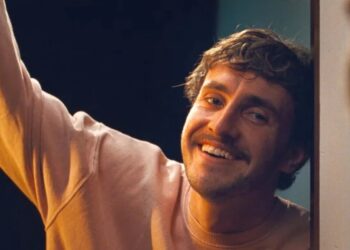
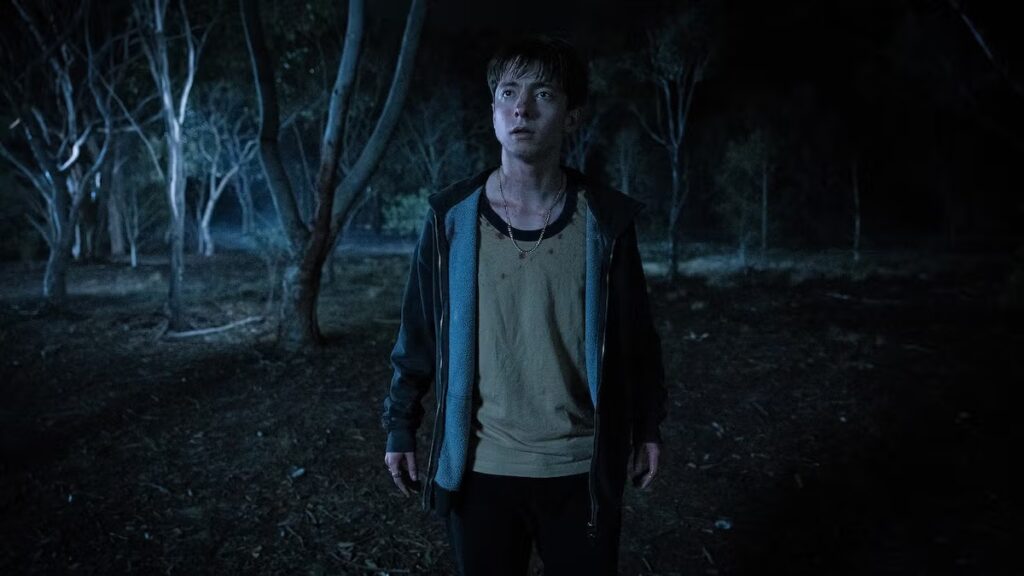
Chiarella knows firsthand how homophobic rhetoric is weaponized against the queer community, attempting to convince people that their identity is wrong, a demon that needs to be exorcised out of them. In “Leviticus,” he shows this process in reverse, with young gay men having a demon put into them by a man of religion, hoping to scare and hurt them until they fear this identity. In the film, a mix of horror and coming-of-age, this is experienced by a central romantic duo of Naim (Joe Bird) and Ryan (Stacy Clausen).
“I wanted to make something more personal, so I started to think about the kinds of films that I enjoyed watching, that I turned to as a teenager going through these experiences, and that was horror movies.”
Chiarella’s film, which debuted at Sundance and was scooped up by Neon, comes at a good time for horror, as similar horror debuts like “Obsession” and “Backrooms” dominate much of the cinematic and box office conversation. Michael Johnston, star of “Obsession,” recently appeared in a video with Bird and Clausen to declare, “Horror is so back!”
“I feel very lucky to be in this moment, but those two films are very tough acts to follow,” Chiarella admitted. “I think what’s interesting is we’re in a year where two really great horror movies have burst out the gate, and I think there’s some other horror movies coming in that have different things to say and are in a slightly different register. I think we’re about to not only see how extraordinary this year in horror is, but also how diverse it is too.”
You can read our abridged interview with Chiarella, below:
Where did this project start for you?
I started developing a horror movie where the fear — because horror movies are always about fear — was homophobia. That was what we wanted to explore in all of its certain shades. Then I came up with this idea of a horror movie monster, an entity, that takes the form of the person you’re most attracted to, because I think a lot of this rhetoric and a lot of these coercive practices that we see in our society, they’re about scaring us away from our feelings and scaring us away from the way we identify.
It’s a really clever construction. As you were saying, it’s creating a fear of connection. People who are hateful and people who oppose queer identity, they want to make you afraid. Talk to me about injecting that into a movie monster and literalizing that in this way.
The monster only emerges when you’re alone. You cannot even feel the sanctuary of being alone with your thoughts and your feelings. That’s a big part of it, and the other part of it was nobody else can see this entity except if they’ve had a curse put on them, because one of the hardest things for young queer people is that their parents and their families and people in their communities perhaps don’t believe them. They think that this feeling, this identity is something that’s been made up, or something maybe that’s been imposed on them by other people.
You have these two actors with this great chemistry who, for the final two thirds of the film, make the audience uneasy whenever they’re sharing the screen together. Does that inhibit you in any way?
What’s been interesting has been that a lot of people who don’t identify as queer said that they perhaps get a little bit of an understanding of what it feels like. They’re drawn in by the beautiful chemistry between Joe Bird and Stacy Clausen in the first half hour of the movie. They’re so excited when these two are together, and then suddenly they have to experience this anxiety whenever they’re watching them together. The feeling as a viewer of watching a romance story is suddenly distorted in this way that perhaps gives them a sense of empathy for what some people in the LGBTQIA+ community go through.
This movie did something in the marketing from Neon that I’ve never seen before: Releasing a selection of scenes for people to make fan cams on the internet. I was wondering if you could talk to me about that and this phenomenon of fan cams.
It’s something we see more and more of from a younger generation of viewers, but I think it’s something that’s been particularly popular when it comes to queer love stories. I think every time there’s a queer romance in a movie or a TV series, I’ve noticed that you just get these mashups and fan edits online. You also get fan art, fan fiction, all that sort of thing. The Neon team and I, we just thought, Let’s lean into that and just let people go wild and express their creativity. I just didn’t expect they would be jumping on it before the film’s even been released. *laughs* It’s interesting, I think that is also just a testament to Joe and Stacy’s chemistry. I think even just in the trailers and the little clips that have come out, people can already see how strong that is and they’re very attached to that.
Talk to me about the importance of that first 30 minutes building that chemistry out. This isn’t a horror movie for quite a while.
It took a lot of calibrating and polishing and reworking to find that balance. At script stage, it certainly did. I think the first draft didn’t have that prologue in the shower. It took me a couple of drafts to realize that, if we’re going to make the audience wait that long, let’s do something just to open up with the tone that we’re headed towards. Even when we got into the edit, there were quite a few more scenes between Joe and Stacy. They were heartbreaking scenes for me to let go of because they were so amazing, but it was just taking us a little too long to get to the heart of the story and get into the horror movie element of it. We sort of had a whole arc in the first half hour where they broke up and came back together again, and then it sort of meant the film felt like it was about something else rather than about what we were heading for, which is this curse that’s put on them.
Where does this idea of the ‘Deliverance Healer,’ as you call him, come from? It feels like this manifestation of these archaic people that exist — or even knowing that conversion camps still exist.
I had a lot of conversations with people who’ve been through various practices like this, and then I read about exorcisms being performed on queer teenagers, and I thought to myself, Well, I’m making a horror movie. Maybe I’ll do something kind of like ‘The Exorcist.’ But every iteration of that story just seemed to perpetuate this myth that they were telling that there’s kind of this gay demon inside of people. So I thought, Well, what if there’s something a bit like one of those exorcist figures, except instead of taking some demon out of them, he does the opposite. He plants something inside of them. Then I thought, Well, what does he plant inside of them? He’s going to plant some seed of fear that scares them away from their desires. That’s why there’s this mythology around this man who has the magic “cure” that can save their kids. It’s just going to come at a cost. That’s why everybody turns to him.
NOTE: The rest of this interview features SPOILERS for “Leviticus.”
One the biggest pops the film got in my audience was the sheets circling around, when you realize that Ryan’s not talking to anybody. Talk to me about directing that moment.
I think when I was writing it, I was like, Where am I going to do that moment? I think what maybe did inspire it was I was thinking about to my horror influences, and because I was such a big John Carpenter fan, I just remembered that image in “Halloween” of him standing amongst the washing line. *laughs* The scene looks nothing like that! But I don’t know, I just thought of a washing line, and those hills hoists are very Australian. The previous scene at the washing line where the boys are throwing rocks and kissing, that actually was a much more ambitious location that we set that in originally. It was sort of under some active train tracks, and I wanted the light flickering as the train passed overhead. We just couldn’t make that work with the budget we were on in terms of finding a space, so we decided to stage it there, and then it actually ended up working out really well because it kind of became a sort of setup and callback.
There’s such a bleak reveal towards the end of this movie. Talk to me about making that decision with his mother, played by Mia Wasikowska.
This film is about a monster, an entity, that makes you think about whether or not you can really trust the person that you care about. Then ultimately, I guess what I ended up doing with the film was making a movie that makes you question who it is in your life that you can trust. That just became embedded in the central theme.
There’s a sweetness to her mixed in with this horrific decision that she makes.
I wanted to explore homophobia in all its shades. There’s internalized homophobia, there’s externalized homophobia, and there’s a type of homophobia that comes in the form of people thinking and insisting that they’re doing it out of protection, you know? “It’s not really me. I’m just protecting you from the rest of the world.” I wanted a character who the audience maybe underestimated a little and didn’t see the turn coming in the middle of the film. Then with that ending, I tried in earlier drafts — this is why I had such wonderful producers who were helping me with the script — we kept trying to give her this sort of redemptive ending. It never felt true.
I think the truth is, when parents put their kids through experiences like this, the relationship isn’t mended overnight. It does seem like quite a harsh ending for Arlene and her son. The film takes place over a very short space of time, and I like to think maybe somewhere in the future there’s some long journey towards them reconnecting. But I think it’s quite a deep chasm that she’s created.
That ending, the note that we leave on, is not a note of resolution whatsoever.
Every version of it that I had written, I knew that I wanted to give a sense that they had chosen to stay together, but that, like every horror movie, you’ve just got a little sense in the final frame that maybe the monster’s not really dead. When I put those things together, I thought, Well, that works because it’s going to be about them choosing to stay together despite the trauma and the scars of what they’ve been through. Despite what may have internalized within them from their experience.
The post ‘Leviticus’ Filmmaker Wanted a Horror Movie Where ‘The Fear Was Homophobia’ appeared first on TheWrap.