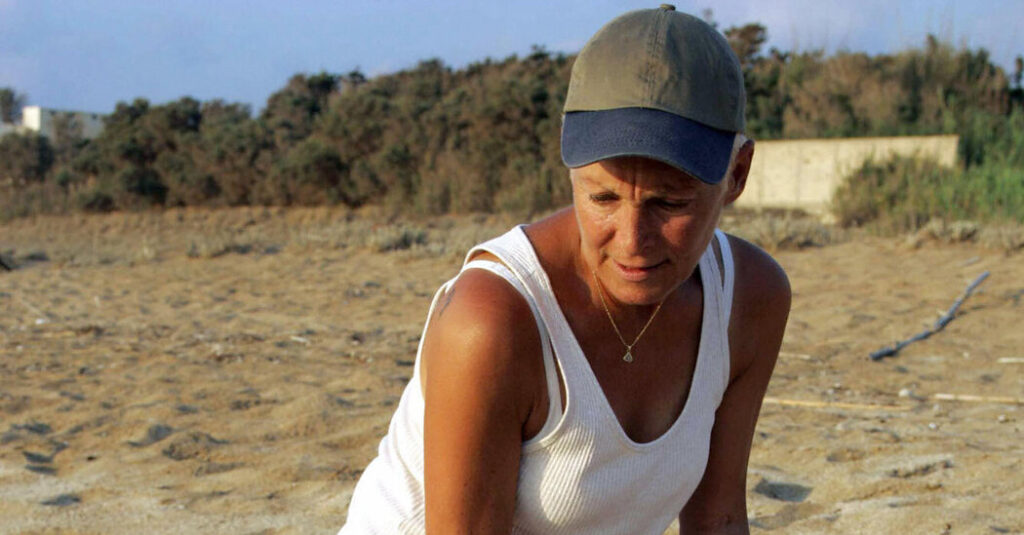
For more than two decades, Mona Khalil protected the endangered sea turtles that laid their eggs on a beach near her bed-and-breakfast in Lebanon and kept predators away from the vulnerable hatchings running to the Mediterranean Sea
Her efforts to spotlight the plight of the turtles, bringing together often opposing interests, earned her respect among conservationists. She remained unflinching in her mission even as periodic war erupted around her in southern Lebanon
On June 4, the fighting between Israel and Hezbollah that has taken so many civilian lives in recent months caught up to her. She was wounded in an Israeli airstrike in southern Lebanon, and on Friday, she died of her injuries at the American University of Beirut Medical Center, a close friend, Fadia Jomaa, said.
Her sister, Amal Khalil, remembered Mona Khalil, who was 76, as “a well-rounded person — extremely tough, extremely kind.”
“Inside, I am angry,” Amal Khalil said.
More than 4,000 people have been killed in the most recent round of fighting between Israeli military and Hezbollah, the Iran-backed armed group and political party that controls much of southern Lebanon. The fighting has threatened to upend a fragile peace agreement between the United States and Iran.
Ms. Khalil was born to Lebanese parents in Lagos, Nigeria. She later moved to the Netherlands where she lived for more than a decade, working for a time as a porcelain restorer.
In the 1990s, Ms. Khalil returned to Lebanon to visit her family’s seaside home between Tyre and Naqoura, which had been built by her grandfather in the 1970s but abandoned during the civil war in the 1980s. It was dangerously close to a zone the Israelis occupied at the time. One night, she was walking on the Hima Qoleileh–Mansouri beach when she spotted a turtle squirming across sand.
“The first time I saw them, it was completely by accident,” Ms. Khalil said to a reporter for a 2006 Times article. “I suddenly heard a noise. It was a turtle creeping through the sand, coming to lay her eggs.”
Ms. Khalil learned that two species of sea turtle who nested there — the loggerhead and the green turtle — had been declared critically endangered by the World Conservation Union.
Her plans shifted. She moved to Lebanon in 2000.
“She used to say that something kept pulling her back to the south — to the land she had left, and to a sea she never forgot,” Jomaa wrote in a text message to a reporter.
Ms. Khalil transformed her family’s seaside home and, in a nod to the Netherlands, named it Orange House. She partnered with a woman named Habiba Fayed to fend off foxes, wild dogs and crabs preying on hatchlings. Her guests, in the spirit of ecotourism, could volunteer to protect the turtles’ nests or keep the beach clean.
The periodic fighting between Hezbollah and Israel sometimes interrupted her work. During the war in 2006, she and Ms. Fayed had to flee because of the rocket fire close by and returned two weeks later to find their house had been hit by a shell.
Over the years, she successfully protected the Hima Qoleileh–Mansouri, which has more than 58 endangered sea turtles’ nests, according to the Society for the Protection of Nature in Lebanon. Ms. Khalil established a network of local communities, youth groups, volunteers and environmental advocates to preserve biodiversity while balancing local development, the organization said online.
“There are people who work for conservation, and there are people who become conservation itself,” wrote Assas Serhal, the director general of the Society for the Protection of Nature in a statement. “Mona Khalil was one of those rare individuals whose life, spirit, and daily existence became inseparable from the cause she dedicated herself to.”
Ms. Khalil hoped to be buried facing the sea, Ms. Jomma wrote.
“Sadly, the war is still ongoing there, and we cannot reach it,” she wrote.
The post Mona Kahlil, Defender of Sea Turtles, Killed in an Israel Strike in Lebanon appeared first on New York Times.