ÉVIAN-LES-BAINS, France — President Donald Trump issued a freewheeling defense of his Iran ceasefire deal at the close of the G-7 summit, veering from warnings about the economic costs of war to criticism of Israel’s campaign in Lebanon and comments suggesting a break with decades of U.S. opposition to Iran’s ballistic missile program.
“They have to have some, because other people have some,” Trump said, acknowledging disagreement among his advisers over his stance. “Am I going to let Saudi Arabia have missiles, but [Iran] can’t have them? … It doesn’t work that way. Missiles aren’t the problem. Missiles, they hurt a little location, but they don’t blow up the planet.”
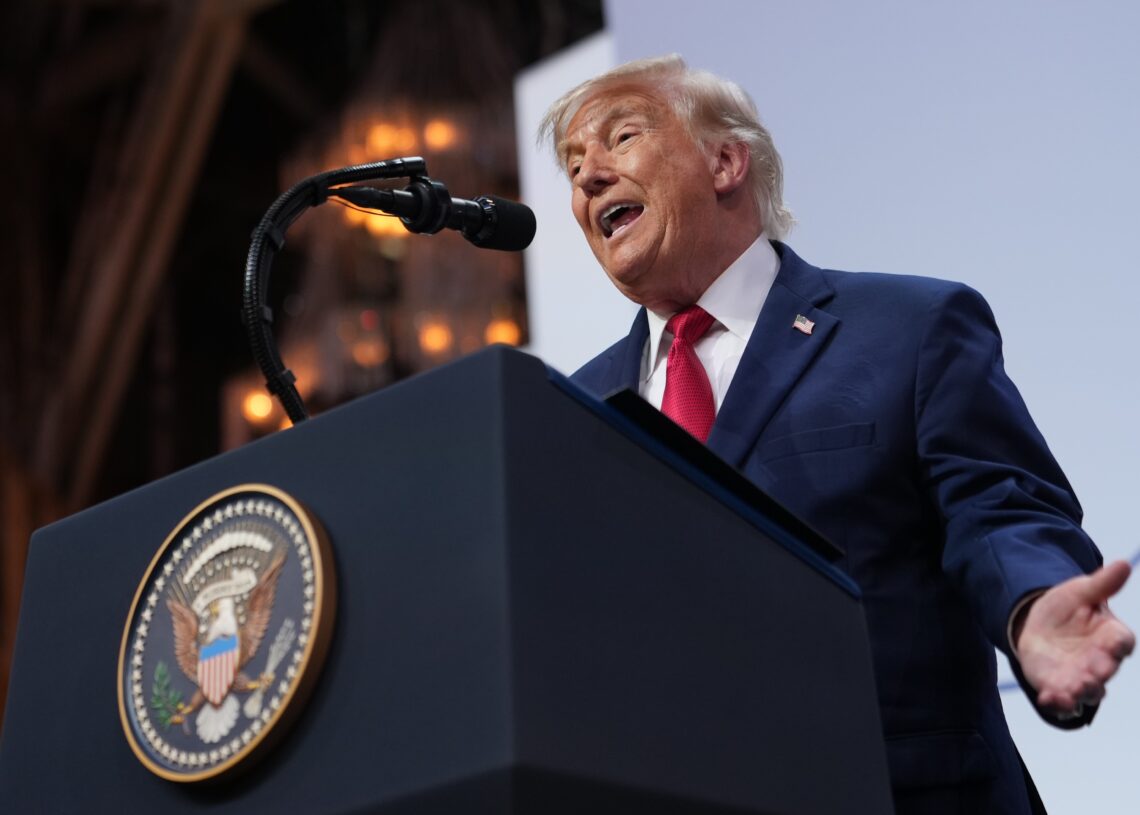
The sprawling, nearly 70-minute news conference capped Trump’s three-day visit to the G-7 summit and underscored a recurring feature of his presidency: using major geopolitical moments to claim vindication, relitigate old grievances and quickly shape the narrative on his own terms.
As Trump was speaking, a U.S. official detailed what was characterized as the terms of the agreement with Iran in a separate briefing with reporters. Later in the night, as Trump dined at Versailles, he signed the agreement remotely — as did Iranian President Masoud Pezeshkian, according to U.S. and Iranian officials.
While a U.S. official previously said both Trump and Vice President JD Vance had signed an electronic version of the agreement Sunday, a separate U.S. official said Wednesday that Trump had only “witnessed” Vance’s Sunday signing.
The latest agreement, as explained by a U.S. official earlier in the day, lays out a starkly different level of U.S. involvement in Iranian government than Trump has suggested at other points over the past three months.
While Trump previously expressed interest in facilitating regime change in Iran, the current agreement — which is in effect for 60 days, but can be extended — says that won’t happen.
The two sides will now agree to “respect each other’s sovereignty and territorial integrity, and to refrain from interfering in each other’s internal affairs,” according to the document.
“If the Iranians behave,” the official said, other countries seeking to do business with Iran will be permitted to do so.
Before taking questions, the U.S. president spoke for 41 minutes on a range of issues and also repeatedly veered off topic to deliver insults to political rivals, ponder the possibility of an economic depression, and describe several Middle Eastern nations and their populations in crude terms.
Trump mused on his negotiations with Iranians, crediting their “genius primitive culture” for helping them hammer out a fair deal, and insisted, again, that he had staved off war from a nuclear-armed Iran.
“If they had a nuclear weapon, they would have used it with it within moments,” he said.
Asked whether Iran had won the negotiation, Trump said that “no matter what” he would be blamed for either letting the war continue or reaching a deal that upset some members of his base.
Trump also criticized Israel, saying the U.S. ally had a right to defend itself but that he believed they were at times too heavy-handed. Israel and the U.S. jointly launched strikes on Iran on Feb. 28. Since then, Israel has also fought the Iran-backed Hezbollah military group in Lebanon and seized large swaths of that country.
“I think they could do better with respect to Hezbollah,” Trump said. “I’m not saying they shouldn’t protect themselves. I’m saying when two drones are shot into the desert and drop harmlessly, you don’t have to knock down buildings in Beirut. They could behave better, and frankly, they could do a better job.”
Trump began the news conference talking about the 14-point agreement. The document was set to be signed in person on Friday by Vance and Iran’s Parliament Speaker Mohammad Bagher Ghalibaf, though it was unclear Wednesday night whether the in-person signing would still take place in Switzerland. Trump on Wednesday repeatedly said that the deal would lower prices in America and around the globe and ease some of the inflationary pressure that has impacted most of his second term and increased headwinds against the Republican Party in the upcoming midterm elections.
“All I know is every time we talked about the possibility of peace, the stock market shot up like a rocket ship, never went down,” Trump said. “… Now that the oil is coming down, you’re going to see everything follow. Everything follows the cost of energy, and we’re going to end up having the lowest energy anywhere in the world.”
The Strait of Hormuz is set to open immediately and Iran will be permitted to sell its oil sanctions-free. As negotiations progress over a 60-day period and a final deal is completed, Iranian assets would gradually be unfrozen and transferred to Iran’s Central Bank, and remaining sanctions would be lifted, assuming Iran’s compliance with agreements. A $300 billion investment fund, which the U.S. believes would largely be financed by Persian Gulf states, would be established.
As Trump was speaking onstage in France, senior U.S. officials held a call with reporters to detail the agreement with Iran — and to read off, word for word, the text of the memorandum of understanding.
The official stated the memorandum of understanding “commits us to quite literally nothing, but of course, if Iranians do a lot of good, then we want to reward that good behavior and transform their relationship with the Middle East and the world.”
Many of the trickiest topics for discussion with Iran appear to have been reserved for the coming 60 days of negotiations, a notable shift given that the military pressure on Iran has eased for now.
White House officials said they planned to lift sanctions on Iranian oil while the broader agreement was being negotiated, a sequencing that reduced economic pressure on Tehran at the precise moment that Americans are hoping to extract concessions about the country’s nuclear program.
The shift was especially notable given how much Republican criticism of the Obama-era nuclear deal was focused on sanctions relief, which Trump and others said at the time delivered cash that fueled Iranian support for its regional proxies, terrorism and other activities that were detrimental to U.S. interests.
Trump also made clear how concerned he was about the impact of the war on the stock market and noted that dwindling global oil reserves were increasingly putting pressure on energy prices — two reasons Iranian leaders might doubt his resolve to restart military operations if talks go poorly.
But he acknowledged that there were few enforcement mechanisms in the deal.
“Doesn’t have to be,” he told reporters in France. “I said, look, if you don’t adhere to the agreement, I don’t want to do that, but we’re going to bomb the hell out of you, and I don’t think that they’re going to veer from the agreement. What else am I going to do? Am I going to say I’m going to take you to court?”
The post Trump signs and defends his Iran deal, criticizes longtime ally Israel as G-7 ends appeared first on Washington Post.