Abby ShalekBriski, an agricultural economist, writes the Substack “Field Notes on Progress.”
In August 2019, after a string of mass shootings, musician Jason Isbell tweeted in support of restricting assault-style weapons, eliciting this reply from an Arkansas man named William McNabb: “How do I kill the 30-50 feral hogs that run into my yard within 3-5 mins while my small kids play?” To the Twittersphere, the post was like some alien tongue spoken across America’s urban-rural divide, and it broke the internet.
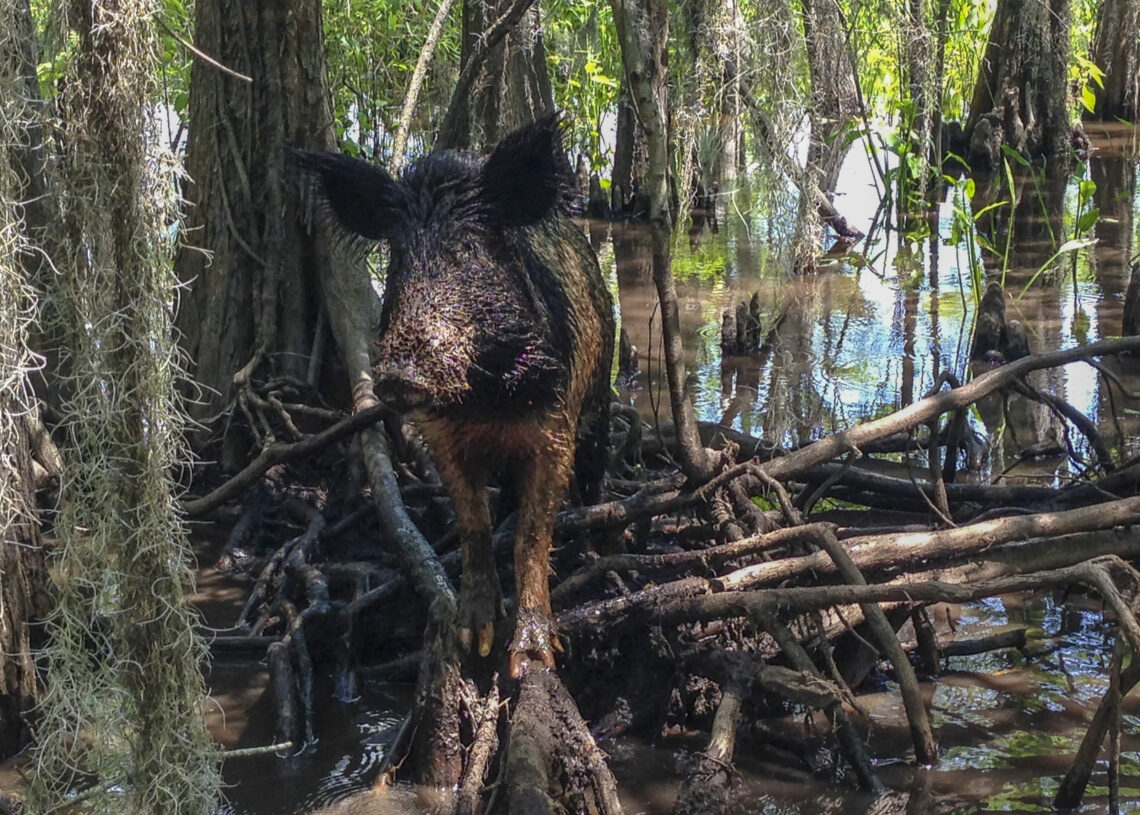
But it also spoke to a real problem that has steadily worsened. Nearly 7 million feral hogs roam the United States, according to the most recent estimates, roughly triple the total 40 years ago. They have been spotted in at least 35 states, nearly double their 1980s range, largely in the South but also in Oregon and Michigan’s Upper Peninsula. With few natural predators of adult feral hogs in North America — think mountain lions, alligators and not much else — these populations grow unchecked.
Farmers have complained about destroyed crops, rooted-up pastures and damaged fences for years. Now the disruption is creeping into suburbia. In April, sounders — packs of hogs — tore up yards in a Dallas suburb. “It’s as though they are working for an excavation company,” a resident said. Hogs have attacked hikers and golfers. Every year, thousands of the animals are hit by cars, or worse: In 1988, a pig and a piglet wandered onto a Jacksonville International Airport runway, forcing an F-16 pilot to eject during landing and destroying the $16 million aircraft. Wild pigs are estimated to cause at least $3.4 billion in damages annually.
The hogs, in their way, are quintessentially American. They are descendants of immigrants. Domesticated pigs first arrived with Spanish explorer Hernando de Soto in the 1500s. In the 1900s, Eurasian boars were released for hunting, and over time the two interbred into a feral hog population that is genetically diverse, behaviorally unpredictable — and very difficult to remove once entrenched.
They are also highly adaptable. The omnivorous hogs, typically weighing between 75 and 250 pounds, eat crops, roots, insects, bird eggs and even small animals, ensuring their survival in many environments. American winters have slowed but not stopped their northward expansion. Though deep snow can deter them, feral hogs build “pigloos” out of vegetation and stick to more temperate areas such as wetlands, forests or other habitats that provide food and shelter.
And they are smart. Their cognitive abilities are comparable to chimpanzees and dogs. One pig’s interaction with a trap can help a sounder evade capture for years; once the hogs spot a trap, they’ll move on to a neighbor’s place. Even if you manage to capture a few hogs, the survivors busily replace them. Sows average up to two litters a year, with five or six piglets per litter. Wildlife experts estimate that around 70 percent of a population needs to be removed annually just to keep it from growing.
Still, as the population has expanded, so have trapping and control methods. Traps triggered by trail cameras, helicopter-based shooting and thermal drones help remove the hogs. But the techniques and technology aren’t really the issue. What’s missing is a coordinated effort to use them effectively over a large area. Missouri’s Feral Hog Elimination Partnership, launched in 2016 and led by the state’s Department of Conservation and U.S. Agriculture Department wildlife experts, has reduced feral hog occupancy in the state’s watersheds by 84 percent. But retaking just this ground took extraordinary planning: Eighteen federal and state entities, 48 elimination specialists and over 600 landowners, producers and ranchers took part.
Congress has begun to help. The Feral Swine Eradication and Control Pilot Program — established in the 2018 farm bill but struck from the 2024 extension — was restored last July in President Donald Trump’s One Big Beautiful Bill, which allocated $105 million for the problem through 2031. The House-passed Farm, Food, and National Security Act would raise the total to $150 million.
Money isn’t the whole problem. The federal government can regulate invasive plants, livestock disease and imported wildlife, yet it lacks jurisdiction over an invasive animal already established in the U.S. Current laws might curb interstate transport, but they cannot regulate in-state markets for feral hogs.
These markets exist because while some see the hogs as a problem, others see a revenue stream. Texas law allows people to sell live hogs by the pound at USDA holding facilities. Hog hunting occurs on game ranches in multiple states. These activities provide income on land that’s not productive for crops. It’s hard to coordinate eradication when some folks have incentives to keep the swine alive.
Feral hog control is about as bipartisan as it gets: The animals root up a suburbanite’s lawn and a farmer’s pasture with equal enthusiasm. Legislation led by members of Congress from the states that actually live with the problem, such as Texas, Tennessee, Oklahoma and Arkansas, could strengthen federal authority to manage an established invasive mammal across state lines.
The hog population grows every day. Though the right number of feral hogs in the U.S. probably isn’t zero (or 30 to 50), it isn’t 7 million either.
The post The feral hogs ravaging America could come to your home next appeared first on Washington Post.