On the night of January 8, in the low-slung, industrial city of Karaj, just northwest of Tehran, a 17-year-old boy named Sam Afshari was killed by Iran’s security services. He and his friends were peacefully protesting when the streetlights suddenly went dark. Witnesses saw members of the Islamic Revolutionary Guard Corps and Basij militia on the beds of trucks charge up behind demonstrators, firing .50-caliber machine guns indiscriminately into the crowd. Sam was shot in the back, just below his kidneys, and brought to a hospital alive for surgery. He had a breathing tube in his mouth when, the family believes, IRGC agents visited the hospital and administered Sam a “finishing shot” to the back of the head.
I wish I could tell you that this was the end of the story of his family’s torment. It was not. Sam’s mother and uncle located his remains in the overflowing morgue of Behesht-e Sakineh, Karaj’s primary public cemetery. Sam’s face was mutilated beyond recognition; his mother identified him by a tattoo on his chest that read Mother, and promptly collapsed. The IRGC men running the morgue called her a prostitute and told her that her son was a terrorist.
Then they brought her a form to sign attesting that Sam had been a member of the Basij militia: The state would officially add him to its tally of “martyrs” killed by violent protesters, rather than honestly account for another nonviolent demonstrator killed by its own men. If she refused to sign it, they told her, they would not release the body to her for burial. They also demanded that she pay $1,400 for the bullet that killed her son. Otherwise, Sam would be buried in an unmarked mass grave, as hundreds of others collected at Behesht-e Sakineh reportedly were.
[Read: ‘You want to leave us alone with Mojitba?’]
Sam’s family did what they had to do to secure his remains. Even at that, they were permitted no funeral gathering, obituary, or public notice of any kind. They found a grave site for Sam to share with just one other slain protester, rather than hundreds, in a location that the family fears to name, lest it be desecrated. I heard this story from Sam’s father, Parviz, who lives in Germany. He spent the three weeks in a hospital on suicide watch after his son’s murder.
“My brain was just sending me error messages,” he told me. “It was not just a feeling that they killed my son. It was a feeling that they killed me as well.”
Iranians have plenty of experience with repression. But neither they nor anyone else has had an experience quite like the first half of 2026. Iran’s security services massacred protesters on a historic scale just weeks before Israel and the United States plunged the country into conflict. The war without has since compounded Iran’s war within, in ways that the world has hardly reckoned with.
In January and February, Mai Sato, the United Nations special rapporteur for human rights in Iran, was inundated with stories much like Sam’s. They came from families extorted and threatened at Iran’s morgues, where they’d gone to collect the remains of their massacred loved ones. The family members either submitted to the indignities—the false testimony, the obscene bullet fees—or were asked for bribes as high as $7,000 to avoid consigning their relatives to mass graves. On some days, Sato told me, she received more than 1,000 emails on this subject.
Shahin Milani, of the Iran Human Rights Documentation Center, told me of a report his organization had received from the family of a teenager who had been transported with the dead to a morgue in the town of Kahrizak. For three days, he hid among corpses, breathing the stench of death and listening to cellphones ringing. Anyone alive who made a bodily sound, the teenager reported, was dealt a finishing shot.
“There are so many open tabs in my mind,” Skylar Thompson, the deputy director of the Human Rights Activists News Agency, a nonprofit that documents human-rights abuses in Iran, told me by phone last month. Beyond even the massacre itself was the matter of “how the bodies were handled, and the desecration of those bodies, and the violation of dignity for the people and the families that had to identify them.” The war has been “almost like a gift to the regime,” Thompson said: “This terrible thing happened, and then everyone’s attention was directly drawn away to the conflict.”
The Islamic Republic has slaughtered demonstrators at random before. It has insulted and denigrated the families of the dead before, demanded bribes for corpses before, refused funerals before. But the sheer scale of the crimes in January was something new, and so was the level of fear among those reporting them. The human-rights groups I spoke with were still combing through it all months later. HRANA has so far identified close to 7,000 massacre victims. The human-rights groups are also tallying Iran’s civilian war dead—about 1,700, according to HRANA, 250 of them children—and tracking a campaign of domestic repression and intimidation that has escalated since the United States and Israel began striking Iran on February 28.
The January dead are not yet fully counted. The war dead, too, are not yet fully counted. And the killing of Iranians has not stopped. Iran has executed political prisoners at a rate of one roughly every other day since March 18. The total number is thought to be close to 40. Some are very young—18 to 25 years old. Many were arrested during the January protests. (I counted 16 as of June 3, but the numbers keep climbing.) In the past, Milani told me, any one of these death sentences would have been “big news.” But now, he said, “everything is overshadowed by the war and the Strait of Hormuz.”
[Anne Applebaum: Trump has no plan for the Iranian people]
In ordinary times, Iran carries out more executions per capita than any other country in the world, and in absolute numbers, it is second only to China. Amnesty International estimates that Iran executed 2,159 people last year; Sato puts the number more conservatively at about 1,600. Normally, only a very small proportion of those executed had been convicted of political crimes. In 2026, that pattern has reversed: Iran appears to have executed fewer people than usual, but 70 percent of them for political reasons.
The war has provided cover for human-rights abuses. It has also reinforced the rationale that the regime uses to justify them. The Islamic Republic has always claimed that its domestic opponents were stooges of Israel and the United States, even when those charges were plainly implausible. Now there is a record of activist figures, mainly in the diaspora, calling for American and Israeli strikes on Iran. And American and Israeli leaders have explicitly corroborated the regime’s most fevered narratives by promising—cynically, fecklessly—that their military onslaught was meant to benefit Iran’s domestic opposition.
Since the war began, according to the Center for Human Rights in Iran, Iranian officials “have made repeated, direct threats to the citizenry, warning of lethal violence against any individuals protesting or perceived to be ‘collaborating’ with the enemy. By ‘collaboration,’ the regime includes any form of peaceful dissent.” Hadi Ghaemi, who runs CHRI, worries that this kind of language is meant to desensitize the regime’s supporters—more numerous now, by many accounts, than before the war—to an imminent campaign of violence.
“Public communication channels are being used to excite the base and normalize what is coming,” Ghaemi told me. Among other posts and public announcements, he pointed to a statement that Salar Abnoush, an Iranian official, had made on state-run television on March 5: “Parents, if your son or daughter doesn’t listen, it’s not our fault. Anyone in Iran today whose voice echoes in line with the enemy, the ground beneath their feet is Tel Aviv and their head is Netanyahu. Their execution order has been issued. No one has spoken to you this clearly before. We don’t want your child to be killed. But your child is ignorant. Unaware.”
A new espionage law, which emerged out of last summer’s 12-day war with the United States and Israel and came into effect in October, has made such collusion easier than ever to charge and prove. The law criminalizes virtually all contact with the United States and Israel. Passing along information, seemingly of any kind, to American or Israeli entities, also seemingly of any kind, could incur a charge of “sowing corruption on earth,” which is punishable by death. Both Sato and Thompson suspect that the espionage law has had a chilling effect on their work. “People are more fearful of the consequences of communicating with us,” Thompson said, “even if they’ve been talking with us for 10 years.”
Political prisoners executed since the war began have routinely been accused of colluding with the United States and Israel. Officials and state media have labeled those arrested during and since the January protests “traitors,” “terrorists,” “agents of foreign powers,” and “enemy collaborators,” according to Amnesty International. HRANA representatives told me that some 350 forced confessions were broadcast on national television in January alone, and in them, detainees largely claimed, under duress, that they had been misled by foreign actors, had been paid by foreigners to participate in protests, or had provided Iran’s enemies with sensitive information.
No one who has observed the Islamic Republic’s treatment of dissent over the past four decades will find the language about foreign collusion surprising. What is remarkable is the scale—and the single-minded, systematic efficiency.
About seven years ago, Parviz Afshari—Sam’s father—lived in Karaj and worked for a conglomerate whose essential purpose was to confiscate private property from dissidents, ethnic minorities, and other people disfavored by the government. By Zoom from Germany, where he is now in exile, Afshari told me that after about three years of this employment, he raised objections to what he was being asked to do: Many of the people he was taking things from had nothing else. They were treated callously. Was all of this really necessary?
Afshari’s critique was apparently unwelcome. The fact that the conglomerate he worked for was directly managed by the supreme leader probably did not help. He spent a couple of months in temporary detention, and he learned that he could ultimately be sentenced to as many as 10 years in prison. He fled the country instead. His wife and son stayed behind for Sam to finish his schooling, but Afshari intended for them to follow him. To that end, Sam studied three European languages; he was fluent in German; he was working toward a degree in IT. But before Sam could get his European visa, he was killed.
[Read: Iran’s next internet blackout is inevitable]
In recent months, the Islamic Republic’s habitual seizure of property from those it has designated as its domestic enemies has been amped up and systematized. In March, the regime announced a new digital system, called Saham, that would help courts and prosecutors swiftly identify and seize the assets of those it deemed enemy agents. The main target here is the diaspora: The Islamic Republic can’t imprison exiled activists, but many still have real estate or bank accounts in Iran, or have family who do. “Those abroad who participate in gatherings will have their assets seized within 48 hours,” Amir Hossein Kalateh, a lawyer affiliated with the government, announced on March 11. Official sources claim that the Islamic Republic has seized property from more than 750 people inside and outside Iran since March.
Two decades ago, when I used to travel to and report from Iran, the penal system was a labyrinth of competing interests. Many political prisoners didn’t know who held them or had control of their fates: It could be the judiciary, or rogue elements within the judiciary; the intelligence ministry, or rogue elements within the intelligence ministry; the IRGC’s proprietary intelligence agency; the Office of the Supreme Leader; a secretive cadre of clerics; or an opaque, mafia-like network that webbed across them all. You might figure a few things out based on where you were held: the intelligence ministry’s section 209 or the IRGC’s section 2A, both in Evin Prison; another known prison; a holding pen at the airport; or a black site of indeterminate location. You’d pay attention to which judge was assigned your case. Sometimes the various agencies and actors disagreed; sometimes a powerful entity might even seek to protect someone a rival sought to condemn.
My contacts in the Iranian-human-rights world have told me that this friction is largely a thing of the past. According to Ghaemi, the IRGC’s intelligence agency has consolidated control over interrogations, detention centers, judges, and prosecutors, and the proof is in the lack of acquittals. “You can look at case after case. None is dismissed,” Ghaemi said. “A dossier is presented, and the judge accepts it.” Julie Heezius, an advocacy officer at HRANA, told me that the trend is one of significantly long standing. She noted “greater alignment and coordination between the IRGC and judicial authorities. This is evident in some of the statements, public messaging, and threats issued by both institutions, which suggest a closer relationship than before.”
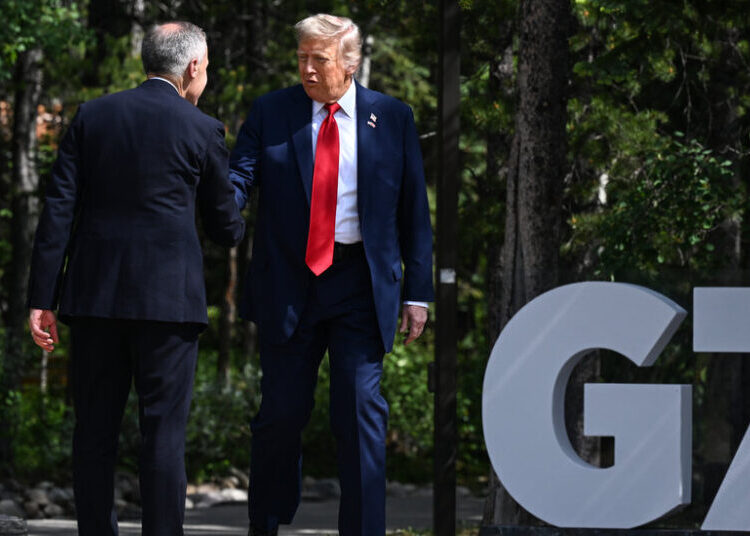
Donald Trump and Israeli Prime Minister Benjamin Netanyahu are apparently disappointed in Iran’s storied opposition. They imagined, in all of their incurious arrogance, that decapitation strikes on Iran’s supreme leader and other high-profile officials would deliver the organs of state into the hands of the people. “Now is the time to seize control of your destiny, and to unleash the prosperous and glorious future that is close within your reach,” Trump told the Iranian people the night he started the war. “This is the moment for action. Do not let it pass.” What a misreading of the moment that was.
War has instead done what it usually does: empowered the powerful, rallied the faithful, and allowed an apparatus of repression to present its imperatives in terms of national security. Trump, of course, is as indifferent to the fate of Iran’s civilians as he is ignorant of their circumstances. But there is still one gesture he could make, in service not of the Iranian political opposition per se but of the forgotten cause of human decency, toward a population protected neither by its own regime nor by anyone else. The next time he shoots for the deal of the century, he could add to his list of pie-in-the-sky demands a few that would cost him and the Islamic Republic next to nothing: the release of those arbitrarily detained, an end to political executions, and a respectful burial for the dead.
The post The Betrayal of the Iranian People appeared first on The Atlantic.