Did Jeffrey Epstein kill himself in jail or was he murdered? After nearly seven years, the official conclusion of suicide has done nothing to clear up doubts or holes in the evidence. Many people still ask: What actually happened?
Four Times reporters just published a 10,000-word investigation that seeks to answer those questions. They drew on new documents and videos. They interviewed former inmates and other key people for the first time. This new reporting points to suicide.
For all that, some people will never believe it. Their gut instinct says murder. Some may even claim that The Times had an agenda to build a case for the establishment view of suicide.
This week, I asked the four reporters about their work: how they did it; if they had any preconceptions about Epstein’s death; and what the role of investigative reporters is. The interview has been edited and condensed.
What assumptions or theories did you have about Epstein’s death going into this reporting? Did any of you think he may have been murdered?
CHARLES HOMANS: This was my first foray as a reporter on an Epstein story, and I went into it with what I think is a widely held skepticism that he died by suicide. It was, I’ll say, a shallowly held suspicion on my part. I hadn’t spent much time thinking about the case, to be honest — but so much about his death felt strange on its face.
STEVE EDER: Unlike Charlie, I’ve spent years on and off the Epstein story. That included being a reporter on our 2021 investigation based on an early set of jail records that The Times sued to obtain. Even after all of that, I had some lingering questions about whether there were any gaps between the official account and what actually happened.
JAN RANSOM: As a reporter who has covered deaths in New York’s city and state corrections systems, I had an open mind about exploring what could have happened. I had just finished reporting on people killed in the state’s prisons by guards and efforts by them to cover it up, so I knew it was important to follow all of the possibilities. I wanted to talk with people that investigators might have missed along the way.
MICHAEL ROTHFELD: While I had followed Epstein stories from a distance, I had not spent much time pondering how he died. So I came into this pretty openly. I will admit that having run down many conspiracy theories in my reporting career, I am generally leery of them, as I told my colleagues somewhat apologetically at the outset.
Why apologetically?
ROTHFELD: I didn’t want them to think I was flatly buying into the official version, either, because years of covering government officials has often left me just as leery of what they say.
Did you take on this story to try to dispel conspiracy theories that he was murdered?
HOMANS: I didn’t. I report often on paranoia and conspiracism in American politics. Many conspiracy theories are absurd, and some people have clear motives for spreading them. But official narratives can be wrong, and strange things do happen. It’s a natural and healthy impulse to seek explanations for why the world is the way it is. As I said, I was instinctively skeptical of the Epstein story myself.
As reporters, I think part of our job is to help readers think critically about the stories they do and don’t believe. Those stories often exist in the space between completely verifiable facts and pure conspiracism. In the case of the Epstein story, I viewed our project as using reporting to clarify the line between “could happen” and “did happen.” That’s the difference between “just asking questions” and journalism.
ROTHFELD: To Charlie’s point, questioning or doubting authority and conventional wisdom is the foundation for much of what we do as journalists. My tendency to do that goes back at least to the third grade, and asking impertinent questions of teachers, who then reported to my parents that I would consistently challenge their authority.
In this case, I had absolutely no desire to dispel anything. Our mandate from the editors — appropriately, I think — was simply to report the hell out of this story and tell readers what we found.
What does “report the hell out of this story” mean in practice?
ROTHFELD: Drill into both the official narrative and the underpinnings of the pervasive conspiracy theories about Epstein’s death. Question all of it. See what answers we could find. That’s what we did. Let’s face it, if we found that Epstein had been murdered, that would have been a world-shaking story. We didn’t.
EDER: I wanted to be on this story because it was a chance to take a fresh look at everything — documents, videos, new interviews — on a subject where our readers have so much skepticism. Because of the Epstein files release, we had a lot more to work with now.
Your reporting points very strongly in one direction — that Epstein killed himself. Is that your conclusion? If so, why not say that plainly?
HOMANS: Our reporting found a preponderance of evidence — much of it not previously seen — that Epstein was considering suicide and attempted to kill himself at least once before while he was in jail.
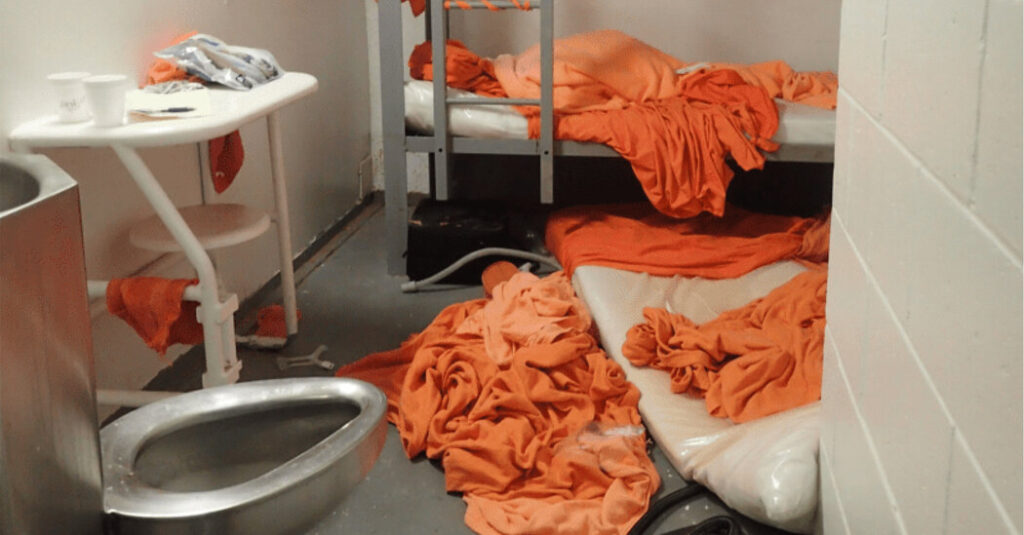
But a lot of crucial information about Epstein’s death is simply missing and always will be. There is not a comprehensive video record of his area of the jail at the time he died. Very little good evidence, or even careful observations, about things like the position of his body was taken from his cell. There are non-nefarious explanations for most of these gaps in the record, but they are real. And they put an upper limit to the amount of certainty we, or anyone, can defensibly convey here.
Where did that leave you as you started writing the story?
HOMANS: Well, here is where it’s worth considering the difference between “could happen” and “did happen.”
Alternate theories about Epstein’s death lean heavily on a couple of aspects of the evidence we do have — an unexplained orange blur in the surveillance video, particular details regarding the injuries to his body as seen in autopsy photographs — that are genuinely ambiguous, as we acknowledge in our story. What we did not find, and what no one has found, is other evidence clearly suggesting something besides suicide did happen, however theoretically possible it might have been.
ROTHFELD: We considered every scenario that we could imagine — that an assailant had slipped into his cell, that a guard or guards had purposely allowed him to be left alone in his cell and unmonitored and take his own life, that cell doors had been left open for another inmate to kill him, among many others.
We found no viable explanation for anything other than suicide that didn’t involve a nearly impossible number of conditions and co-conspirators. Combine that with the evidence of his declining mental state, some of which has been reported before and some of which is entirely new — and we had overwhelming indications of suicide. But the incompetence of the system, primarily of the jail, means we can’t say that with 100 percent certainty.
Jan, you’re an investigative reporter who covers the criminal justice system and incarceration. How did you approach digging into Epstein’s five weeks in jail?
RANSOM: A common refrain in journalism is “show don’t tell,” and I think that was especially important here. You would be hard pressed to find someone who does not have a strong opinion about what happened to Epstein.
It was our duty to hold the readers’ hand on our reporting journey as we explored questions about access and security to Epstein’s cell. We found that it would take significant involvement from various staff members to not only get to the area where Epstein was held, but also then into his cell to kill him. And in the weeks leading up to that night, Epstein’s two previous cell mates recalled his bizarre behavior, which included other suicide attempts that started after he was denied bail.
I also spoke with an inmate in the cell next to Epstein who had not interviewed with federal investigators who recalled hearing him rip up sheets late the evening before he was discovered. That inmate said he also never heard anyone enter Epstein’s cell until the officer discovered him unresponsive the next morning.
We’ve had investigative pieces recently on Satoshi and crypto and on Alex Pretti’s killing in Minneapolis where some readers felt we were assembling evidence and building a case not unlike prosecutors. How do you see the role of investigative reporters?
HOMANS: We went to real lengths to explore alternate explanations here. (For me, that involved letting Mark Epstein, Jeffrey’s brother, demonstrate the physics of a hanging with a prison-bedsheet noose on my neck during an interview at his home.) But I think as a reporter, if you did the work, you shouldn’t shy away from saying what you found.
EDER: I think our jobs as investigative reporters have obvious differences. Prosecutors primarily are trying to get a conviction, but as reporters we are trying to piece together as much of the story as possible, in as much detail as we can, and let readers decide how they feel about the facts we’ve provided.
RANSOM: A prosecutor’s job is to prove a case in court. As an investigative journalist, my role is to follow the facts wherever they lead, test assumptions and provide the public with the fullest and most accurate account possible.
ROTHFELD: The big difference here is in how we handle circumstantial evidence, which — in the absence of direct proof — is all we have that Epstein killed himself. Many criminal cases rely on circumstantial evidence without a proverbial “smoking gun.” But when prosecutors use circumstantial evidence to try to convict someone, say of murder, they must act with complete certainty to convince a jury that the person absolutely did it.
Our job as journalists, on the other hand, is to give readers nuance, show them the gray. We present both the solid reporting and the holes — to give them the fullest, truest picture we can and allow them to draw their own conclusions.
We usually don’t publish graphic details relating to suicide methods, at least in part because there’s a risk of copycat behavior. How did you weigh what to include or not include in your story?
HOMANS: None of us were eager to depict suicide in such detail, and we are all well aware of the reasons not to do so when it’s avoidable — and it usually is. But some of the most persistent questions about Epstein’s death have to do with the mechanics of strangulation and asphyxiation: What methods would or would not have been possible within the controlled circumstances of his cell, and what injuries they would have left behind? We elided the specifics where we could, but we also felt that it was impossible to engage with serious questions about his manner of death without getting into some of them.
If you are having thoughts of suicide, call or text 988 to reach the 988 Suicide and Crisis Lifeline or go to SpeakingOfSuicide.com/resources for a list of additional resources.
The post How Our Reporters Got at the Truth of Jeffrey Epstein’s Death appeared first on New York Times.