This personal reflection is part of a series called The Big Ideas, in which writers respond to a single question: What drives us? You can read more by visiting The Big Ideas series page.
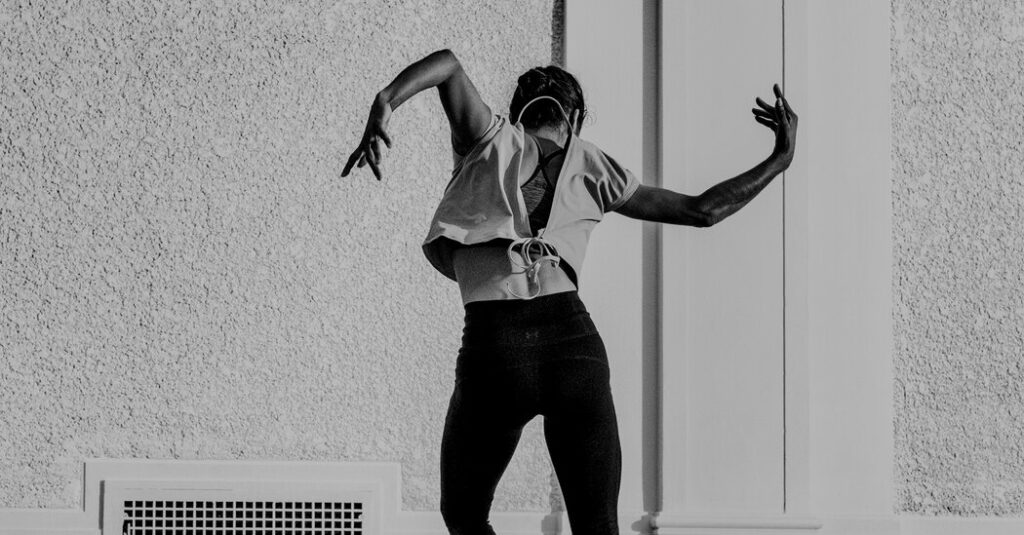
There’s a moment after a long career in ballet when your body begins to ask for something different.
After decades of pushing past limits — through injury, fatigue and expectation — there comes an insistence: slow down. I’ve been feeling that insistence lately following a recent surgery and my decision last fall to step away from the stage in the way I once knew it.
Yet even in this chapter — what people call retirement — I still find myself moving. Not always in the same way physically, but propelled by a force just as strong.
This makes me wonder: If the body can slow down, but the drive to move does not, then where does that drive actually live?
Ballet is an art of extremes. It asks you to pursue beauty and perfection while working against your most basic instinct: self-preservation. Your body is the instrument, and you are trained to override its warnings. Pain becomes information. You start to understand the difference between discomfort that builds strength and pain that signals something is wrong.
People often ask what motivates that kind of commitment. The truth is, pushing forward does not always feel like a decision. It feels closer to something instinctive — a pull you do not question, even when it would be easier or more rational to stop.
I think about the years of training, the repetition, the discipline of showing up. There is no audience for most of it. No applause. Just you, the mirror and the constant awareness that the work is never finished.
And still you return, fighting one instinct but following another, because something within you needs to keep going.
I did not enter ballet because I dreamed of becoming a ballerina. I entered it because it gave me structure and direction when my life felt uncertain. It was a place where the intensity I carried had somewhere to go.
But the environment I stepped into was not built with someone like me in mind. I did not grow up seeing my skin color reflected in the world of classical ballet. There were moments where I was acutely aware of being watched, measured, questioned.
I remember performing roles like Odette and Odile in “Swan Lake,” where tradition carries a kind of weight that can feel almost immovable. You are not just dancing steps, you are stepping into an image people believe they already know. And when you do not fit that image, the scrutiny feels different. It can make you question whether your drive is enough, or whether the institution will ever fully accept you. But that tension sharpened something in me. It made me more committed to the work and to the idea that presence itself can begin to shift what tradition looks like.
What people do not always see is the aspect of drive that is perhaps the hardest to name — the will to keep going in those moments when the path is unclear, when recognition may never come. You stay focused on the work while navigating a life on the public stage. You keep refining, keep returning, even when belonging or success are not guaranteed.
But once you recognize that drive in yourself, you begin to see it everywhere. I see it in young dancers, in the focus they carry before they even have the words for it. For them, it is not yet about perfection. It is about possibility.
But possibility is fragile. Having the drive is one thing; having access to spaces that can nurture it is another.
I was shaped by those spaces. At 13 years old, I found one at the Boys & Girls Club in San Pedro, California, where my own drive was met with open arms. That experience stayed with me. Creating spaces like that for others is what drives me now. The signature program of the Misty Copeland Foundation, which I created in 2022, is “Be Bold.” The program is rooted in that same idea of creating spaces where young people and their ambitions can be cultivated early.
Lincoln Center, where I performed as part of the American Ballet Theater for more than two decades, and where I now serve as a board member, is thinking about this same idea in its work to open the “back” of campus to communities to the west. (As it was originally designed, the campus’s western edge has acted almost as a physical barrier.) This means not only working to improve access to buildings, but also opening programming and extending invitations and a sense of welcome to the communities directly surrounding Lincoln Center. For me, it is about making the campus feel less like a boundary and more like a bridge.
Before it became my home, artistically and personally, this part of Manhattan was called San Juan Hill. This working-class community, rich with culture and music, was displaced to build Lincoln Center. As a Black artist, that history is not abstract to me. It is something I carry — the drive of the artists who came before me, who may not have had the same chances I have had.
This has also shaped how I think about legacy, both what I’ve inherited and what I feel is my responsibility to expand. It pushes me to bring others with me and tell stories that have not always been acknowledged.
My roles today feel significant. There is real power in having a seat at the table, in helping shape spaces so they are more open, more reflective and more inclusive of the communities whose histories they stand on. That is a crucial part of continuing the work: inspiring someone to follow their own drive and take their own leap, and giving them space to land.
Misty Copeland was the first Black female principal dancer at the American Ballet Theater, where she performed for more than two decades. She now serves on the board at Lincoln Center for the Performing Arts.
The post Pushing Forward, Onstage and Off appeared first on New York Times.