On a new single from her upcoming album, Charli XCX pronounces: “I think the dance floor is dead.”
I get what Charli is saying. I’ve been to enough clubs and festivals in enough cool-kid locations — Amsterdam, London, Paris, Berlin, New York, Chicago, Rio de Janeiro, Accra, cities that take their nightlife seriously — to know that the dance floor isn’t just for dancing anymore. It’s become just another backdrop for content, for selfies and TikToks, a place to be seen online, usually looking nonchalant or posing, duck-faced, with friends. A dance floor is meant to be a place to feel something, to let go. You should be too sweaty, your hair too messy, to stand around posing.
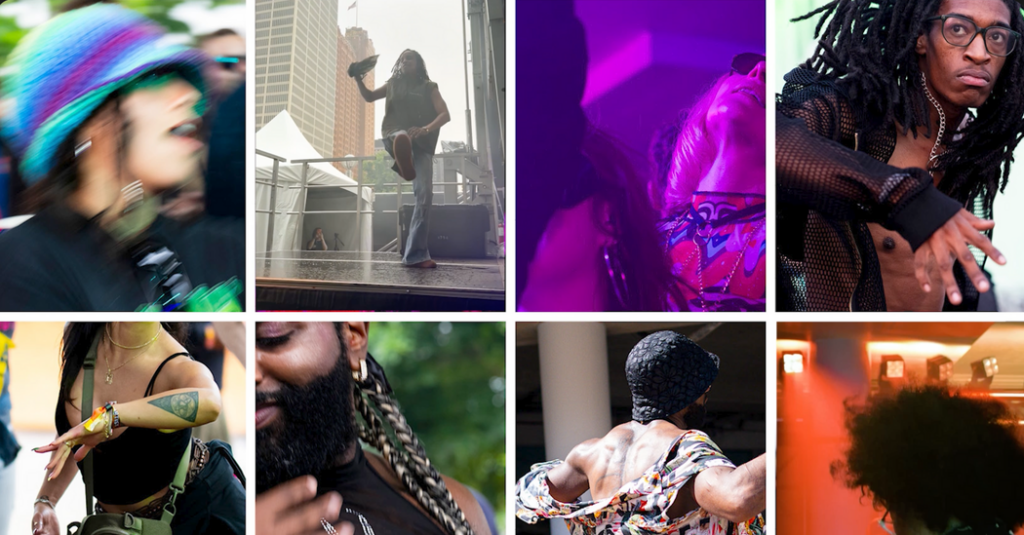
The true dance floor was never about the room, the lights or the lineup. It was always about the people who showed up to feel something together. And they’re still here. In fact, they can be found in my hometown, Detroit, a city where — despite its many changes over the past decade — the dance floor is still very much alive.
Anytime I come home to Detroit and go out, there’s simply no such thing as bad music. This is especially true on Memorial Day weekend, during the annual Movement music festival, which this year featured such prominent D.J.s as Carl Cox and Sara Landry, as well as pioneers of Detroit dance music such as the D.J.s Delano Smith and Stacey Hale, known as Hotwaxx.
I was born in Detroit and grew up in the suburbs and my childhood was defined by music. I was a Warped Tour teen who attended the Hoedown and saw Lil Wayne and Kid Cudi on the lawn at Pine Knob. I first attended the Movement festival — or DEMF, Detroit Electronic Music Festival, as some people call it — when I was in high school, in 2009. I couldn’t tell you who I saw or what the stages looked like back then; I was too fascinated by the strange souls dancing around the water fountain in the center of Hart Plaza with crystal balls and latex bodysuits. It was weird. It was great. I was hooked.
Detroit remains the only place where I can walk through a door, hear the first few beats of music and feel my whole body instinctively start to bounce toward the dance floor. Many cities where I’ve explored the club scenes have been ruined by becoming party-tourist destinations: The rent goes up, the crowd changes, and the magic leaves. Detroit, where techno was invented, was written off by the rest of America for so long that it missed this cycle entirely. The city’s dance culture wasn’t built for outside validation or commercial success. It’s been shaped by people who stayed out of devotion to the music, not for clout.
In the early 1980s, Juan Atkins, Kevin Saunderson and Derrick May, known as the Belleville Three, built the genre of electronic music that went on to be the soundtrack at clubs from Berlin to Tokyo. Before that, Detroit gave the world Motown and the Detroit sound in rock, and set about broadcasting its dance culture on local TV with a program called “The Scene,” hosted by Nat Morris, which aired from 1975 to 1987. Its musical history doesn’t just live in record stores, museums or YouTube. It lives in the culture — because the creators and the community never left.
“In Detroit, we’re friendly people,” the music producer and D.J. Carl Craig told me. “So you’re going to have this openness that can happen on a dance floor.”
Detroit strips the self-consciousness of the dance floor away and returns the club to its original purpose: connection. When I come home to Detroit, who I am and what I do completely leave my brain. I’m not thinking about work or my phone or who’s watching, and the facade of big-city living just fades away. In other cities, clubbing can feel performative and transactional, less about the music and more about networking. But in Detroit the connection still feels entirely organic and unforced.
If you walk into the record store and downtown Detroit bar Paramita Sound or the legendary nightclub TV Lounge on a Saturday night, the crowd will most likely be intergenerational, crossing backgrounds and tax brackets. The uncs are there in their leather cookout sandals, bopping and stepping like they’ve been coming to the spot for 30 years, while the 20-somethings who’ve just moved to the city and are still figuring out the scene are dancing right alongside them. You have locals from Detroit proper dancing next to people who drove into the city from the suburbs — but none of that matters because everyone is moving to the same music for the same reason. As the Detroit-born D.J. Sky Jetta described it: “A mixture of everybody. All ages, all races, all sexual orientations. And nobody makes it weird.”
And nobody is performing. That is the hardest thing to explain to someone who has never been to Detroit. “The biggest difference I’ve noticed,” said Sky Jetta, who is now based in New York, “is people in Detroit not feeling like they’re too cool to have a good time. In New York, I did see a lot of people picking the scene up to see who was watching.”
At the final night of the Movement festival this year, I stood front and center at the Pyramid Stage, watching D.J. Minx close out the festival as the skyline of Windsor, Ontario, flickered across the river. Two women from Chicago who were standing in front of me turned around to ask if I was wearing a Telfar top. (I was.) Within seconds, we were all dancing together, three strangers who had never met before, moving to techno made by a Black woman from Detroit, in the city that gave the world this sound. It felt spiritual. It was the only possible way to end the weekend.
While the festival plays a huge role in highlighting the music culture, it’s not the only place or time that Detroit’s dance floors are alive. That weekend, I danced in the rain at Moodymann’s Backyard Bar-B-Q Boogie, where the entry fee was $5. There was no fancy light show, just wet grass, hamburgers and hot dogs off the grill, a side of Better Made chips and people from every walk of life grooving to a casual six-hour set by the D.J. Moodymann, who would occasionally get on the mic to tell a story or say a few words. That experience is the soul of the real dance floor. It travels with the people who carry it. It shows up in backyards, block parties, day parties and after parties. It exists wherever someone decides that the music and the love in the room matter more than the performance of being seen.
Devine Blacksher is a lifestyle writer who was born in Detroit.
The Times is committed to publishing a diversity of letters to the editor. We’d like to hear what you think about this or any of our articles. Here are some tips. And here’s our email: [email protected].
Follow the New York Times Opinion section on Facebook, Instagram, TikTok, Bluesky, WhatsApp and Threads.
The post The Dance Floor Isn’t Dead. It’s in Detroit. appeared first on New York Times.