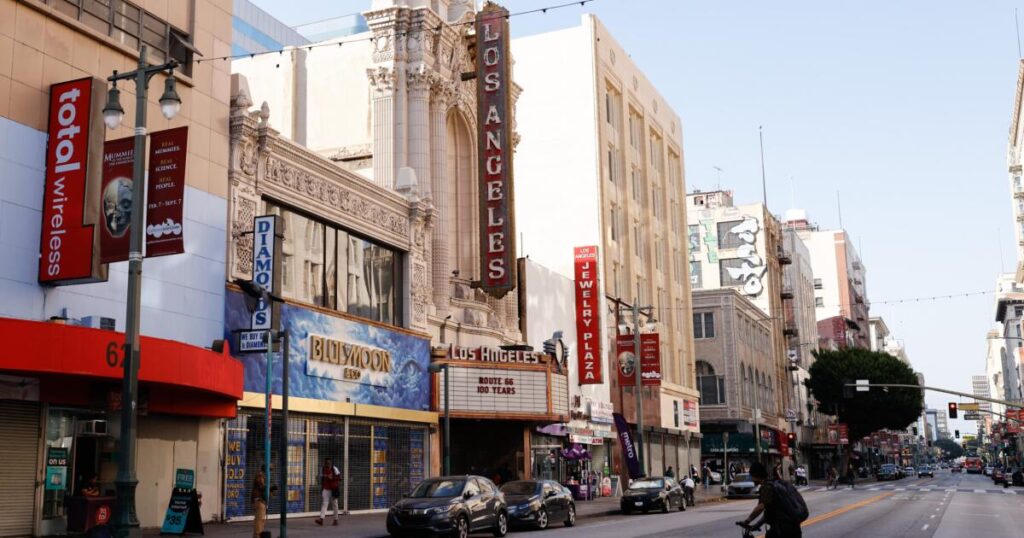
Los Angeles has one of the deadest downtowns in the world, according to a new survey.
Out of 75 of the top cities around the world, L.A. ranked among the lowest for vibrancy in Gensler’s 2026 City Pulse report released this week.
Around 65% of those surveyed found DTLA vibrant compared to more than 80% vibrancy scores for New York, Chicago, Sydney and Shanghai.
The urban planning and consulting company surveyed 35,000 city residents on how they ranked their city for a variety of statements. Los Angeles ranked 20th-lowest globally and 11th-lowest among 34 U.S. cities in vibrancy.
Downtown Los Angeles needs more people to return to downtown to work, shop and eat if it wants to boost its scores, said Kelly Farrell, the managing director of Gensler’s L.A. office
“L.A.’s kind of central problem is that businesses have left L.A. We need them to bring the offices back in,” she said. “Bring the people back in so they’re staying after work and interacting with those businesses that are in the area.”
While there are pockets of downtown that are thriving and local residents say life is improving, Los Angeles’ downtown suffers from an image problem that is weighing on how it is perceived.
Gensler’s report highlights key factors that contribute to a thriving downtown area. Downtowns should have a blend of shops, offices, and housing, walkability, and a role as a cultural and entertainment hub.
Despite its status as the city’s historic seat of government, finance, arts and sports, downtown L.A. has experienced a trend of offices leaving post-pandemic, leading to fewer visitors and the remaining stores and restaurants struggling.
The Los Angeles Office of Finance showed that the number of businesses reporting leaving downtown has increased greatly over the last two years, following a lull post-pandemic. Similarly, downtown has accounted for a growing share of overall exits from the region in the last five years.
According to a Times data analysis, downtown has regularly accounted for the highest number of closures. Among the neighborhoods hit the hardest by closures, South Park, the Fashion District, Central City and Pico-Union had the highest number of closures from 2024 to 2025. Nearly 40% of the office space in the Financial District is functionally empty, and 30% of retail space is vacant, according to CBRE.
Another important factor is whether or not people linger there. Rather than the number of visitors, Gensler said in the report, the amount of time spent downtown matters more in cultivating a thriving downtown area.
L.A. has consistently struggled to get locals back into downtown in recent years.
Perceived safety issues downtown are one major reason businesses are leaving downtown, and locals won’t go there.
Vandalism, assaults and robberies downtown have driven businesses out, and a noticeable lack of police presence makes people reluctant to return. Still, Los Angeles Police Department Capt. Kelly Muniz said in April that crime is down 10% from last year.
Gensler’s L.A. director says that as people flood back into downtown, crime will continue to decline.
“One of the best things we can do for safety is have an abundance of population,” said Farrell. “You will see right now that we have a lot of great ground-floor retail that’s empty. As that gets fuller, we typically see that crime starts to go down with it.”
Farrell said results can change dramatically between each year of the survey, and as L.A. sees more offices return to downtown, perception of vibrancy will increase with it.
The post Los Angeles has one of the deadest downtowns in the world, according to a new survey appeared first on Los Angeles Times.