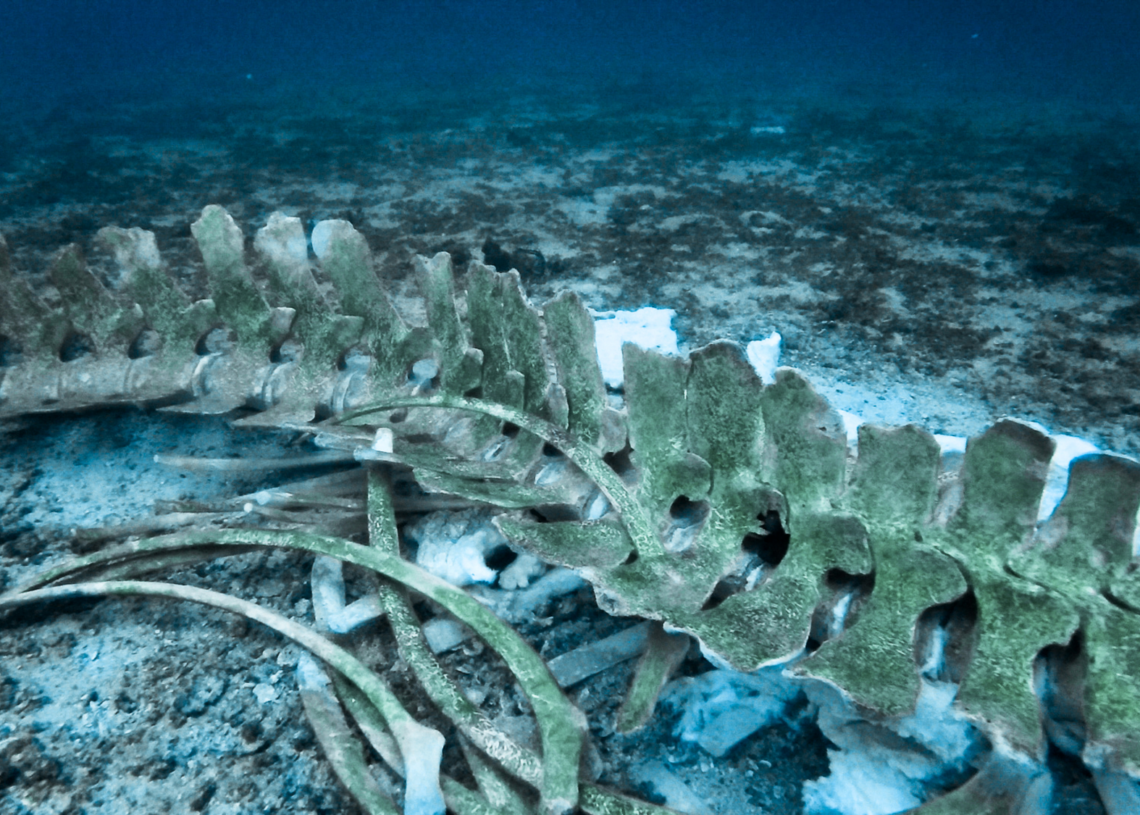
A team of researchers recently found out what happens to a whale carcass sitting at the bottom of the ocean for 15 years. Now, according to findings published in Nature, a completely different team of marine researchers has one-upped that discovery by finding a whale “necropolis,” as the researchers are calling it, in the southeastern Indian Ocean: a massive whale burial ground that has been accumulating bodies for millions of years.
The site sits nearly 23,000 feet beneath the surface in the Diamantina Zone, a deep-sea valley formed when Australia and Antarctica split apart. The team found at least five active whale falls, 476 fossilized whale remains, and evidence that this underwater graveyard has been a gigantic buffet for countless deep-sea creatures for at least 5.3 million years.
Whale Graveyards Are Great for the Ocean
When a whale dies and sinks to the ocean floor, its gigantic blubbery body becomes a bountiful feast for any creature swimming by. In time, they become a vital part of the local ecosystem, being both food and home to all sorts of scavengers, worms, crustaceans, and whatever else is looking for a hearty meal at a place where food is scarce. And those creatures don’t stop at the soft tissue. Eventually, even the bones get devoured.
The research team documented the ecosystem around the whale remains, some of which might be entirely new discoveries. In total, the team identified 35 major groups of organisms living around the carcasses, including a previously unknown extinct whale species, Pterocetus diamantinae.
Whale falls give researchers a chance to study how life adapts in some of the darkest, most isolated parts of the ocean. Discoveries like this are going to keep researchers busy for several years to come, while suggesting that if there is one whale necropolis like this out there, there might be several more waiting to be discovered.
The post Scientists Found a Massive Whale Graveyard That’s Been Filling Up for 5 Million Years appeared first on VICE.