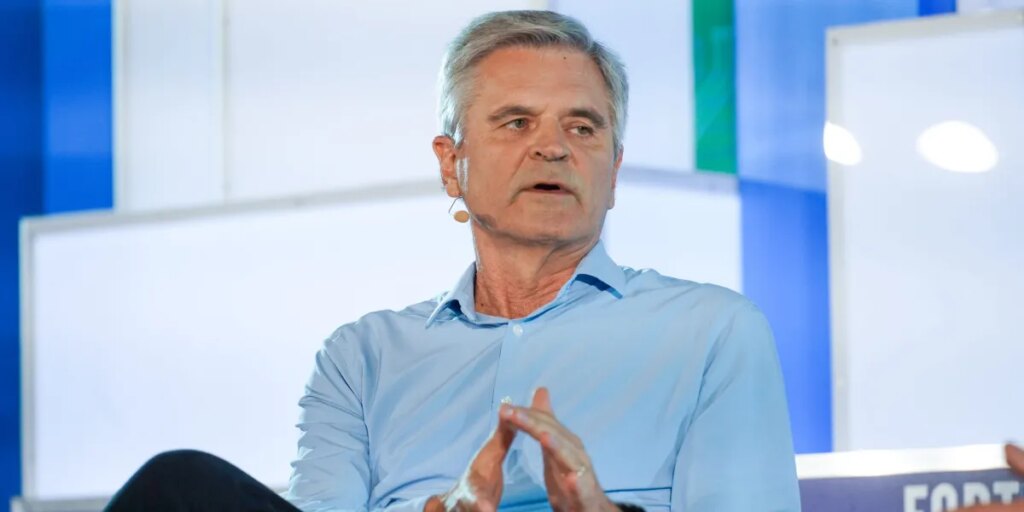
AOL cofounder and Revolution CEO Steve Case sees a “huge, huge opportunity” in artificial intelligence, but he’s less certain about the upside of its impact on the workforce. Striking a balance will ultimately land in the “messy middle,” he said at Fortune’s 25th annual Brainstorm Tech conference in Aspen this week.
“To argue that this is so risky that you need to essentially slow it down or hobble its development, which is sort of what the European Union’s approach is, and worry more about what might go wrong than what might go right would really limit the growth, innovation and America’s lead in AI and the world when obviously China and others are trying to take us on,” said Case. “The flip side, though—which I suspect some in the audience would say that this should just should be left alone and we should do whatever we want and let it rip—seems reckless and irresponsible.”
Case, who spoke with Brainstorm Tech founder David Kirkpatrick, started AOL in 1985 when just 1% of Americans were online, and then led it as CEO while it grew into the largest internet company of the 1990s and became the first to go public in March 1992. Its $165 billion merger with Time Warner in 2001is considered the peak of the dotcom boom, and ultimately, of AOL’s relevance—within a few years the merger began to unravel, and a new generation of Web companies including Google and social networking services rose to prominence.
After leaving AOL Time Warner in 2005, Case started investment firm Revolution, which now has $2 billion in companies including Anduril and Sweetgren plus more than 200 startups. Revolution’s “rise of the rest” seed fund, which focuses on investments outside of Silicon Valley and New York, has invested in 100 cities, including Detroit when the city was bankrupt. Case told the Brainstorm crowd that his investments in healthcare have shown him the benefits of AI.
However, when he was asked about AI’s impact on the workforce, Case was less clear. While Case called himself “a huge optimist about what can happen,” at the same time there risks to reckon with, including the debate about jobs.
“Maybe jobs will be created, maybe a lot of jobs will be destroyed,” said Case. “Probably a net negative, but we’ll see how it plays out.”
In part, AI is difficult to govern because of its speed, he said. He called the surge in users of ChatGPT to 100 million a short time after its launch to as its “Netscape moment.” In contrast, AOL grew to 184,000 users in seven years before soaring to 30 million.
“Suddenly it’s a big deal, and it’s already pervasive,” said Case, “which is putting pressure on governments, not just this country, but around the world.”
He predits that pressure will land in the 2028 election. Most Americans “aren’t fans” of AI, he said, noting boos from graduation crowds at commencement speeches and protests against data centers. He warned the crowd that Silicon Valley’s “trust us, it’s all going to be fine” stance would fail to resonate.
He also warned the Brainstorm audience against believing that the current administration’s light touch on AI will be permanent. He suggested executives treat AI policy as a 10-year or 20-year endeavor, rather than as an issue that will be decided by President Trump’s White House. Case further cautioned that there could potentially be an “FDA for AI” similar to the way cars were eventually bound by speed limits and medical innovations are overseen by the FDA.
Case did, however, point out a bright spot. He’s spent the past 30 years living close to Washington, D.C., and previously employed President Biden’s former White House chief of staff Ron Klain and Vice President J.D. Vance. The “hyper partisan” political landscape won’t last forever, he said.
“We’ll figure out a way to get back together and really get stuff done,” Case said. “At some point, the fever will break.”
More from the 25th annual Fortune Brainstorm Tech conference:
The space economy’s next frontier is in ground infrastructure, Northwood Space CEO says
‘Not an Allbirds Moment’: Xbox’s new CEO says she is grounding the console in gaming roots not AI
The post AOL cofounder Steve Case on AI— major upside, real risk, and ‘probably a net negative’ for jobs appeared first on Fortune.