Never before in American history has a president abused his authority so blatantly to prosecute his enemies. For defendants pursued by Donald Trump’s Justice Department, this paucity of historical precedents initially presented a problem: Not much law on the books can help someone fight back against a malicious prosecution, and what law does exist tends to be favorable to the government.
That is changing now. Defense lawyers for people targeted are finding that motions that might have once been dismissed out of hand are being seriously considered—and even granted—by judges newly skeptical of DOJ’s integrity and fidelity to the law. As the shoddy criminal cases against Trump’s enemies stretch on, and as their numbers mount, defense lawyers are starting to sketch out the earliest drafts of a road map for how to respond to politically abusive prosecutions. And judges, skeptical of what they are seeing from DOJ, have begun building upon one another’s work to adapt criminal law to an era when the federal government cannot be trusted.
In particular, two defense tactics that have historically faced long odds are newly succeeding in court: seeking access to secret grand-jury transcripts to see if prosecutors fudged the law in pursuing an indictment, and asking judges to dismiss charges on the grounds of “vindictive or selective prosecution.” The standard for granting such requests from the defense has long been high, because courts have usually shied away from questioning DOJ’s propriety.
Legal scholars sometimes call this approach by judges the “presumption of regularity”—the idea that the government should generally be trusted to be acting honestly. But the flamboyant dishonesty of the second Trump administration has put this presumption to the test, forcing judges to navigate unknown legal territory.
[Quinta Jurecic: A Department of Justice for an age of conspiracy theories]
Early glimmers of this shift in the law first appeared following a spree of shaky prosecutions of anti-ICE protesters in Los Angeles last summer. In two of those cases, a judge seemed potentially open to handing over protected grand-jury materials to demonstrators charged with assaulting federal officers, but both prosecutions ended before the court ruled on the issue. The government dismissed one case; the defendant took a plea deal in the other.
The real turning point came in November 2025, when James Comey persuaded a magistrate judge to release information from the grand-jury proceedings that led to the former FBI director’s indictment. “The Court recognizes that the relief sought by the defense is rarely granted,” Magistrate Judge William Fitzpatrick wrote in November. But, he reasoned, “the record points to a disturbing pattern of profound investigative missteps.” He granted Comey’s motion, acknowledging that doing so represented “an extraordinary remedy.”
Fitzpatrick’s decision to release the transcripts to Comey’s defense team became a key factor in the implosion of the case, as the materials revealed a series of impermissible missteps by Trump’s handpicked prosecutor, Lindsey Halligan. (The charges, along with those against New York Attorney General Letitia James, were later dismissed on the grounds that Trump had illegally appointed Halligan to the role; the Justice Department has appealed.)
Comey’s success in obtaining grand-jury material bolstered the arguments of other defendants seeking the same relief. In February, lawyers for the journalists Don Lemon and Georgia Fort—both facing highly unusual criminal charges after covering an anti-ICE demonstration at a Minnesota church—drew on Fitzpatrick’s ruling in making their own requests for grand-jury material, which is shielded from public view by default. The two journalists pointed to the Comey decision as an example of a “small but growing body of caselaw” involving “highly unusual conduct,” including “political pressure to bring charges, and misstatements of law at the highest levels of government.” Two months later, after DOJ indicted the Southern Poverty Law Center on similarly flimsy fraud charges, the SPLC likewise cited the Comey ruling in seeking materials from the grand jury. “The presumption of regularity historically afforded to such vital proceedings,” lawyers wrote, “cannot be used as a shield for a prosecution that is so clearly untethered from the facts.”
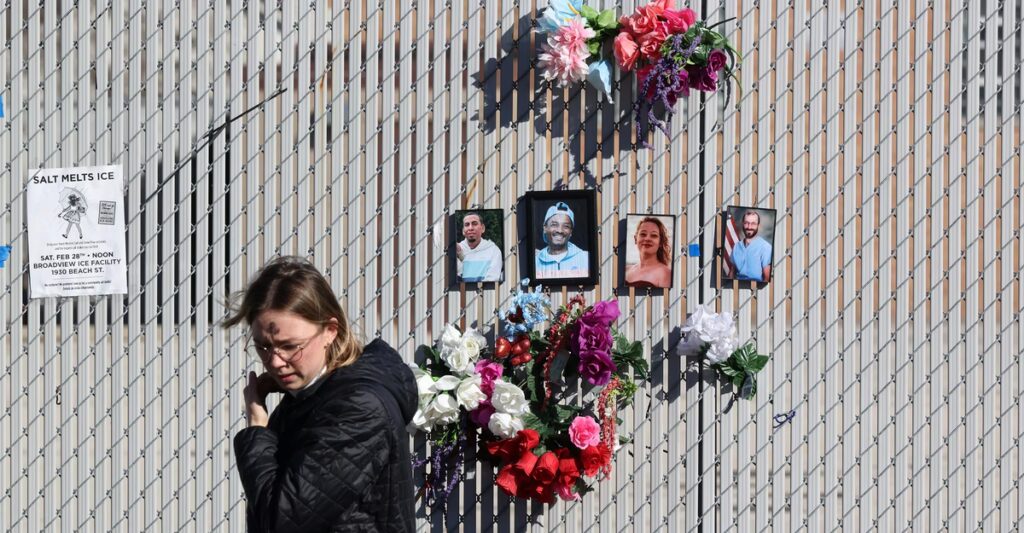
While judges weighed the motions filed by the journalists and the SPLC, a similar request succeeded in the case of the Broadview Six, a group of anti-ICE protesters whom DOJ had charged with conspiring to block access to a Chicago-area immigration detention facility. After prosecutors shaved down the felony count to a misdemeanor and dismissed charges against two of the defendants, the remaining four moved for the release of grand-jury transcripts that they believed might explain these late-breaking changes. Citing the Comey ruling along with reports of political interference in the SPLC case, the defendants argued that the presumption of regularity “no longer holds.” Judge April Perry agreed to review transcripts of prosecutors’ appearances before the grand jury—setting in motion a bizarre chain of events as DOJ repeatedly attempted to shield the transcripts from scrutiny, only for Perry to finally review the records and discover that a prosecutor had improperly cut corners to secure an indictment. According to the transcripts, which Perry later released first to the defense lawyers and then to the public, one unimpressed grand juror had scoffed at the case as “a crock of shit.”
“I relied on all of you,” Perry scolded DOJ lawyers during a hearing about the transcripts. Previously, she said, she had believed “that most government attorneys are doing the best they can to do the right thing. That trust has been broken.” Perhaps deciding that it would be wiser to abandon ship, the government dropped the case.
Following the Broadview Six hearing, both Lemon and the SPLC filed new motions alerting judges of the government’s apparent misconduct in the Chicago case. News of the disaster before the Illinois grand jury could well make the judges presiding over these other cases more inclined to grant access to grand-jury material. In this way, DOJ’s losses can compound as judges across the country find new reasons to distrust the government and cite one another in their decisions.
A similar pattern has emerged regarding motions to dismiss for selective and vindictive prosecution. The day after the Broadview Six hearing, Judge Waverly D. Crenshaw Jr. granted Kilmar Abrego Garcia’s request to toss out the criminal case against him on those grounds—the first ruling granting such a motion in the second Trump administration. (Comey, James, the SPLC, and other Trump targets have also filed similar motions at various points over the lifespan of the cases against them, but for various reasons, judges have yet to rule on those requests.) Crenshaw dismissed the case after determining that DOJ had likely brought charges against Abrego Garcia only to save face after another judge ordered the government to bring him back from the detention center in El Salvador he had mistakenly been shipped to. The SPLC quickly filed its own motion alerting the judge in its case about the Abrego Garcia decision. The Broadview Six, who are now seeking financial compensation from the government after the dismissal of their case, also flagged the ruling for Judge Perry as evidence of widespread political interference in criminal prosecutions.
[Quinta Jurecic: DOJ enters a new, even more aggressive phase]
This expanding network of citations and cross-citations suggests that DOJ’s approach of bringing slapdash cases will struggle to produce results. So far, none of these rulings has created binding precedent at the appeals-court level, but they will nevertheless be significant hurdles for DOJ going forward.
Some courts have also begun implementing prophylactic measures. In both Chicago and Washington, D.C., the chief federal district judge has ordered the Justice Department to notify the court if a grand jury refuses to return an indictment, which is known colloquially as “no true bill.” Such refusals, once rare, have proliferated under Trump: When seeking indictments against Comey, James, and the Broadview Six, prosecutors initially failed to convince a grand jury before succeeding on subsequent attempts. Now greater accountability around no true bills might help dissuade further chicanery by prosecutors. It may also strengthen the hands of defense lawyers in future cases, who will be able to wield new Trump-era case law against prosecutors no longer benefiting from the instinctive trust of courts.
Of course, there are never silver bullets, and this shift in approach by courts cannot entirely resolve the damage of Trump’s abusive prosecutions. Just a week after the collapse of the Broadview Six case, a jury in Spokane, Washington, returned guilty verdicts in a similar conspiracy case against anti-ICE protesters, which the district’s chief prosecutor had resigned rather than pursue. (Trump promptly appointed another prosecutor, who moved forward with the case anyway.) Yesterday, a magistrate judge in Minnesota denied Lemon and Fort’s motion for access to grand-jury materials, though he left open the option for the journalists to try again. Meanwhile, the judge overseeing the case against the SPLC has yet to rule.
Still, these new developments may slow down Trump’s efforts. Reportedly, DOJ recently opened an investigation into the nonprofit that helped pay E. Jean Carroll’s legal bills after Carroll accused Trump of sexual assault. The probe is based out of Chicago—in the same U.S. attorneys’ office that oversaw the Broadview Six case, under the same leadership that is now subject to intense scrutiny from Judge Perry as she continues to examine DOJ’s misconduct. Under that kind of pressure from a judge, prosecutors may not be quite as eager as they were before to do the president’s dirty work.
The post The New Law of Political Prosecutions appeared first on The Atlantic.