There are few experiences more humbling than explaining your underwear drawer to a stranger.
In addition to Amazon Essentials‘ full-coverage cotton fleet, my drawer contained: nursing bras from 2021, mismatched socks, confining shapewear purchased during moments of aspirational delusion, and several aggressively neon lingerie items my husband had acquired online in what I can only describe as an enduring commitment to keeping the spark alive after 16 years of marriage and two children.
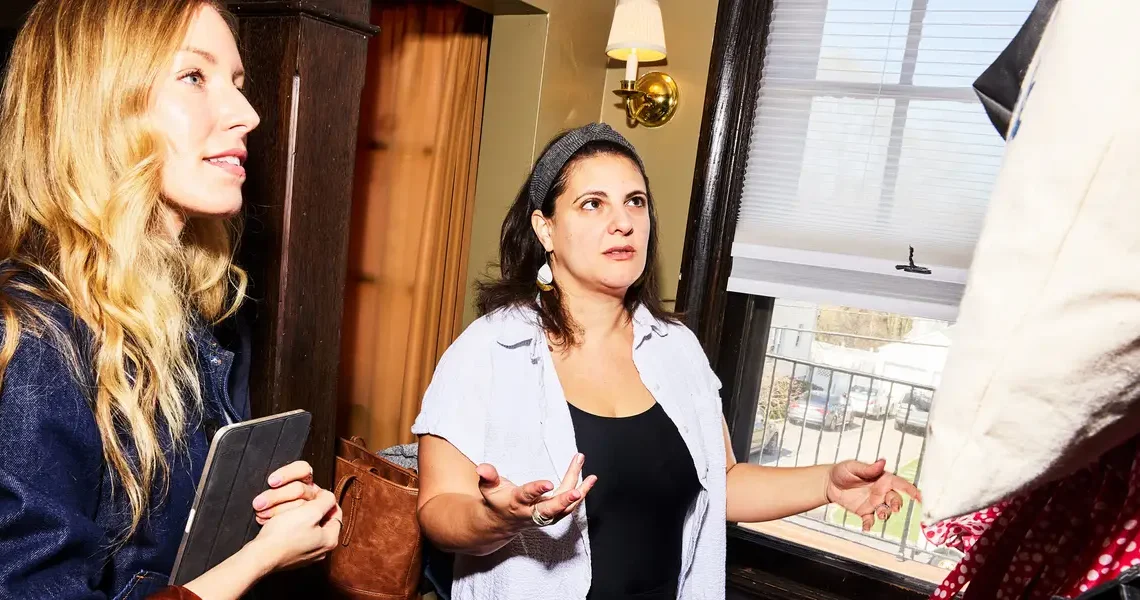
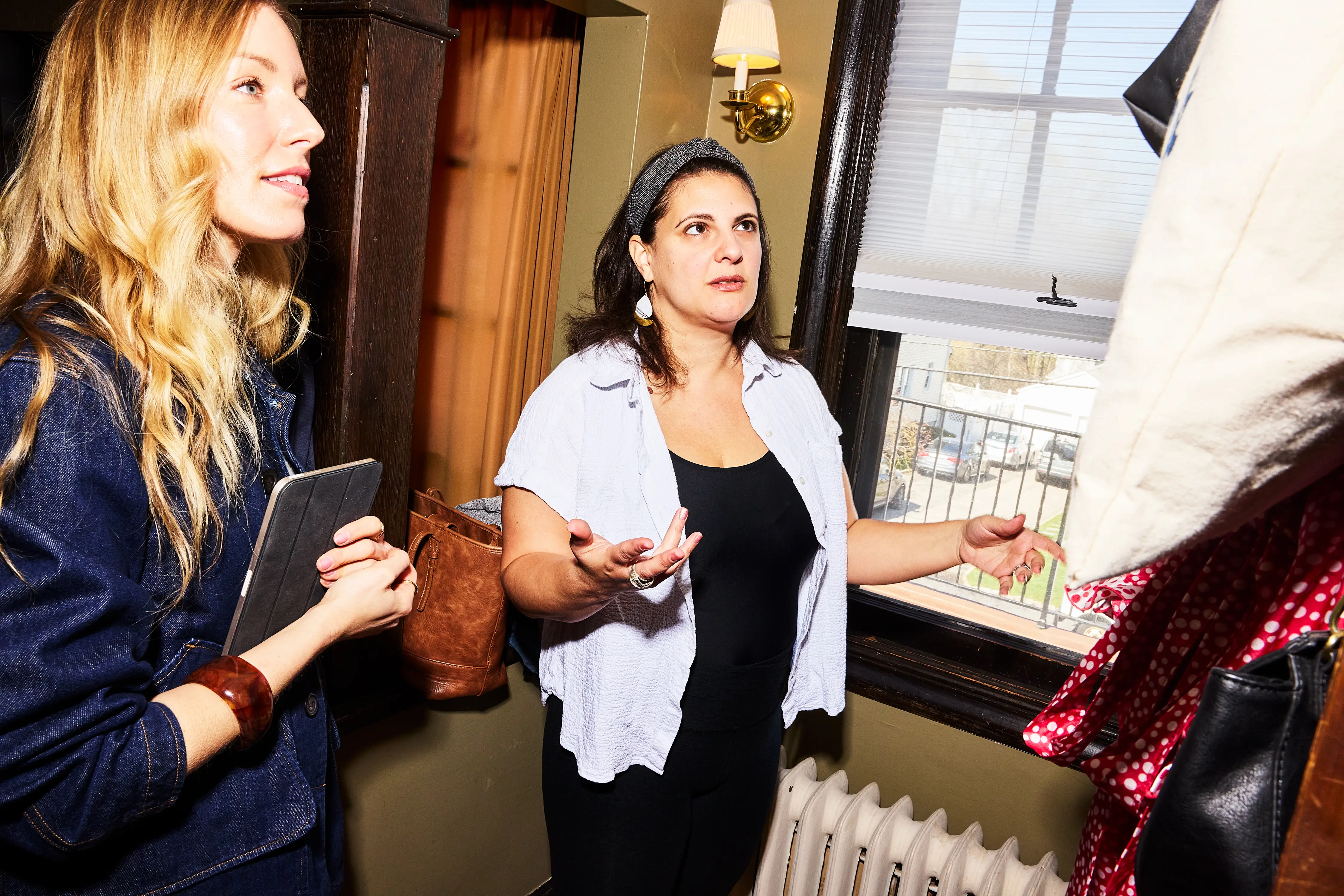
This was the sorry state of affairs when professional stylist Liz Teich of The New York Stylist walked into my house this spring.
I warned Teich ahead of time that every horizontal surface in my bedroom would be covered with clothing representing versions of myself I could no longer fully recognize.
@media (min-width: 768px) {
.vertical-image-wrapper {
display: flex;
justify-content: center;
}
.vertical-image-wrapper .vertical-image {
width: min(calc(80vh * var(–img-w) / var(–img-h)), 100%);
min-width: 0;
}
}
Amy Lombard for BI
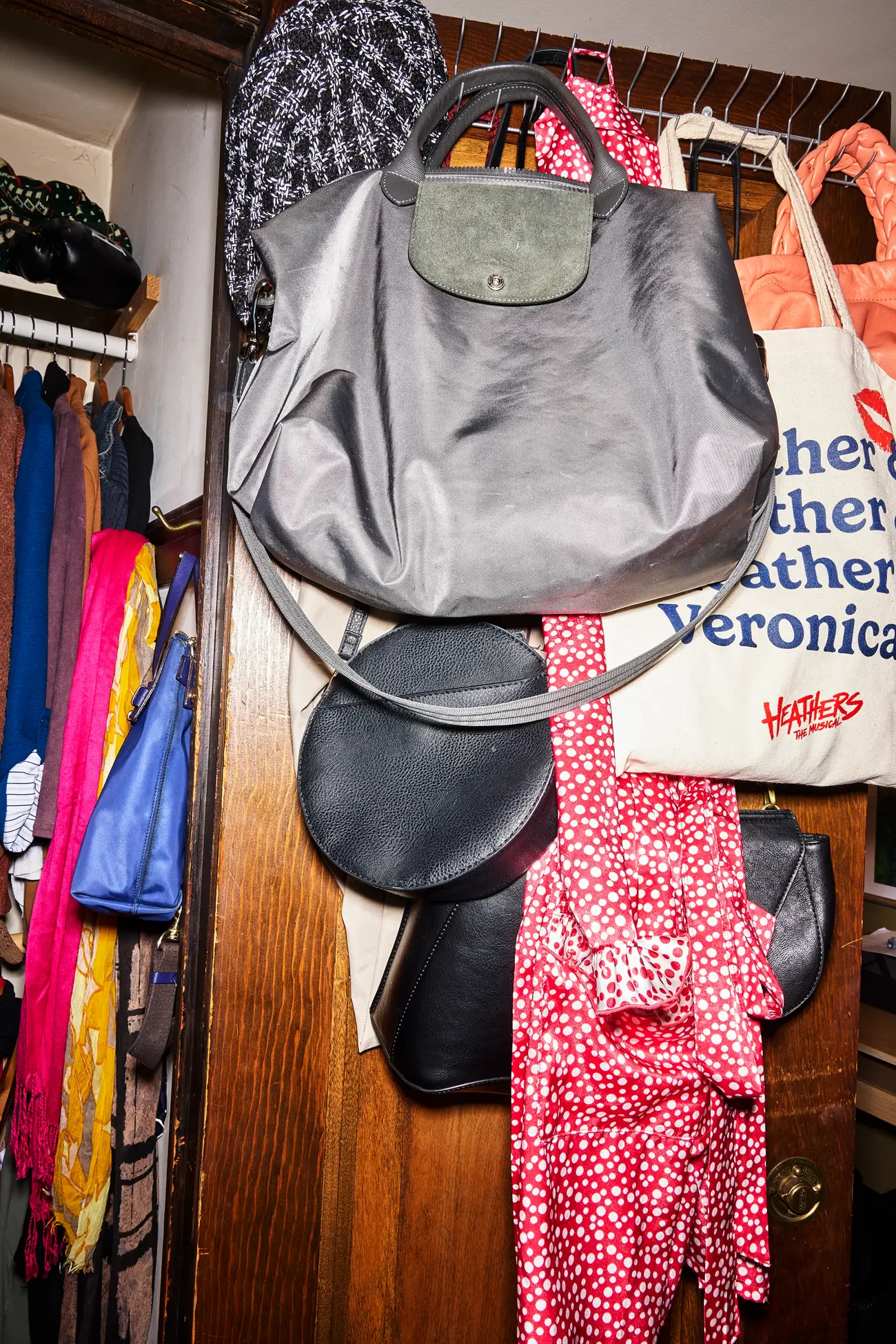
I work from home, which means my daily uniform is “elevated pajamas.” Most mornings, after disentangling myself from whichever small child has silently appeared in my bed overnight, I approach my closet with a low-grade sense of dread and rotate through about four outfits, while the remaining 90% of my wardrobe patiently waits.
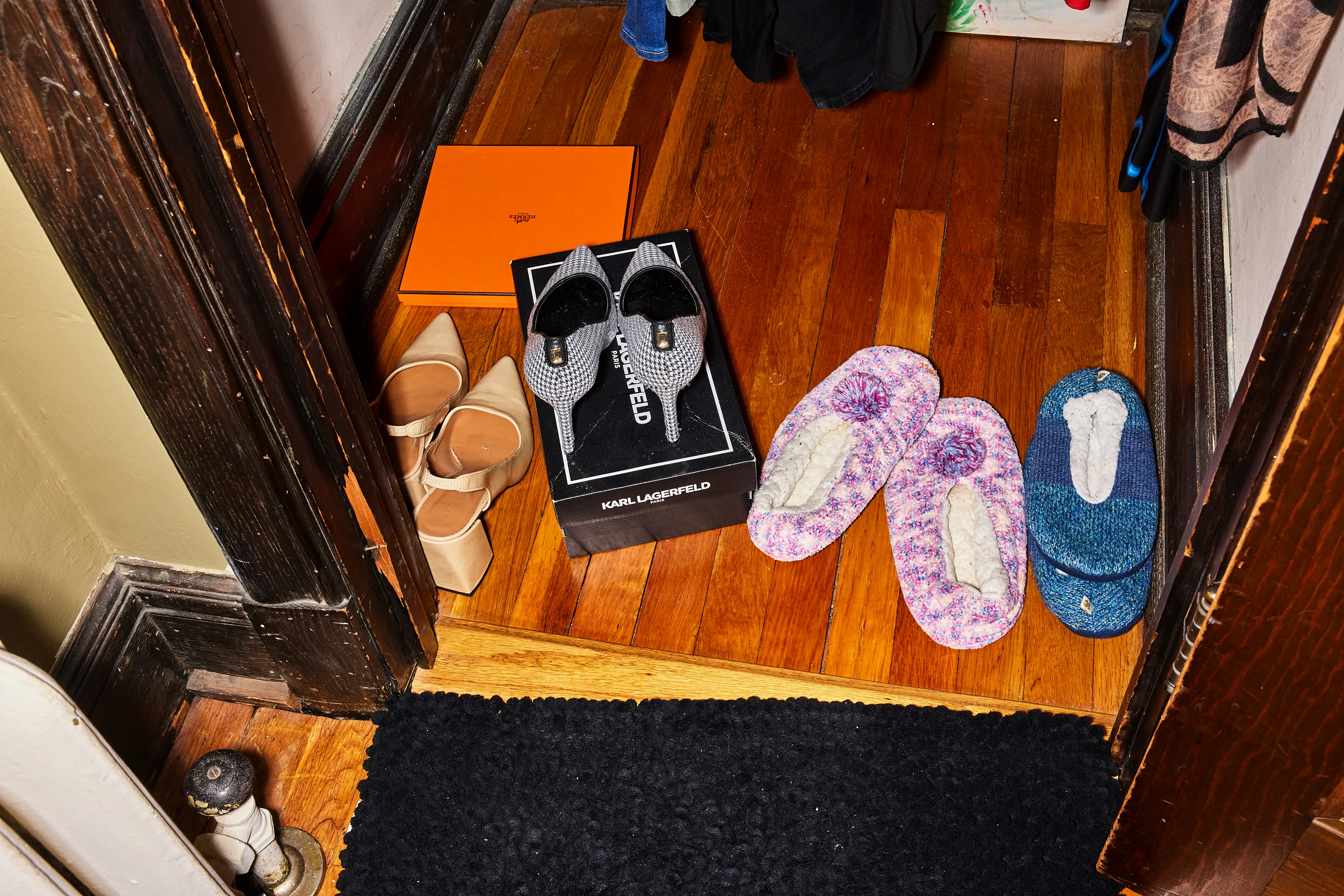
These Fabric Ghosts of Julie’s Past include: Guess jeans from my pre-kid life made the same year as Sabrina Carpenter, sparkly Steve Madden “going-out” tops, and the novelty tees some call cringe, but that I will defend to my grave. In nearby giant plastic tubs were the “maybes.” Maybe when breastfeeding ends. Maybe if/when I take a GLP-1. Maybe if I’m ever invited somewhere with a coat check again.
I no longer knew what deserved space in my closet, or what version of myself I was dressing for.
Teich told me later that this is actually the most common reason clients reach out to her: “Most clients initially reach out when they are going through a life change or trying to find themselves again, especially after having children, during or after menopause, IVF, GLP-1 weight loss, divorce, retirement, or starting a big promotion or new job role.”
In other words, I was right on schedule.
Don’t clean up
Teich offers several personal-styling services ranging from virtual sessions with one of her associates (starting at $250) to in-person consultations in the New York area.
I purchased Teich’s standard first step, the in-person Closet Refresh, a three-hour session in which she’d go through my wardrobe, teach me how to edit what wasn’t working while offering styling tips to make the most of what I already owned.

The package, which typically retails for $2,700, also includes a post-refresh follow-up document with personalized recommendations. I received a media rate of $1,600.
Before I reached out to Teich, I nearly talked myself out of it. She looks exactly how you imagine a stylist should look: polished, cool, effortless in a way that suggests she understands fabric blends. (And of course she does, but we’ll get to that later.) I thought I was too much of a lost cause and too insecure on every front — physical, financial, professional — to deserve this kind of help.
During our pre-session Zoom, Teich immediately put me at ease, especially with her first liberating instruction: Don’t clean up! Teich told me she wanted to see the real state of my closet. Not the hopeful version of my life I might stage before her arrival, but the actual systems (or lack thereof) shaping my mornings every day.
I was happy to oblige.
Open to belts, but historically unsuccessful
Teich is warm, upbeat, and has the kind of loving authority that makes you trust her immediately — especially when she’s holding up a stained, ripped maxi dress you’ve owned for 15 years and says, “I think we can do better than this.”
Teich and I spent the first 20 minutes at my dining room table chatting about how I would describe my style, my clothing and shopping preferences (brands, colors, cuts, which pieces in my closet I truly love), a typical day, and my goals.
@media (min-width: 768px) {
.vertical-image-wrapper {
display: flex;
justify-content: center;
}
.vertical-image-wrapper .vertical-image {
width: min(calc(80vh * var(–img-w) / var(–img-h)), 100%);
min-width: 0;
}
}

Amy Lombard for BI
Then she summarized me, fairly accurately: “Mom of two in Westchester, wears about 10% of clothes and wants to feel good in everything. Loves the styling in ‘Emily in Paris’ and accessorizes with jewelry. Open to belts, but historically unsuccessful.” (It’s true, I’m successful in many areas, but the belt has always eluded me.)
She seemed to understand right away that I still wanted to feel slightly edgy/artsy, put together, and sexy, despite spending much of my time handing out squeezey yogurts.
Teich then offered what I now think of as my North Star for getting dressed: a list of words my clothes should speak to. We landed on put-together, funky, feminine, sophisticated, and comfortable. Not every outfit needed to hit all five, but ideally, every item in my closet would fit at least one category.
Then it was time to enter the lion’s den and see what in my closet still deserved its own wooden hanger. (Teich actually recommends velvet hangers and attachable clips to fit more in your closet, and ensure tops will stay put.)
The edit
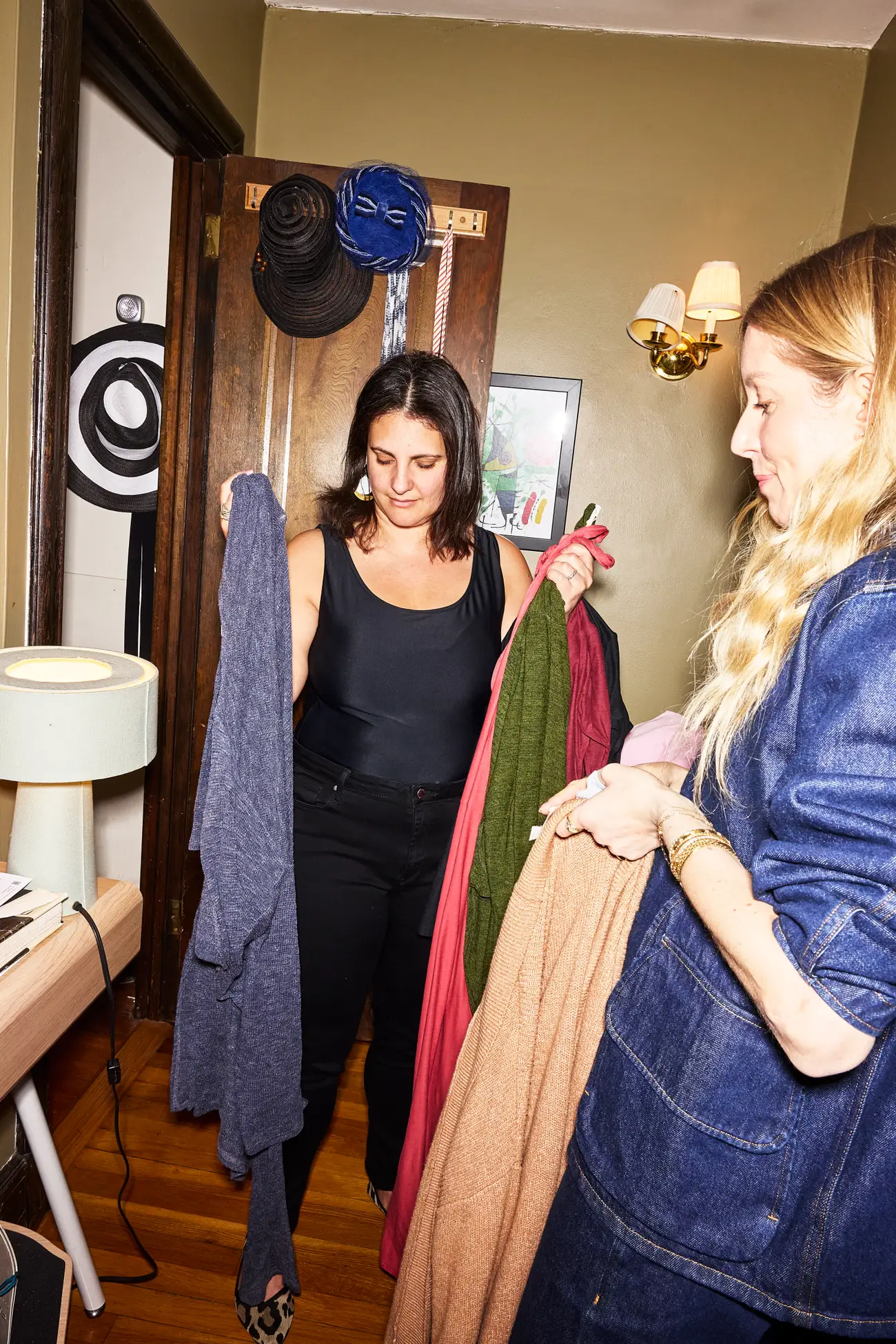
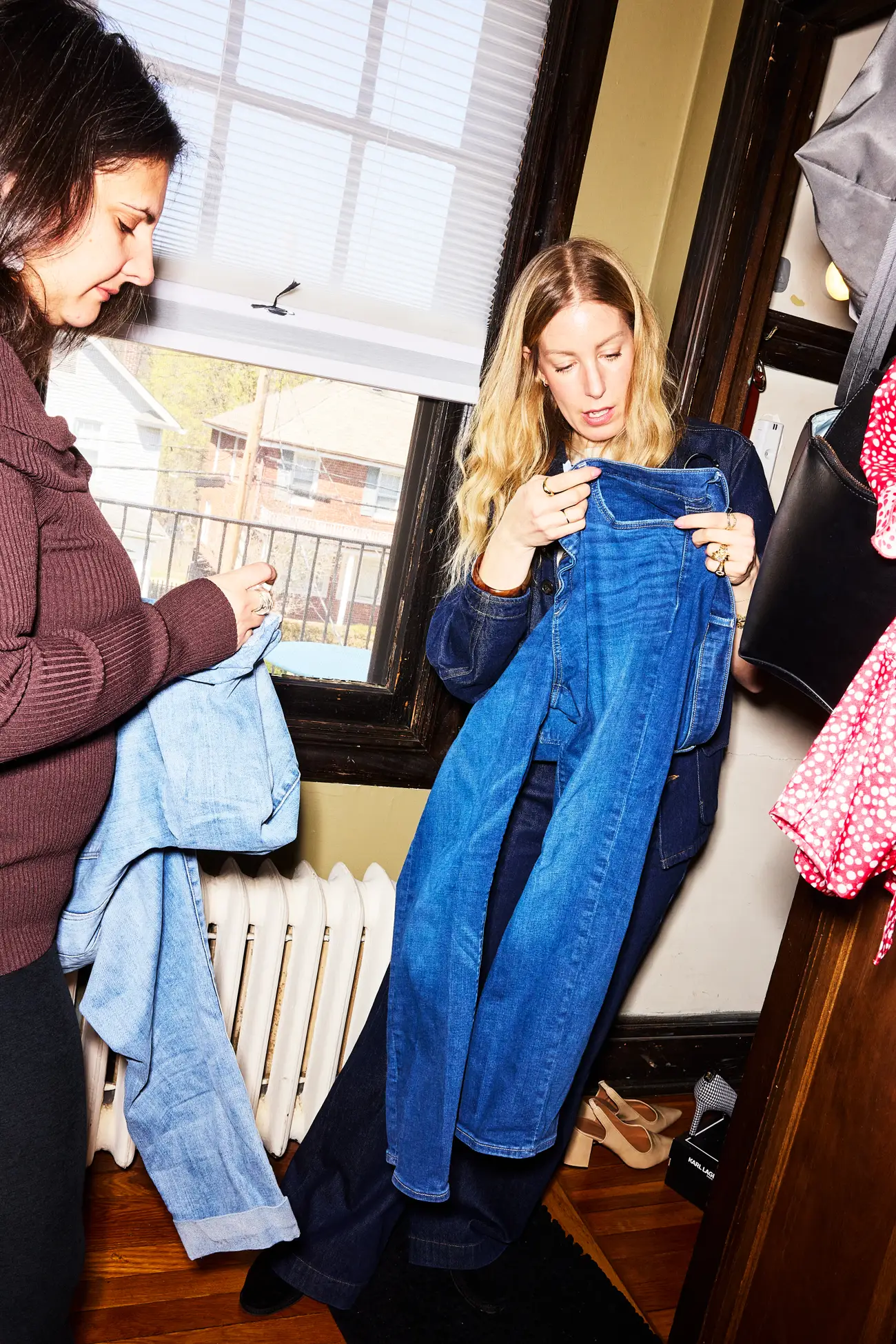
For the next three hours, Teich moved methodically through my closets and bins, evaluating each piece of clothing for condition, fit, and fabric type.
@media (min-width: 768px) {
.vertical-image-wrapper {
display: flex;
justify-content: center;
}
.vertical-image-wrapper .vertical-image {
width: min(calc(80vh * var(–img-w) / var(–img-h)), 100%);
min-width: 0;
}
}
Amy Lombard for BI
Occasionally, I got an “oh no,” but it never felt judgmental and was reserved for discoveries like the five tank tops I’d crammed into one hanger, which I’d convinced myself was a system, but was actually an arrangement born entirely from laziness.
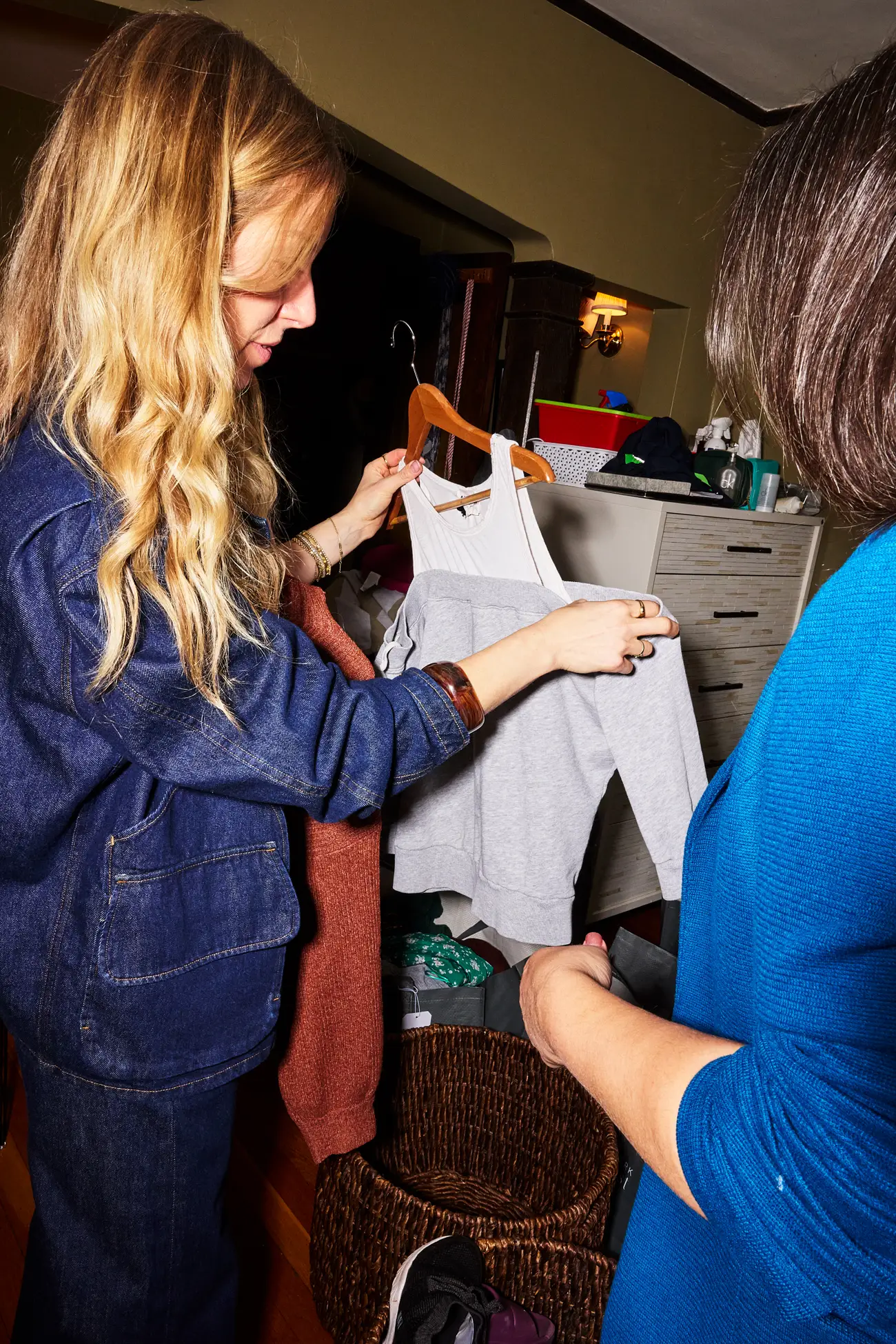
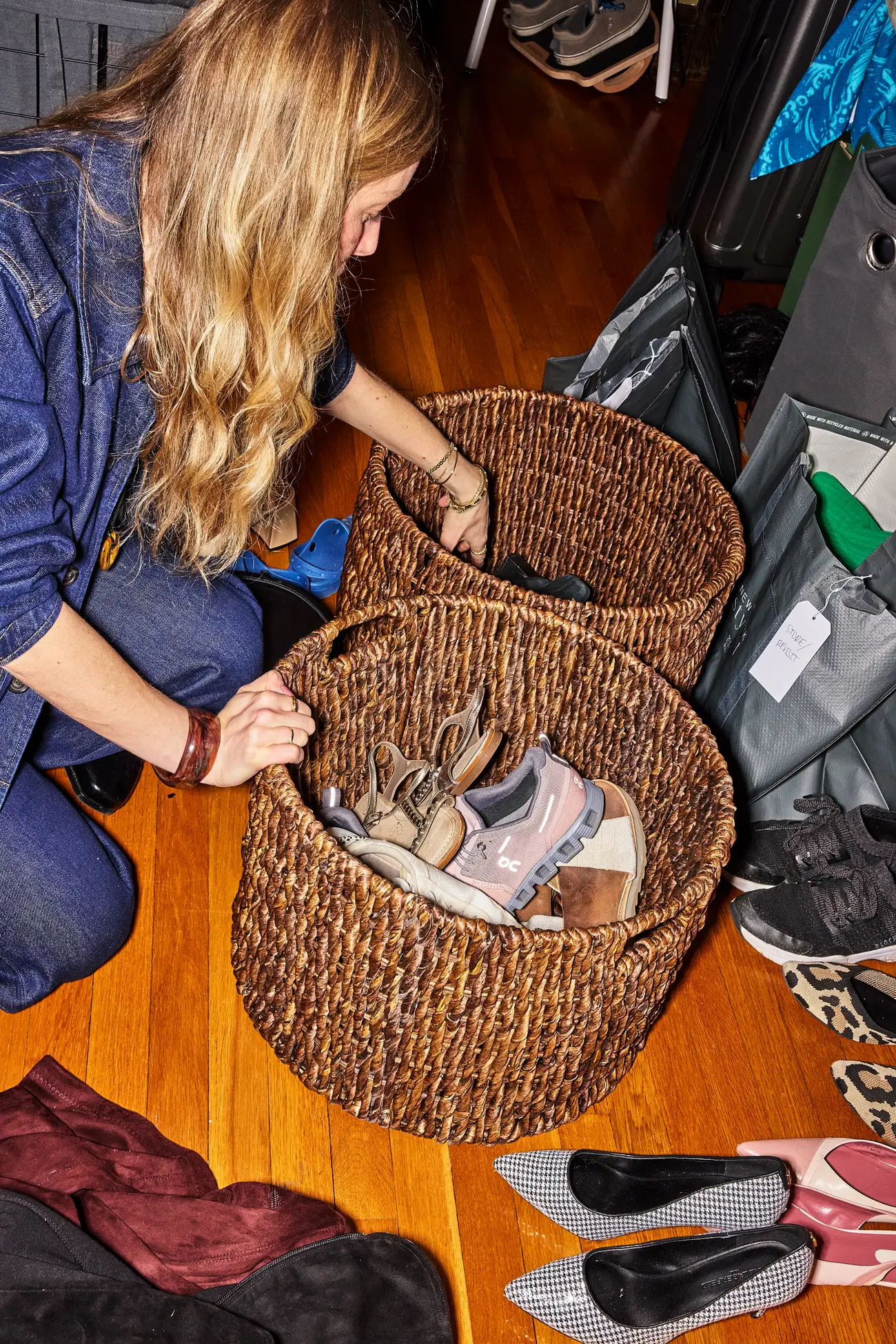
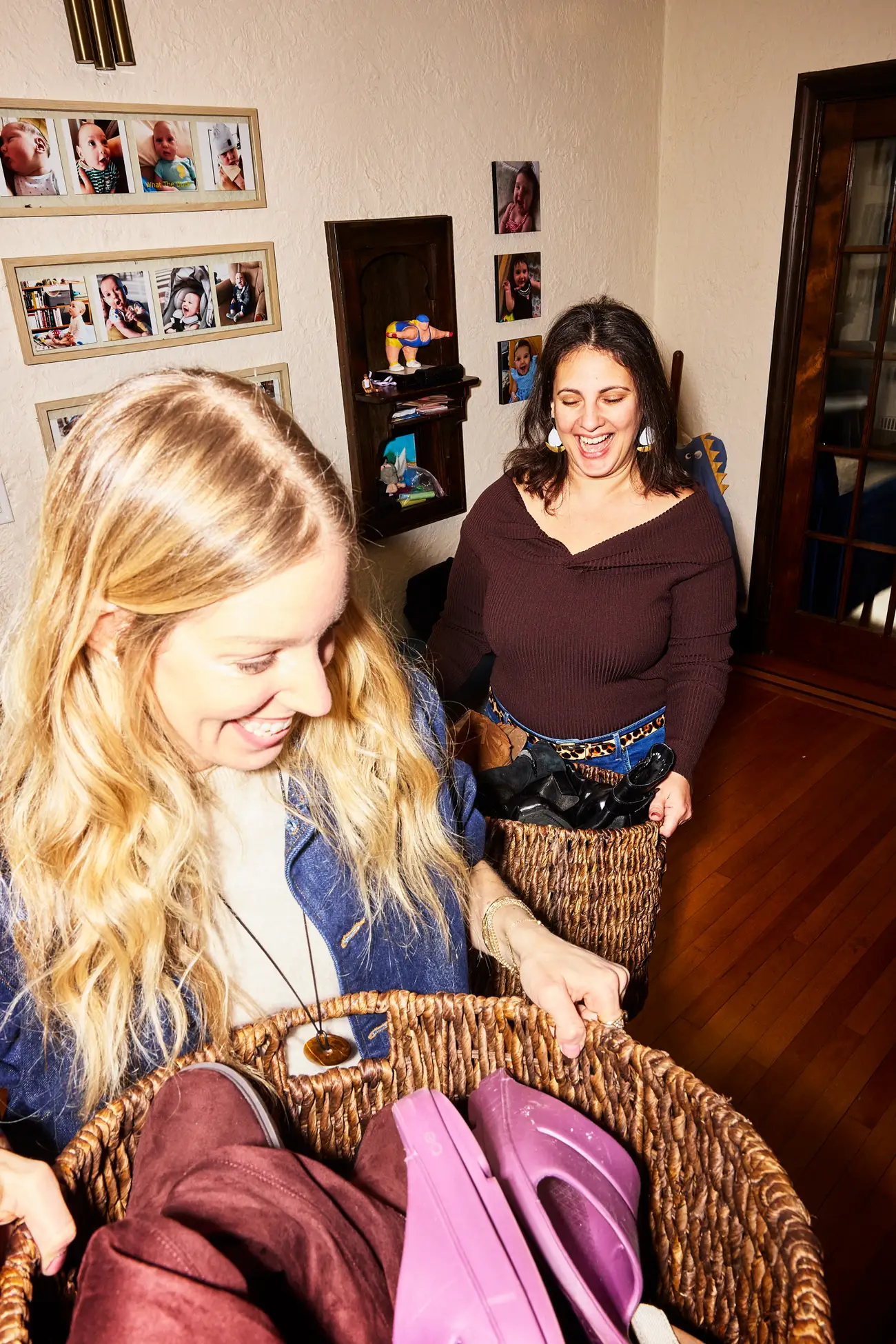
The edit was a chance to decide whether an item still comfortably fit and “served” the person I am now. Items that fit the bill went right back in my closet; the rest landed in one of three bags: sell/donate, recycle, or repair. We also kept a very important “dress up” pile of particularly nostalgic or fun pieces for my daughter that could elevate her collection of polyester princess dresses.
I agreed with Teich’s recommendation 99.9% of the time. The remaining 0.1% involved a fierce defense of my piling “Grease” “Patty Simcox for Prom Queen” sweatshirt. (Teich recommends using a sweater shaver to keep knits looking fresh, especially for those of us who can’t move on from their high-school-theater glory days.)
@media (min-width: 768px) {
.vertical-image-wrapper {
display: flex;
justify-content: center;
}
.vertical-image-wrapper .vertical-image {
width: min(calc(80vh * var(–img-w) / var(–img-h)), 100%);
min-width: 0;
}
}
Amy Lombard for BI
What surprised me most was how little grief I felt letting things go. I was certainly attached to what some of the clothes represented — unencumbered younger me, thinner me, more confident me — but I was excited to replace those with a version of myself that’s fun, elegant, stylish, and mature.
Teich framed this shift in a way that didn’t feel limiting or sad, but freeing.
“When I work with my clients, we focus on how they want to feel or be perceived at this point in their life. We then reframe their wardrobe, making the clothes either work for them in some way, or letting them go if they don’t,” she said.
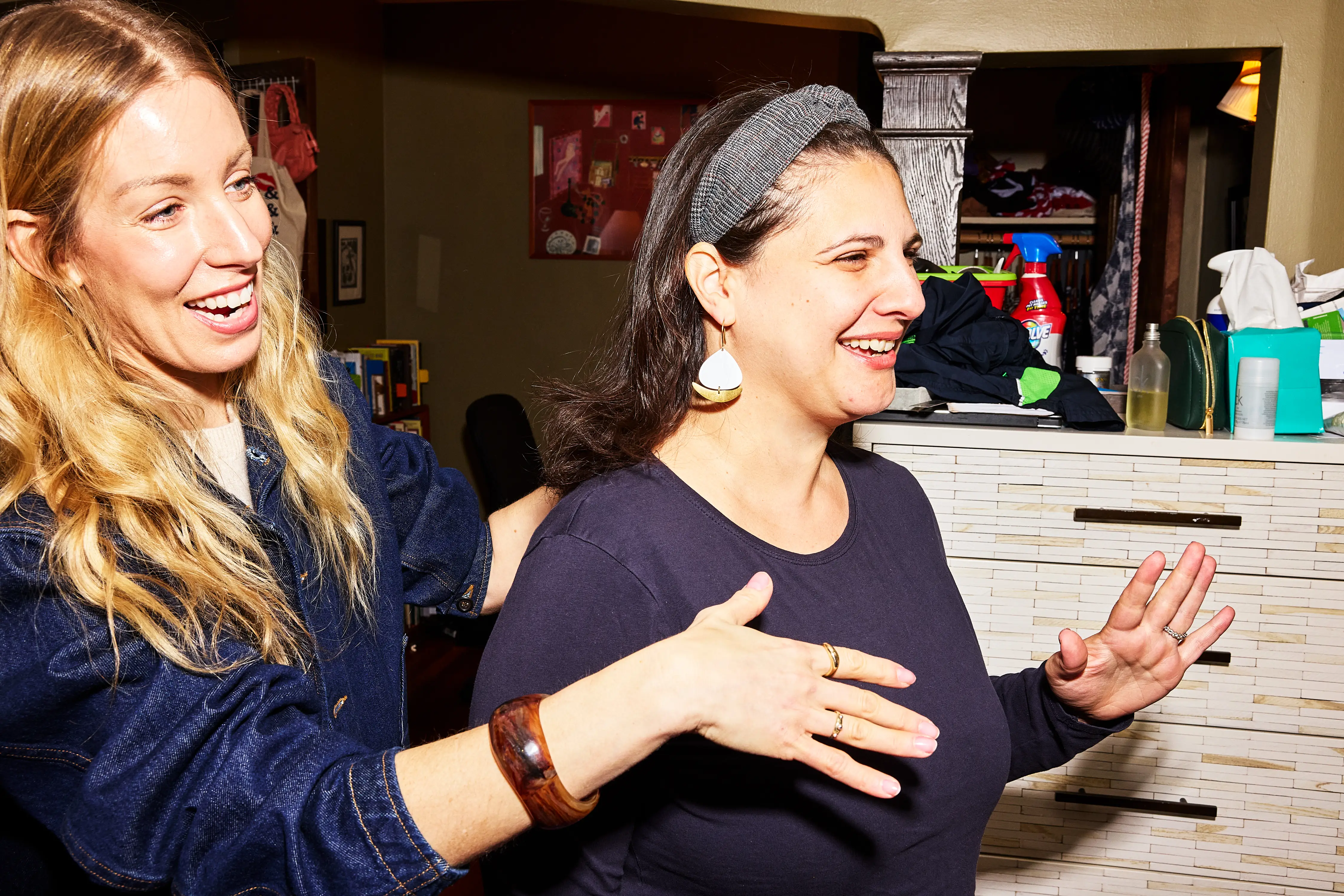
As we edited, Teich would also pull pieces together into new outfits, sharing her three-color rule (stick to just one main color, one secondary, and one accent color for a harmonious look), and third-layer rule (a third layer, like a blazer or belt, helps an outfit look more polished) for reference when I struggled to put something together on my own.
I’ve since followed the three-color rule easily, I’m conquering belts, and at least three different moms have commented that I “look good” lately.
An education
The session ended up being as much about systems as aesthetics, with a steady stream of conversation about clothing care and hacks I’d genuinely never considered.
Teich reorganized my clothes by garment type and then color, explaining that closets are basically exercises in visual psychology.
How you hang the clothes can make them more appealing and easier to wear because “if you can’t see something, you won’t wear it.” She taught me to display T-shirts and athleisurewear vertically (like books at a library), so every item stays visible. To do so, just fold an item as you normally would, then fold it once more so it stands vertically.

Her philosophy is less “buy more” than “buy better, buy less often, and take care of what you own.”
She explained that cotton, viscose, linen, silk, and other natural materials last longer, wear better, and she’s seen with her clients how it can even affect how confident and physically comfortable they feel in their clothes.
And since I have firmly entered my blazer era, I loved Teich’s refresh hack to avoid frequent dry cleaning and neutralize smells: just mix one part vodka with one part water in a fine-mist spray bottle — and voila, refreshed pits!
The long-term approach, she explained, actually pays you back. “The beauty of investing in quality is that you’re happy to give it another life, either by passing it onto a loved one or selling it in the future, thus providing your item with a bit of an ROI. Many of my clients tend to get money back to purchase new clothing, so it’s a win-win.”
@media (min-width: 768px) {
.vertical-image-wrapper {
display: flex;
justify-content: center;
}
.vertical-image-wrapper .vertical-image {
width: min(calc(80vh * var(–img-w) / var(–img-h)), 100%);
min-width: 0;
}
}
Amy Lombard for BI
At one point, Teich mentioned that part of her own motivation for investing in quality pieces is that she’s slowly curating a wardrobe she can eventually pass down to her daughter.
Teich lost her own mother to cancer when she was a kid, and her mother’s approach to clothing, even when they didn’t have a lot of money — that every piece should be powerful, that each item was an investment regardless of its price tag — has stayed with her.
“Nothing in our closets served only function; each item evoked a feeling, whether it was thrifted, an heirloom, a hand-me-down from local families, or handmade by her. When I wear my mom’s clothing and accessories, I feel a connection to her, and it evokes emotion,” she told me. “I want my children to feel the same pride in their clothing that I was taught to have.”
@media (min-width: 768px) {
.vertical-image-wrapper {
display: flex;
justify-content: center;
}
.vertical-image-wrapper .vertical-image {
width: min(calc(80vh * var(–img-w) / var(–img-h)), 100%);
min-width: 0;
}
}
Amy Lombard for BI
Teich’s personal approach to her closet felt so much more meaningful than the usual “look hotter/smaller/younger” messaging women are often sold around style and beauty.
When Teich left, I instinctively reached out to hug her, and then immediately felt embarrassed. She reassured me that the majority of her client sessions end the same way.
“A wardrobe shift that reflects the person now can change how they feel. I often hear from clients that a ‘weight was lifted’ or they feel refreshed. That’s why I aptly named my service the Closet Refresh.
Twenty-four hours post-hug, Teich sent an extremely comprehensive 21-page follow-up document filled with wardrobe-care advice, links to her styling tutorials on Instagram, where she has 500,000 followers, shopping recommendations for gaps in my wardrobe, resale resources, and organizational systems.

Growth, with some exceptions
These days, I approach my closet with curiosity, not dread. My wardrobe used to feel like a kooky museum of past selves; now it’s starting to feel like somewhere I actually want to be.
How I shop has also shifted: The other day, I avoided the temptation to impulse-buy yet another denim jacket because I knew it wasn’t part of a wardrobe I needed or wanted to build. (And no one except Madonna/Cyndi Lauper in 1984 needs that many denim jackets.)
In the end, I wished we’d had more time for outfit building, and I’m still a little overwhelmed by the list of items I need to buy to fill gaps in my closet. Still, for the first time in years, I actually know what I’m looking for.
Ultimately, this is the kind of investment I’m glad I made at least once, for the level of editing and education I walked away with. Teich said her clients often ask her back seasonally to style what they already own, or hire her to plan daily outfits for vacations through mini sessions (ranging from $350 to $600).
@media (min-width: 768px) {
.vertical-image-wrapper {
display: flex;
justify-content: center;
}
.vertical-image-wrapper .vertical-image {
width: min(calc(80vh * var(–img-w) / var(–img-h)), 100%);
min-width: 0;
}
}
Amy Lombard for BI
I understand the impulse entirely. Ideally, I’d have her edit my closet once a season. I genuinely see the value — the kind you can’t quite put a number on — of not standing in front of a full closet feeling like you have nothing to wear.
However, I’m not sure I could swing these rates again, no matter how good an investment it is. The rates for mini sessions feel more doable at a few hundred bucks each, but those make sense for a specific occasion or vacation, not a whole season’s wardrobe.
Still, I appreciate that the closet I have now and the blueprint Teich offered to build slowly is more reflective of my current lifestyle, not the one I had in my 20s, or the one I assumed I’d eventually “get back to” after kids.
And maybe that’s the real value of hiring a stylist. Not simply helping someone look and feel better, but helping them reconnect with themselves at a moment when their identity, body, and ambitions all feel slightly in flux.
And the Gilmore Girls novelty sweatpants I nabbed from a promotional pop-up in 2016, which are grossly discolored with a giant rip running lengthwise and dangerously close to exposing my Amazon Essentials full-coverage cottons? Well, I’m wearing them right now.
All growth has its limits.
Read the original article on Business Insider
The post I paid $1,600 for a professional stylist to fix my closet and teach me how to dress. Here’s what actually changed. appeared first on Business Insider.