Maria Cantwell, a Democrat, is a U.S. senator from Washington.
Today, more than half a million athletes participate in college sports, many of whom go on to become the nation’s brightest community, business and political leaders. College athletics provides young people across America opportunities to strive for the highest levels of their abilities, compete to win while learning sportsmanship and, most importantly, discover how to grow and thrive as a team.
Many of these athletes represent the United States at international competitions. Three out of four members of the 2024 U.S. Olympic team in Paris were current or former college athletes.
But the nation’s collegiate sports system is at a breaking point. Since late 2023, more than 100 programs have been cut. At least 1,000 roster spots and athletic scholarships in non-revenue-generating sports have been impacted by program cuts, largely to pay for an arms race of out-of-control spending in football and basketball. A shared national pastime has become a free-for-all: money flowing with few guardrails, players and coaches constantly moving, and schools struggling to keep pace.
Without new rules, the future looks like a few thriving super leagues while smaller university athletic programs, women’s teams and Olympic sports wither away. Without new tools and clearer lines to adjust to this new reality, college sports and academic institutions will suffer.
That is why I introduced the bipartisan Protect College Sports Act with Sen. Ted Cruz (R-Texas). The bill establishes federal rules that will preserve opportunities for all athletes, ensure fair competition among historic regional rivalries, and could unlock billions in new media rights revenue to support universities and compensate the players who proudly wear their uniforms. By prohibiting conferences that had more than $1 billion in revenue in 2025 from merging or consolidating with another conference, the legislation would also prevent the formation of a super league that could essentially control college football.
The inspiration for the Protect College Sports Act is to enshrine, for the first time in federal law, the ability of athletes to earn compensation for their name, image and likeness (NIL) and receive their fair share of profits generated from media, ticket sales, advertising and sponsorships. However, while NIL opportunities and revenue sharing dominate headlines, only a small fraction of college athletes receive revenue sharing, with less than two percent ultimately turning professional. Expanding media rights revenue would also protect pathways for hundreds of thousands of nonrevenue college athletes, many of whom are using their talent to access an education that might otherwise be out of reach.
This legislation would also establish federal policy and standards to help shield athletes from harmful practices used against them in past decades. These rights include academic safeguards, scholarship guarantees, health care, safety standards, whistleblower protections, transparency requirements and protection from unscrupulous agents. It also ensures that female athletes receive equal treatment for transportation, lodging, medical care and facilities when they compete in championship events or tournaments. Student-athletes would no longer be recruited on the promise of a scholarship, only to have that support withdrawn when they are injured while playing.
The bill also corrals the arms race among conferences, coaches, agents and collectives seeking to outspend one another with the goal of buying a national title. Championships should not be controlled by the same top few teams or billionaires who want their alma mater to have a lopsided advantage. New rules will rein in bad behavior by holding schools accountable to the revenue-sharing limits they agreed to in last year’s House v. NCAA settlement. The bill also prevents boosters from cheating by using fake NIL deals. This will ensure that the real competition is on the hardwood and the gridiron.
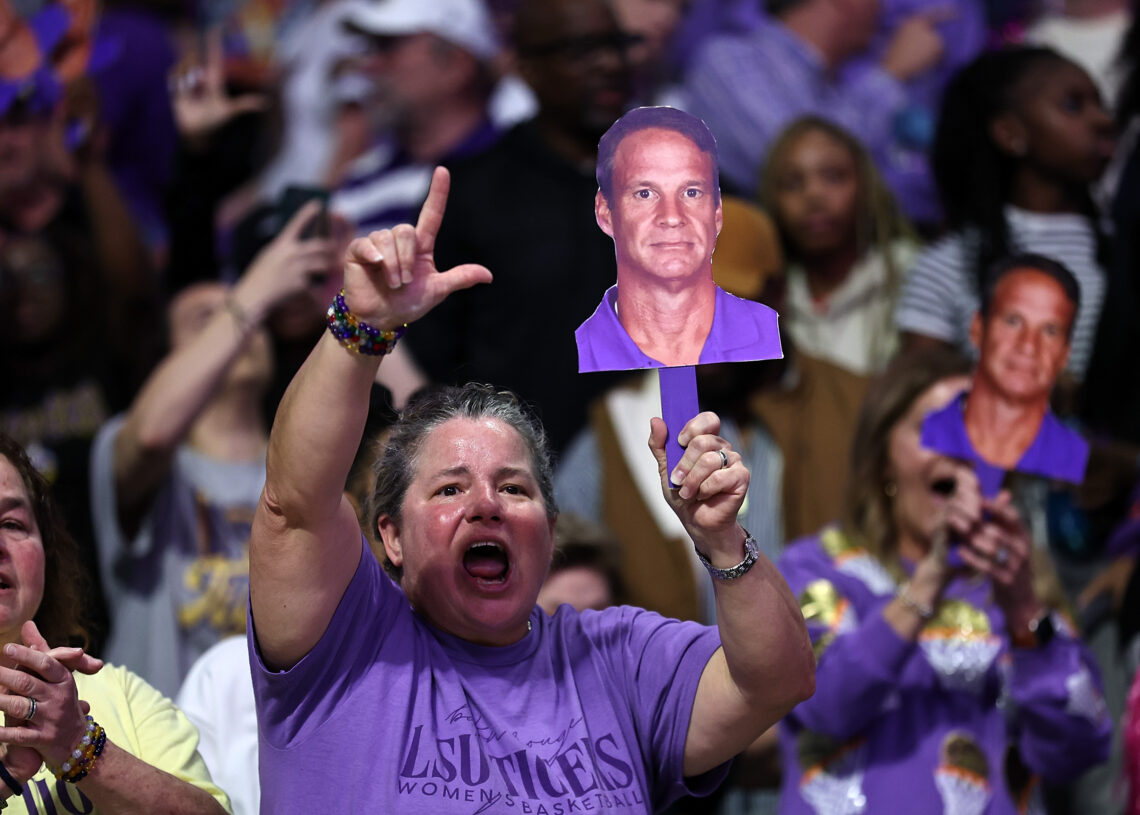
The spending pressures have become so extreme that some schools are charging student fees to make up sports budget deficits. James Madison University tacked on more than $2,400 to each student’s annual enrollment costs to support athletics. This exorbitant spending includes contracts such as the $54 million buyout for Louisiana State University football coach Brian Kelly, who was fired but still walked away with a huge payout. LSU then lured Lane Kiffin from Ole Miss to be its head coach with an eye-popping $13 million annual salary. Kiffin was hired right before he was supposed to lead the Rebels through the College Football Playoff, leaving Ole Miss athletes, alumni and fans in the lurch. Our bill would stop midseason football coaching moves.
Congress should come together behind this bipartisan proposal and protect the more than 500,000 collegiate athletes, including women and Olympic athletes who are now on the chopping block.
The post An arms race in college sports could sideline 500,000 athletes appeared first on Washington Post.