
The offers and details on this page may have updated or changed since the time of publication. See our article on Business Insider for current information.

When Jeffrey Mass and his wife retired, they had planned to use part of their savings to travel to Europe and take foreign cruises.
They also wanted to leave inheritance money for their adult kids and establish college funds for their two young grandchildren. “We had this idea of how we wanted to spend our golden years and include a legacy,” Maas, 77, told Business Insider.
The couple’s future is unlikely to look anything like they’d hoped: Maas was scammed out of his $390,000 nest egg — around half his life savings — by cybercriminals who struck twice.
The scammer said he represented PayPal
Maas received an email on June 5, 2024, claiming to acknowledge a $691.05 payment for Norton Antivirus identity theft protection software.
The email was not, in fact, from Norton, but from the scammers. Maas, a former human relations professional, who had not ordered the service, called the “helpline” number listed.
He reached a man, who called himself Jason Green and said he was an agent for PayPal. He said he could refund the money if Maas filled out an online form.
The senior provided details, including his bank name and the last four digits of his PNC checking and money accounts. Unbeknownst to Maas, the scammer had also taken control of his computer.
Green began the “refund process,” but told Maas he had accidentally deposited $300,000 into the checking account. Green used his computer access to show Maas a falsified PNC statement recording the transaction.
Maas was told he could incur penalties from the IRS
“He kept saying he would be fired if his mistake was discovered,” Maas said, adding that the scammer was slick and solicitous.
A second scammer, to whom the first conman directed to call, told Maas that the only way he could refund the $300,000 without incurring financial penalties from the IRS was to deposit gold.
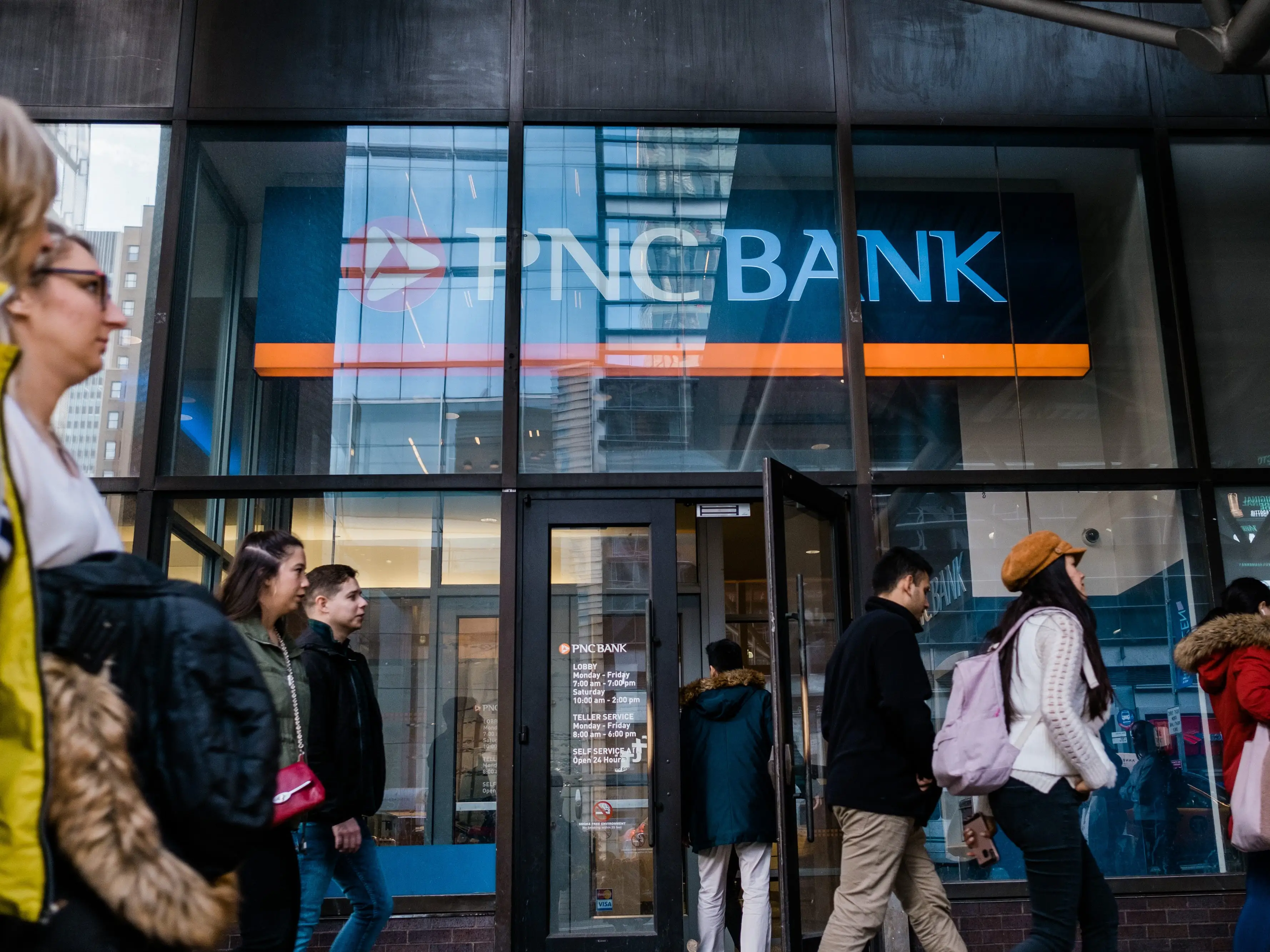
The same day, Maas visited his regular PNC branch in West Orange, New Jersey, to authorize the wiring of $300,000 to American Coin and Stamp Co, Inc., a precious-metal dealer based in Clifton, New Jersey, as recommended by the scammers, to buy gold.
Details of the scam are described in a lawsuit filed in the Law Division of the Superior Court of New Jersey, Essex County. In it, Maas claims negligence against PNC and American Coin.

He is also suing a Pennsylvanian named Jaynesh Patel, alleging conspiracy to commit conversion and conspiracy to commit common fraud. Authorities arrested Patel, identifying him as a person who allegedly helped retrieve hundreds of thousands of dollars’ worth of gold from Maas. Patel has been charged in a separate criminal investigation of the matter.
According to the lawsuit, a PNC banker guided Maas through the process of wiring the money to American Coin. Throughout the whole transaction, the suit said, Maas was on an open phone line with Green. It said the staff member asked Maas no questions, such as why he was depleting his savings to purchase gold.
“He did not ask why Mr. Maas was on a call during the entire interaction or who was on the other end of the call,” the complaint stated. “He did not try to assess if Mr. Maas was being unduly influenced.”
Maas placed the coins in the back seat of a car
The lawsuit said that American Coin received the wire amount an hour later, and that Maas drove to Clifton to pick up the gold from Jeffrey Angello, owner of American Coin.
The suit added that Maas was also on the phone with the scammer during the gold exchange, and no one questioned why the large sum of gold was being purchased, or how he had learned about the store.
Maas returned home, following Green’s advice to wait for someone to collect the coins. A black Nissan with a New Jersey license plate arrived, and Maas placed the coins in the back seat through an open window.
The next day, Green told Maas that the process had been successful and offered him a $1,000 reward for his help, which, the lawsuit said, Maas declined.
Maas was shown a forged document depicting his bank account
“I said, ‘I don’t want a reward,'” Maas told Business Insider. “I told him to leave me alone.”
Green then told Maas that, instead, he would pay Maas $10,000 compensation because he had “saved his job.” As Maas completed the supposed reward form, Green said there had been another mistake: $100,000 had been credited to his account, not $10,000.
Maas was again shown a forged document depicting his PNC account with the latest deposit and told he would need to repeat the process of the previous day.
The New Jersey resident returned to PNC and withdrew $90,000. The suit alleges that Maas was on an open phone line and that the second banker who helped him did not ask him what he needed the funds for, or note that he had withdrawn the $300,00 the day before.
Maas requested that the wires be recalled
Maas’ complaint said the banker “did not alert Mr. Maas that this withdrawal would essentially wipe out the savings in his checking and money market account.”
Maas then returned to Angello and purchased more coins. This time, a green Honda with Pennsylvania plates came to pick up the gold.
“I was on the phone with Green, but I just figured something wasn’t right,” Maas told Business Insider. After a sleepless night of “agitation” and “complete humiliation,” he filed a report with the West Orange Police Department.
Officers identified the Honda driver as Patel, leading to his arrest and indictment on a second-degree theft by deception charge. He has pleaded not guilty, and his next court appearance is on July 6, 2026.
The lawsuit said Maas reported the situation to PNC and requested the wires be recalled, only to learn that it could not be done. “I was hoping it was a bad dream, but it wasn’t,” Maas said to Business Insider.
He had two severe episodes of fainting, which doctors diagnosed as the result of stress. He spent three days in the hospital on both occasions and suffered from severe social anxiety and avoidance.
The coin dealer has denied all wrongdoing
The lawsuit alleges that neither the bank nor the dealer took the necessary precautions to prevent the elaborate con.
Business Insider reached out to PNC and Patel’s attorneys in both the civil and criminal cases against him. PNC, which has filed a motion to dismiss the case on legal grounds, said it could not comment on active litigation.
Patel’s attorneys have not responded to Business Insider’s request. However, in his answer to the complaint, Patel denied Maas’ allegations.
Jeffrey Angello, owner of American Coin, denied wrongdoing. He told Business Insider that the lawsuit was “absurd.”
“I’m livid that they are taking shots at my company and me when we’ve been here for 70 years,” he said. “My name is being sullied.” He said the case was keeping him up at night, and he was considering counter-suing.
Maas wants to raise awareness
Meanwhile, Maas told Business Insider, “Of course, my wife yelled at me, but she and my family have been super about what happened, but I’m my own worst enemy. Nobody held a gun to my head, but I was trying to do the right thing.”

He added that he was left shaken, and his regret at what happened wouldn’t go away. As for his attitude toward PNC, American Coin, and Patel, Maas said he wanted nothing more to do with them, but hopes to recover damages, attorney’s fees, and court costs.
Maas’ attorney, Steve Cohen, who said scams against older Americans are prolific, accused financial entities such as PNC and American Coin of being as crucial to the success of the con as the frontline criminals.
“They ignored all the red flags,” he told Business Insider. “Jeffrey has been gutsy coming forward with his story.”
Maas has now dramatically scaled back his expectations for an enjoyable retirement, yet still wants something good to come out of his experience.
“In retrospect, you just get caught up, and your adrenaline is going, and now it’s caused this situation,” he said.
Maas said that, by going public, he hopes people will take note of his personal story of being scammed, and it will raise awareness of exploitative crimes like phishing.
Read the original article on Business Insider
The post A 77-year-old lost $390,000 of his retirement savings after picking up a scam call. Now he wants to help others. appeared first on Business Insider.