JERUSALEM — Iran announced Monday that it would suspend its wave of attacks against Israel after the two sides traded volleys of long-range missile strikes that defied calls for restraint from President Donald Trump and threatened to tip the region back into all-out war.
Israel also decided to stop attacks on Iran, said a person who was briefed on the matter and spoke on condition of anonymity because they are not allowed to speak with the media.
It was not immediately clear whether the pause in fighting, which marked the first direct blows between the Middle Eastern archenemies since April, will be durable, or whether the U.S.-Iran negotiations would be back on track. The pause came shortly after Trump posted on Truth Social before sunrise Monday morning in Washington, declaring: “Israel and Iran must immediately stop ‘shooting.’”
The two sides were locked in an escalatory spiral overnight after Israel carried out an airstrike Sunday in Beirut, where the Iran-backed militia Hezbollah is headquartered.
That triggered a retaliatory ballistic missile barrage from Iran, which has warned for months that it would not sign a comprehensive deal with Trump if Israel did not stop its offensive against Hezbollah, and that it would hit Israel if it continued to strike the Shiite militia in Lebanon, particularly in Beirut.
After Iran fired at Israel on Sunday, Trump told reporters that he was days away from a deal with Tehran and would call Israeli Prime Minister Benjamin Netanyahu to tell him to refrain from retaliating. Israeli officials confirmed that Netanyahu spoke to Trump on Sunday night, Israel time, but there was no immediate readout of their conversation.
By Monday morning, Israel and Iran had fired dozens of missiles at each other, raising doubts about whether the U.S. president could contain a spiraling crisis that has caused heavy economic damage worldwide. Israel dispatched jets overnight that hit Iranian air defense systems and a chemical plant in the Mahshahr region, according to Israeli officials. Iran, meanwhile, launched waves of missiles at military and a petrochemical refinery in northern Israel, setting off sirens and sending Israelis scrambling for shelter.
But shortly after Trump posted his demand for a ceasefire Monday morning, the Iranian armed forces’ headquarters said that it had delivered a “painful response” to Israel and would halt its attacks.
It added, however, that “in the event of continued aggression and mischief, including in southern Lebanon, much more severe and devastating actions than before will be forthcoming,” according to the semi-official Fars News Agency.
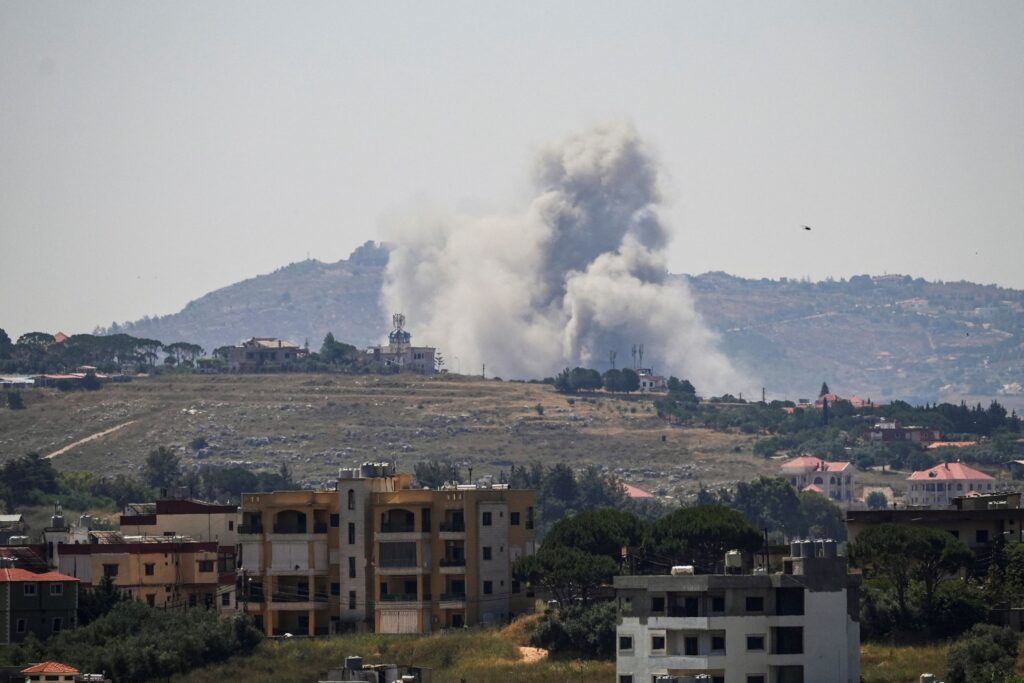
It’s not clear whether the ceasefire will hold. After Iran announced it was suspending attacks, the Israel Defense Forces said projectiles were fired from Lebanon at its forces, without naming Hezbollah. Lebanese news outlets reported that Israel continued bomb targets across south Lebanon.
The war, initiated by Trump and Netanyahu against Iran in late February, has proven deeply unpopular in the United States, where gasoline prices have surged as a result of the closure of the Strait of Hormuz, an important shipping pathway for energy products.
Since April, Trump has been locked in indirect negotiations with the Iranian leadership, which has demanded, among other things, a lifting of economic sanctions and a regionwide ceasefire — including an end to hostilities between Hezbollah and Israel — in exchange for reopening the strait.
Many in Israel have bristled at Trump’s efforts to reach a deal with Iran, while Netanyahu has insisted on maintaining the freedom to strike Hezbollah. Last week, Trump said in a podcast interview that he told Netanyahu he was “crazy” for continuing the fight against Hezbollah but that his relationship with the Israeli leader remained healthy.
On Monday morning, Iran’s attacks were joined by a missile launched at Israel by another Iranian partner, the Houthi militia in Yemen, which had refrained for months from joining in hostilities.
The Houthis’ entry into the conflict could prove geopolitically and economically significant given the group’s control of the Bab al-Mandab Strait, a gateway to the Suez Canal connecting Europe and Asia.
Iranian state media, citing an adviser to Iran’s supreme leader, reported Monday that Tehran now would block the Bab al-Mandab — on top of its blockade of the Strait of Hormuz — if Israel escalated its attacks.
In recent months, even as war raged in the Persian Gulf, the Bab al-Mandab has remained largely navigable for most ships, including tankers carrying oil from Saudi Arabia’s Red Sea ports. The price for July delivery of Brent crude oil, an international benchmark, shot up more than 4 percent Monday morning to over $97 a barrel.
The recent cycle started after Israel launched a targeted strike on Sunday against Hezbollah in the southern suburbs of Beirut, in response to what Netanyahu said were Hezbollah missiles fired at Israel.
Israeli Defense Minister Israel Katz said last week that the IDF had refrained from powerful strikes in Lebanon’s capital, “except for targeted assassinations,” following a U.S. request, but it would strike Dahiyeh, a southern Beirut suburb where Hezbollah holds sway, if Hezbollah hits communities in northern Israel. On Sunday, the Israeli in Dahiyeh killed two and injured 20, according to the Lebanese Ministry of Health.
Iran followed up on its threat to retaliate against Israel around 10 p.m. Sunday, launching a first wave of missiles at the Ramat David Air Base in northern Israel, which it called the “source” of aggression against southern Lebanon and Beirut’s southern suburbs, Iran’s semiofficial Tasnim news agency reported.
“Since last night, they fired close to 30 ballistic missiles at Israel,” an Israeli military official said, speaking on the condition of anonymity to discuss sensitive security operations. “At the same time, the Houthis also added two more; one fell on the way to Israel.”
Israel Ziv, a major general in the Israeli military reserves and the former head of its operations directorate, said it was a “bad decision” for Israel to strike Beirut on Sunday and a “strategic mistake” for Israel to be dragged into a new round of retaliatory blows with Iran.
“Israel needs to climb down from the tree,” Ziv said, while blaming Hezbollah for baiting Israel. “If Israel had shown restraint and allowed the U.S. to quietly finalize the agreement with Iran, it would have signaled strength rather than weakness.”
In Israel, Iran’s direct attack — the first since a ceasefire was reached with Trump in April — ratcheted up political pressure on Netanyahu. The Israeli premier risks angering Trump, a crucial ally, by attacking Hezbollah and Iran, but he also faces widespread calls at home to do more to eliminate the threat posed by the Iran-backed militia entrenched in neighboring Lebanon and must take into account political considerations ahead of an Israeli election expected in September.
Many political observers — and a smattering of Netanyahu’s domestic rivals — have accused him of prolonging the fight against Hezbollah to provoke Iran and derail Trump’s Iran talks.
“It is important to understand: Netanyahu escalated tensions in Lebanon in an attempt to set the region ablaze and avoid elections,” said Yair Golan, who leads a left-leaning party competing in the upcoming elections.
In an interview with Fox News on Sunday shortly after Iran launched its initial volley, Trump said he had not received advanced warning about Israel’s strike on Beirut earlier in the day and was “not happy about it.”
But the president urged both sides to de-escalate, saying he would call Netanyahu to hold off from retaliating and demand that Iran also stop firing and return to the negotiations.
“What I would suggest to Iran: You’ve shot your missiles, that’s enough, get back to the table and make a deal,” Trump told the network.
The post Iran says it will halt attacks on Israel after waves of strikes appeared first on Washington Post.