
I knew visiting Intel’s chip factory would be different when they told me I couldn’t wear my regular deodorant.
Or lotion. Or hairspray. Or makeup.
Before I’d even boarded the plane to Oregon, Intel sent my videographer and me a long list of things we couldn’t wear or bring into its factory in Hillsboro. No Velcro. No Bluetooth. No phones unless they were on airplane mode. The list kept going.
That was my first clue I was about to step into a place governed by a very different set of rules.
In March, after months of planning with Intel, I got rare access to one of its chip factories — the kind of place the tech industry calls a fabrication plant, or fab. Inside, Intel makes some of the most advanced semiconductors in the world.
Chips run almost every part of modern life: laptops, phones, chatbots, washing machines, fighter jets, and the data centers behind AI.
Demand for these chips is skyrocketing, with annual semiconductor sales expected to reach $1 trillion by 2027. I went behind the scenes to see the complicated and delicate manufacturing process that’s so controlled, it permanently changed how I think about what it means to be clean.
What it takes to get inside Intel’s fab
I arrived on a rainy Oregon morning in my best walking shoes, per Intel’s instructions. We’d be covering a lot of ground, and they weren’t kidding. The fab in front of us was enormous — bigger than an aircraft carrier.
We walked about 10 minutes to the gear-cleaning room. Just beyond it sat a room full of what I estimated to be billions of dollars in Intel chips.
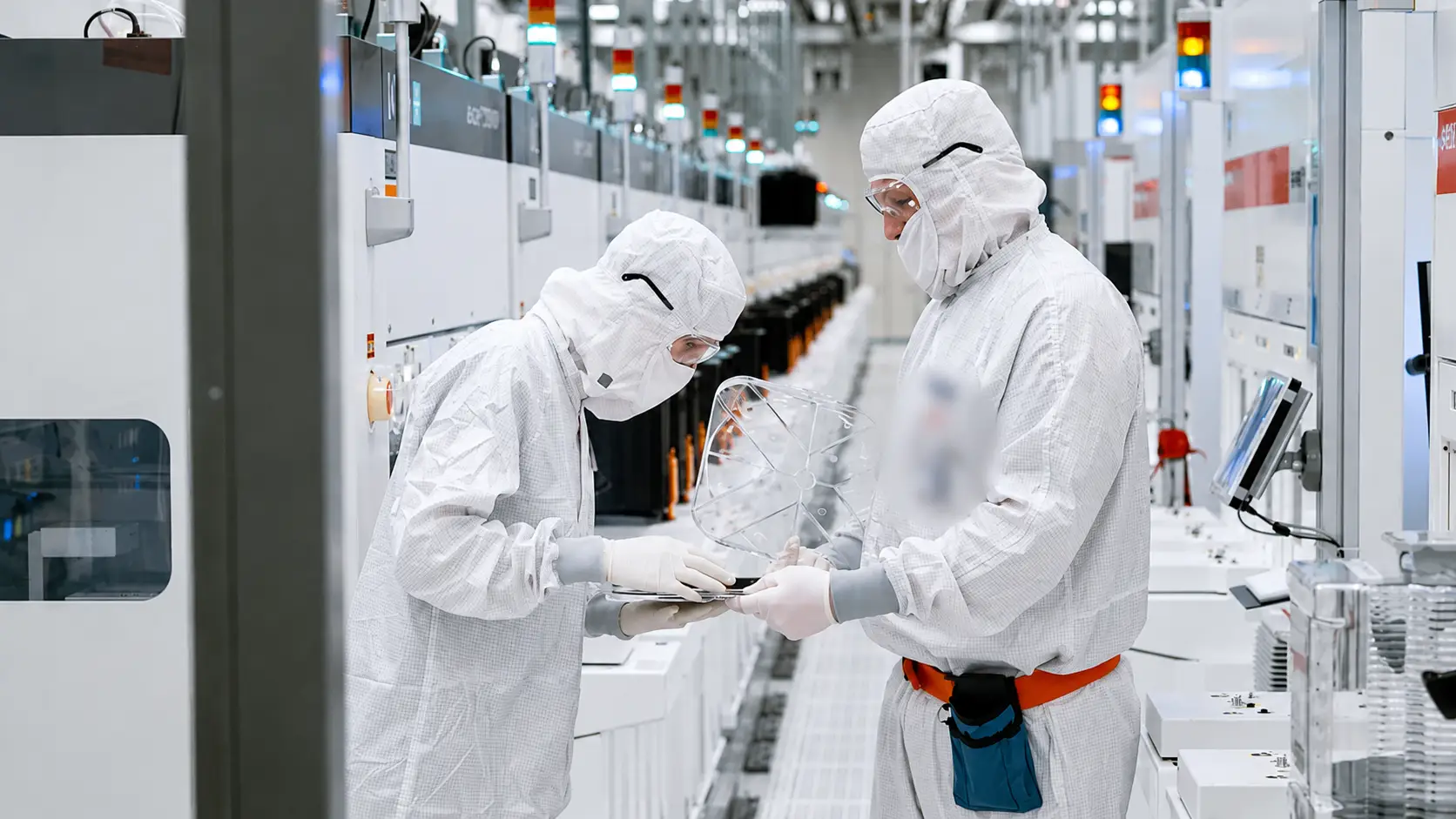
“Each little tiny speck can cause a defect, which would destroy the chip,” Chris Auth, Intel’s vice president of manufacturing development and our guide for the day, told me.
We scrubbed down every piece of camera equipment with sterilizing wipes. Not just the obvious surfaces. We extended the tripod legs, wiped them down one by one, collapsed them, and wiped them down again, hunting for any nook that might be hiding dust.
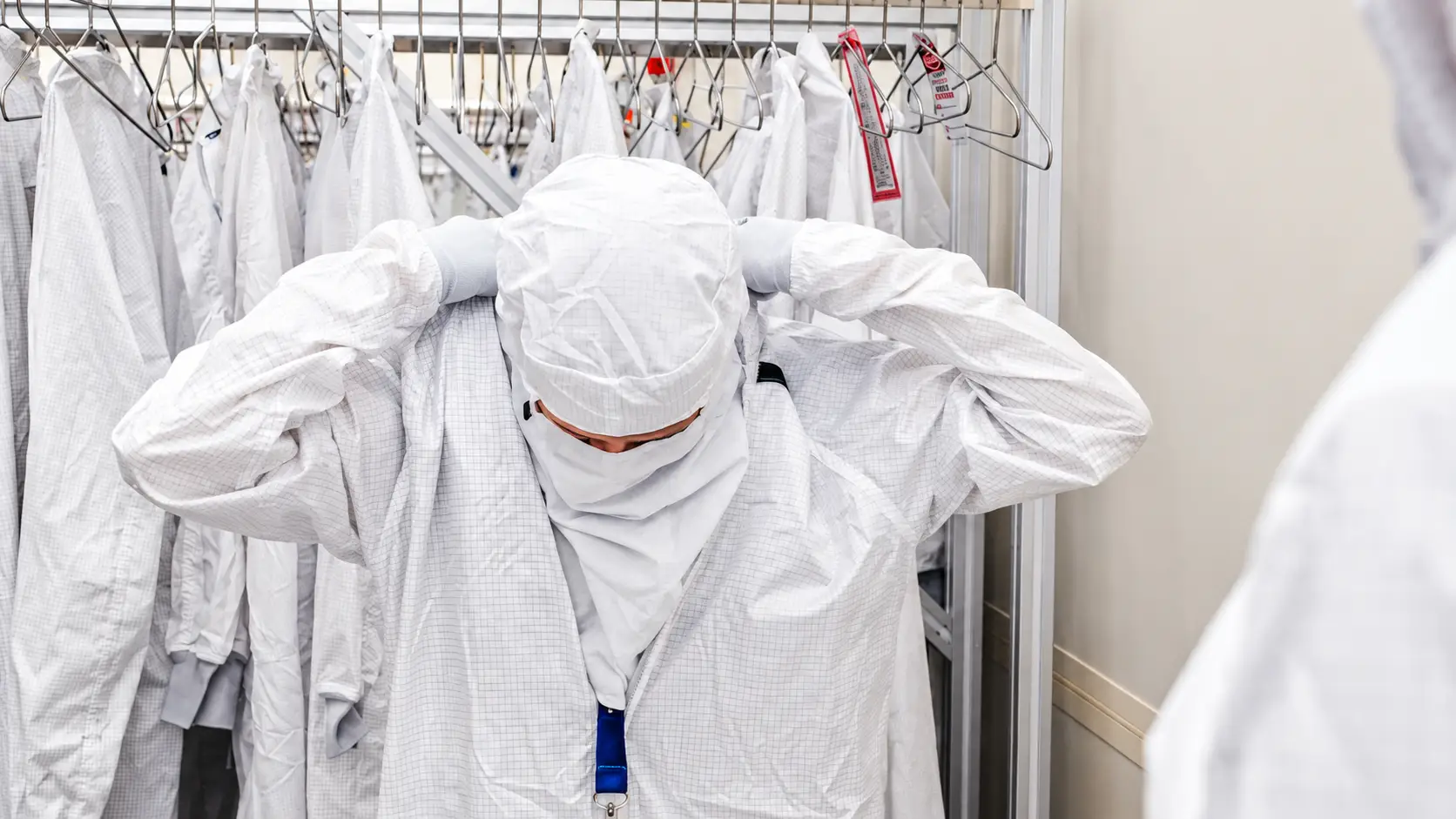
Then came the gowning room, a chamber so big it could have swallowed my New York studio apartment many times over. It was packed wall-to-wall with bunny suits, each worth about $1,000, according to Intel.
I got to wear one for the day. But first, I had to figure out how to put it on.
“So you kinda wanna scrunch up your suit so that the sleeves don’t touch the ground here,” Auth said, once he’d slipped on his hood.
Every piece had to connect in the right order. The onesie snapped onto the hood. The boots attached to the suit. My first pair of gloves got tucked under the sleeves. A second pair went on top to trap the skin particles my hands were shedding.
I’ve visited factories before that worried about visible contaminants — a bracelet falling off, an earring coming loose. Intel worried about invisible ones. The kind your body releases constantly without asking permission.
That also explained why my notebook had to stay outside. Regular paper sheds microscopic particles, and here, even that can be enough to ruin a chip. Intel handed me a special cleanroom notebook that doesn’t shed.
Then I stepped onto the fab floor.
Intel’s most precious room
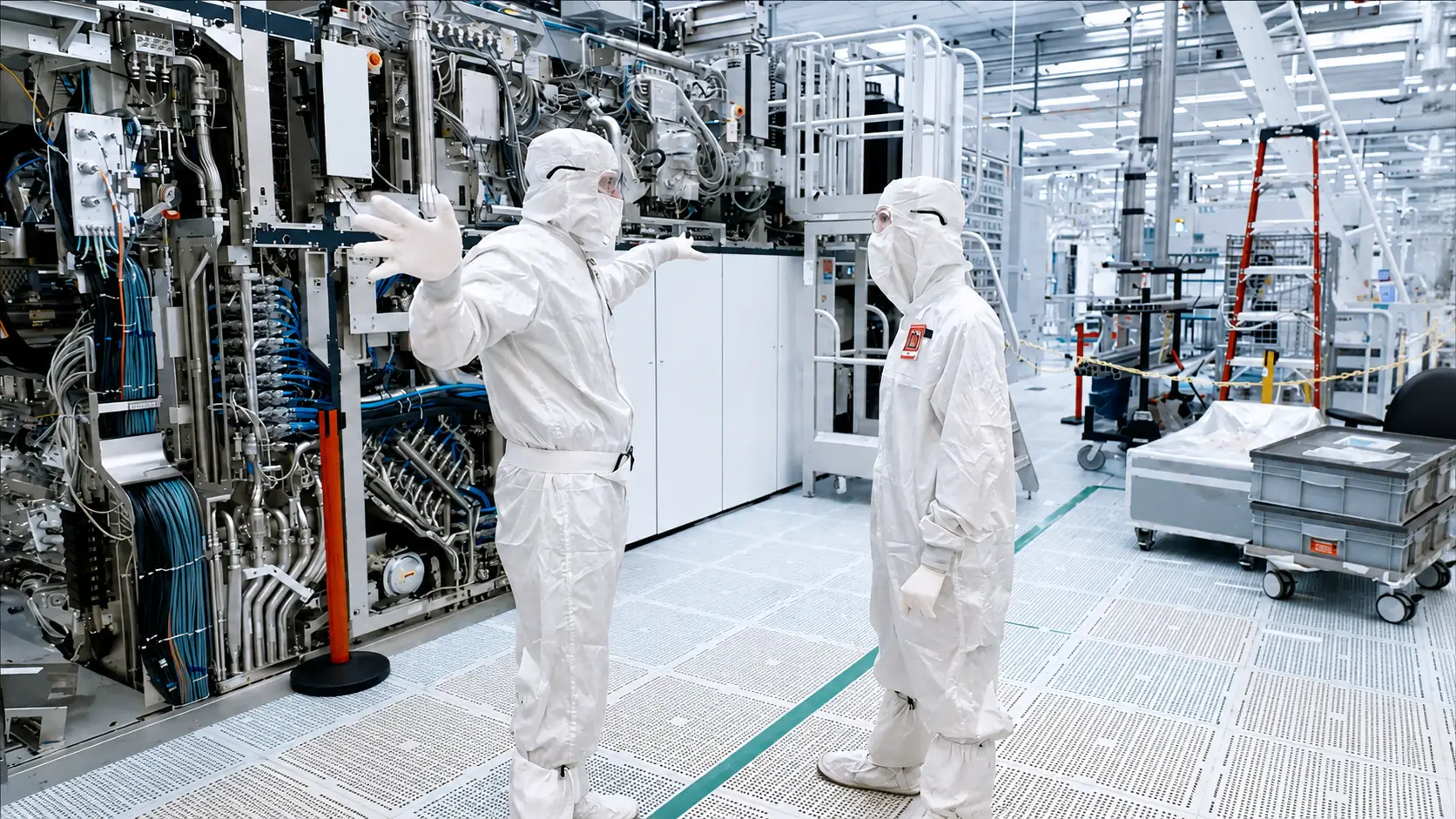
In a place this tightly controlled, I was oddly thrilled by what looked like hot-pink equipment everywhere. But it wasn’t actually pink.
The gigantic room glowed under yellow light to protect the chips. Any other wavelength could damage a chip while it’s being made.
“Under yellow light, everything that looks pink to your eyes is actually red,” Tyler Osborn, Intel’s director of advanced packaging technology development, later told me, gently bringing me back to reality.
Nothing about the fab felt quite real, though.
There were more robots than people. The few people who were there all looked the same in hooded suits. Employees told me they often recognize one another by how they move.
“You get to know people’s gait,” Osborn said, his voice muffled by the layers covering everything but his eyes.
Robots zipped by on overhead tracks, carrying sealed boxes of wafers — the thin slices of silicon that chips are built on — around the factory, keeping them out of human hands.
People, I learned, are too inefficient for this work. Robots need to move thousands of wafers a day. Not to mention, humans can be clumsy.
I couldn’t stop wondering what would happen if someone in a rush tripped and sent a box of wafers flying.
“Mistakes are very, very costly,” Auth said. “You’re somewhere in the $50,000 to $500,000 range just for one wafer.”
Each robot carries 25 wafers at a time.
“So now you’re into the millions for just one box,” he said.
Even my footsteps felt like a risk
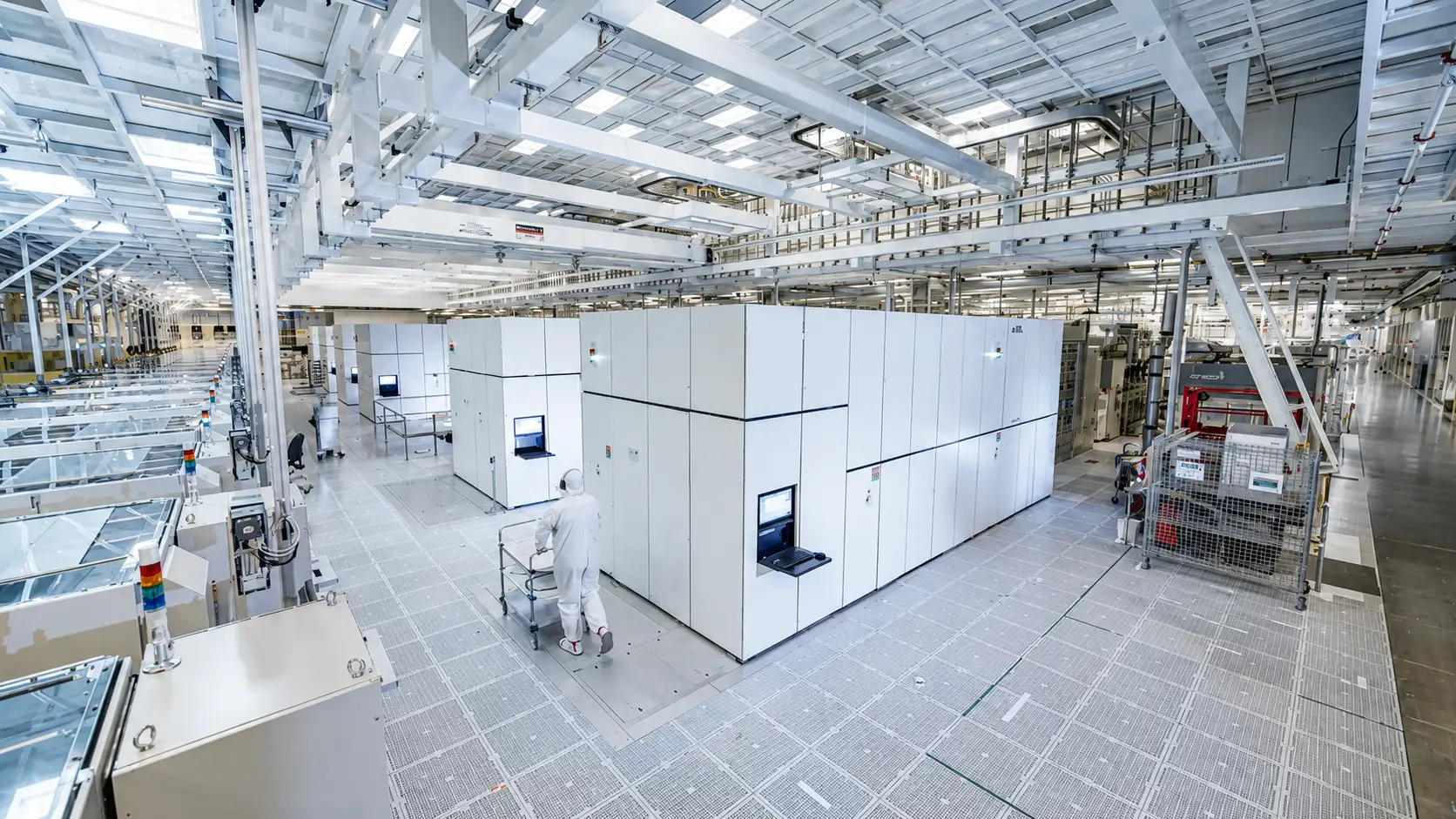
The chips are about the size of a fingernail. But Intel isn’t just controlling that tiny patch of space. It is trying to steady an entire factory around something microscopic.
“We’re building the world’s smallest features in some of the world’s biggest factories,” Auth said.
The fab is built in layers, with a foundation designed to absorb outside shocks — earthquakes, nearby machinery, even low-frequency vibrations from air-conditioning units in neighboring buildings.
“It comes down to microvibrations,” Bob McMillan, Intel’s life safety and systems manager, told me.
That was the moment I became unusually aware of my own footsteps. I felt like a giant moving through a world built for things far smaller and more delicate than me.
Everything in the fab was choreographed to protect the chip, which made me wonder what would happen if all that control failed in the smallest possible way.
So I asked what would happen if a beard hair got into one of these machines.
“You’re done,” McMillan said.
“A hair is huge,” Auth later explained.
A single human hair can be a million atoms thick. Some of the structures Intel is building are just a few atoms wide.
The entire factory works like a machine
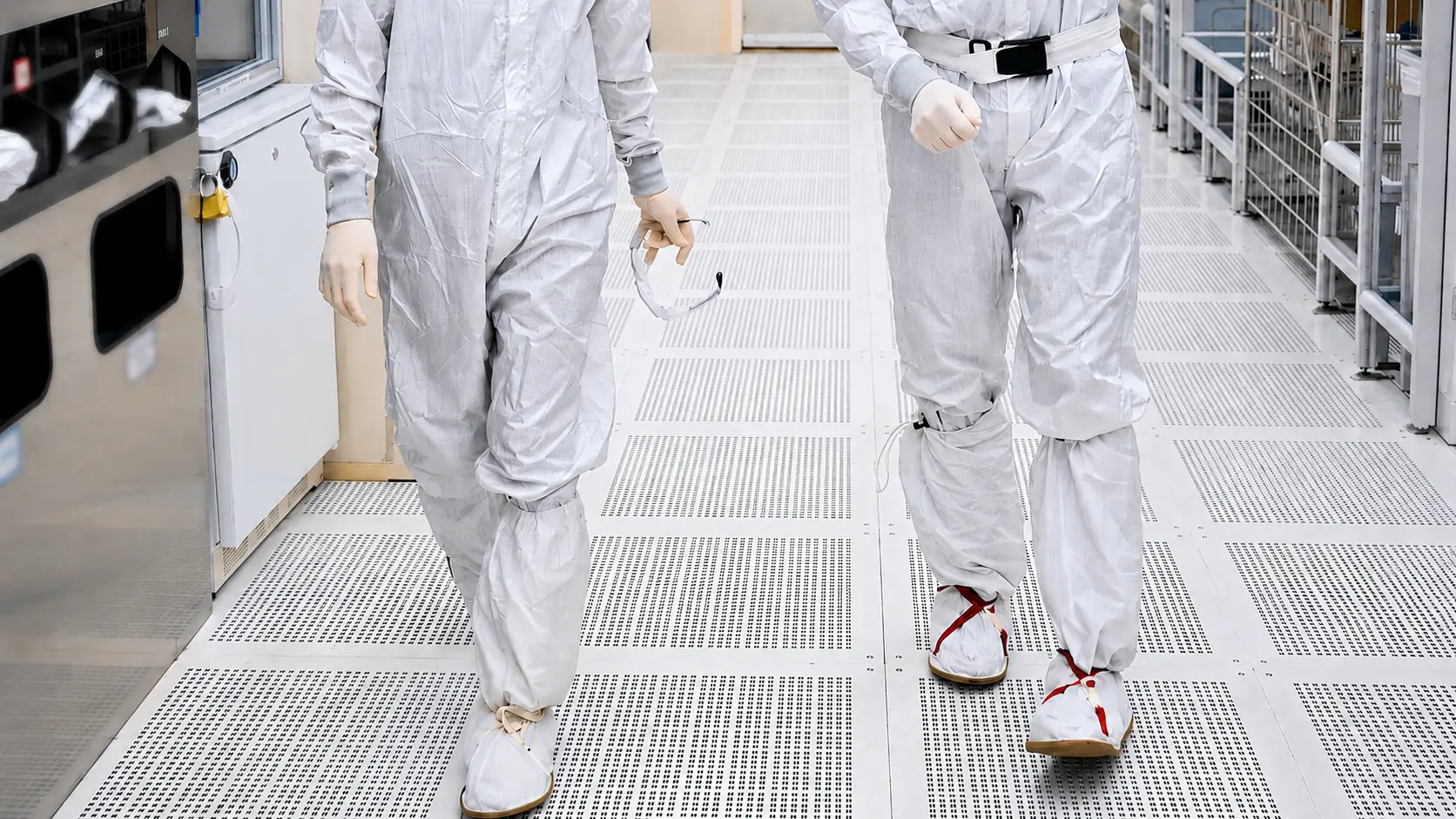
It was hard to hear anyone over the constant hum of gigantic tools.
Then I realized the building wasn’t just full of machines. It was one.
Even the floor was working.
It stretched beneath us like a giant metal sieve, perforated with holes as far as I could see. They were there to pull particles away from the wafers — catching anything rogue that escaped our suits in less than 60 seconds.
“We change all the air in this factory about that quickly,” McMillan told me.
They filter the air over and over because, at any given moment, there can’t be more than eight particles bigger than a micron floating in every cubic meter of air. The room you’re sitting in right now probably has millions.
To me, that was hard to fathom.
I was standing inside one of the cleanest places on Earth, which was reassuring and also vaguely unsettling. Regular life suddenly seemed impossibly filthy.
Why making chips is so hard
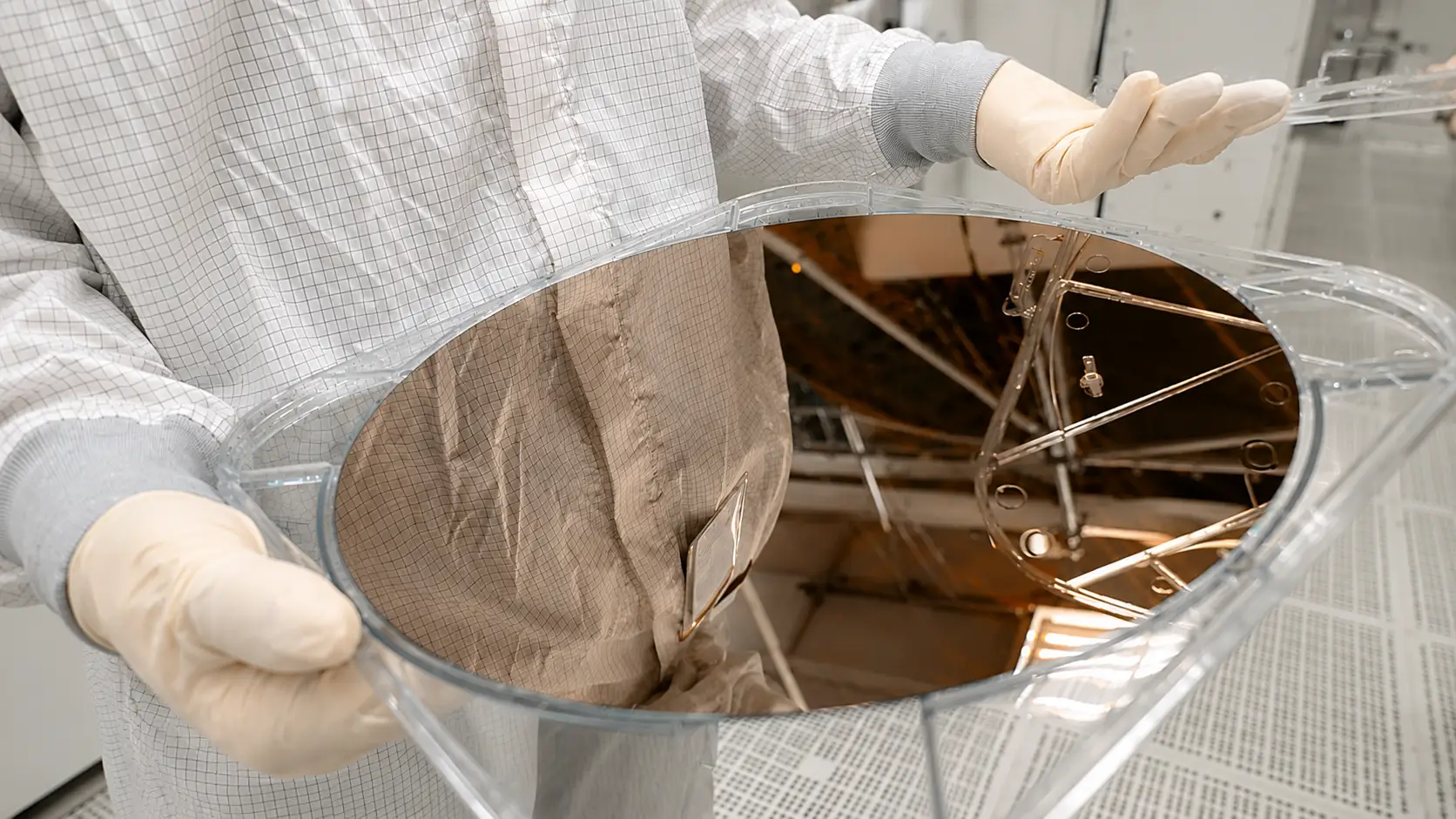
A single chip takes about three months to make, and almost nothing can go wrong. In that time, it moves through roughly 2,000 steps, and thousands of machines spread across the factory.
“There’s 12 football fields of clean room space here,” Auth said.
He later told me it costs about $20 billion to build a fab like this. By comparison, One World Trade Center cost about $3.9 billion to build.
Despite the price tag, the US government has made building chips in America a top priority.
About 90% of the world’s most advanced chips are made in Taiwan, which Washington sees as a major geopolitical risk as China threatens to take the island by force.
That’s why, no matter how hard these chips are to build, the White House says the US needs more factories like this one. Right now, Intel is the only American company designing and manufacturing advanced logic chips on US soil.
I left thinking about how fragile modern life is
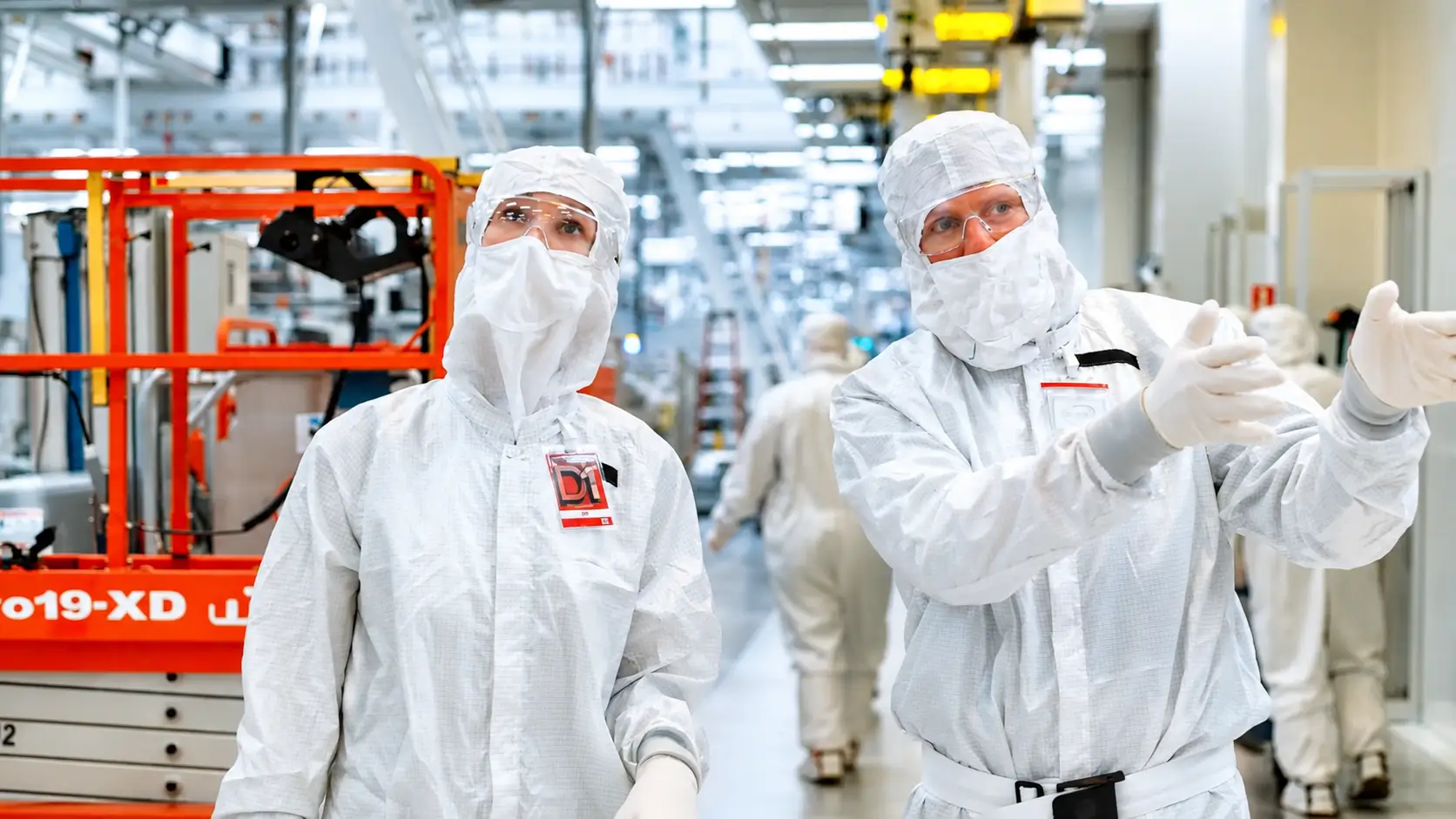
When we got back to the gowning room and took off our hoods, I realized I’d almost forgotten what everyone we’d spent the day with actually looked like.
Then I got my phone back, stepped back into normal life, and had a thought I still can’t shake: we live in a world that runs on chips.
To make them, however, we have to create an entire environment designed to protect them from us.
Read the original article on Business Insider
The post I visited Intel’s robot-run AI chip factory, where the biggest danger is human skin and hair appeared first on Business Insider.